Copyright law

Definition and stakes

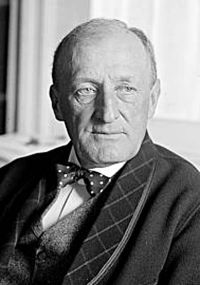
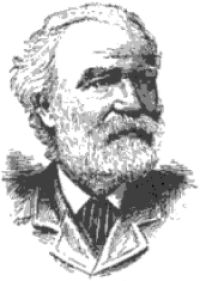
Portrait of Benjamin Vaughan Abbott Benjamin Vaughan Abbott Popular Science Monthly (1882)

Does the copyright law sustain property in the mere title of a book? The tendency of thought is that the law of trade-marks affords such protection as there is for a title, as distinguished from the body or contents; that the purpose of the copyright law is to secure the exclusive right of publishing the substantial work, and that it protects the title only as being a part of the work.
Source: Wikisource

James S. Heller The Librarian's Copyright Companion (2012)

Over the past few decades, license agreements have been gradually displacing copyright law. Users and owners of copyrighted material have always been free to alter their copyright rights and responsibilities by mutual agreement. Publishers of print and microform sources rarely use license agreements. But digital publishers are compelled to rely on license agreements, partly because their products are more vulnerable to copying and other misuse, and partly because their users sometimes need rights that copyright law doesn’t provide.
Source: Wikisource

Timothy K. Armstrong Fair Circumvention (2008)

Theories of statutory interpretation that demote the courts to a more passive role, commanding them merely to read Congress’s words and apply them exactly as written, make an especially poor fit for copyright law. The applicable statutory provisions, with few exceptions, simply are not written in such a way as to make such judicial passivity feasible, and two centuries of copyright history have accustomed the courts to a more coequal role in the development of copyright doctrine—a role Congress has repeatedly recognized and towards which it has repeatedly expressed approval.
Source: Wikisource

Get perspective with Kwize: daily news enlightened by great literature