Currant jelly

Definition and stakes

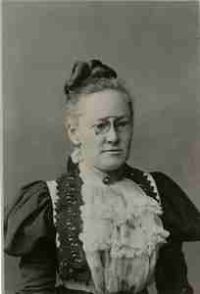
Portrait of Alexis Soyer Alexis Soyer,  The Modern Housewife or, Ménagère

“ Currant Jelly is made precisely as in the last, omitting the raspberries, the difference being in the use; the last being adapted for the garnishing of pastry, and this to use for sauces, or to serve with hares, venison, or any other meat, where required.
A more simple method of making currant jelly is to rub the fruit through a sieve, and afterwards squeeze it through a fine linen cloth, put it into a preserving-pan with, to every pint of juice, three quarters of a pound of white sugar; place over a sharp fire, stirring occasionally with a skimmer, keeping it well skimmed
”

Source: Gutenberg

A. G. Payne,  Cassell's Vegetarian Cookery

“ Black Currant Jelly.—The juice of black currants makes excellent jelly in the ordinary way if we boil a pint of black currant juice with a pound of sugar till it sets; but a mould of black currant jelly suitable to be used as a sweet at dinner can be made by adding less sugar and thickening the juice with corn-flour, allowing about a tablespoonful to every pint, and pouring it into a mould or plain round basin. ”
Source: Wikisource

Portrait of Maria Parloa Maria Parloa,  Canned Fruit, Preserves, and Jellies…

“ The simplest method of making currant jelly is perhaps the following: Free the currants from leaves and large stems. Put them in the preserving kettle; crush a few with a wooden vegetable masher or spoon; heat slowly, stirring frequently.
When the currants are hot, crush them with the vegetable masher. Put a hair sieve or strainer over a large bowl; over this spread a double square of cheese cloth. Turn the crushed fruit and juice into the cheese cloth, and let it drain as long as it drips, but do not use [27] pressure.
”
Source: Gutenberg

Get perspective with Kwize: daily news enlightened by great literature