“ What an experience it would be to look on the death's-head moth in a state of nature, feeding among the flowers in the early evening, with some sunlight to show the delicate grey-blue markings and mottlings of the upper- and the indescribable yellow of the under-wings—is there in all nature so soft and lovely a hue? ”
Death's-head moth
Definition and stakes
The theme of “death's-head moth” has been addressed by authors such as Gene Stratton-Porter, Richard South, Augustus Radcliffe Grote, William S. Furneaux and Theodore Wood. It is often associated with terms like insect, wing, caterpillar, egg and pupa.
Quotes about “death's-head moth”
 C. J. Cornish,
The Naturalist on the Thames
“ It would not be human if some belief had not arisen that the insects that fly by night imitate human thieves and rob those which toil by day. There has always been a tradition that the death's-head moth, the largest of all our moths, does this, and that it creeps into the hives and robs the bees, which are said to be terrified by a squeaking noise made by the gigantic moth, which to a bee must appear as the roc did to its victims. ”
 Ovid,
The Metamorphoses of Ovid, Books VIII-XV
“ Pliny, in the twenty-eighth Book of his History, says, ‘The moth, too, that flies at the flame of the lamp, is numbered among the bad potions,’ evidently alluding to their being used in philtres or incantations. There is a kind called the death’s head moth ”
George Adams, Essays on the Microscope
“ The reason, if it be not a prostitution of the term, is, that as the plumage on the back of this moth exhibits somewhat of the resemblance of a death’s head, these intelligent prognosticators (naturalists they cannot be called) are fully convinced that this harmless insect must be the harbinger of mortality, and that its appearance infallibly portends speedy death to some one of the family! ”
Various, Chambers's journal of popular literature… (1853)
“ So, too, the season of 1885 proved a good one, as the lepidopterist would say, for the larvæ of the Death’s-head Moth, in fact, it is doubtful if it had ever been so abundant. It is a grand species—the largest of our native Sphingidæ, or Hawk Moths, and interesting in all stages of its existence. It is the only lepidopteron that we possess capable of making any cry; but the caterpillar, pupa, and moth of Atropos can all squeak. ”
Winthrop Packard, Old Plymouth Trails
“ Thus it is that a lovely white moth flits often in the veriest gray of dawn just to the eastward of where I lie. It always seems as if he were a condensation out of the white mists that are born in that darkest hour when the night winds cease and that runic rhyme of the pines is lulled for a time. He seems as transparent as they and is nothing but the ghost of a moth as he passes from one head of goldenrod bloom to another. Some mornings he vanishes in the amber glow that ushers in the daylight and then I think I have merely been dreaming of lepidoptera. ”
Arthur Herbert Savory, Grain and Chaff from an English Manor
“ It is an excellent example of "mimicry," whereby a harmless insect acquires the distinctive appearance of a harmful one, and so secures immunity from the attacks of its natural enemies.The larva of the Death's Head was not uncommon at Aldington and Badsey on potatoes; I had a standing offer of threepence each for any that the village children could bring me. These large caterpillars require very careful handling, and I fear the children were not gentle enough with them, as I only had one perfect specimen moth from all the larvae they brought. ”
S. Baring-Gould, A Book of the Cevennes
“ In this corpse-like state it remains for a fortnight or three weeks. Then it bursts its cerements and comes forth furnished with wings, antennæ and feet for living in its new element—the atmosphere. The female moth flutters its wings, but rarely uses them for flight, but the male employs his for seeking a partner. As the moth is not furnished with teeth, it perforates its tomb by knocking with its head against the end of the cocoon, after moistening it with saliva, and thus rendering the filaments more easily torn asunder by its claws. ”
F.L.S. John Watson, Poachers and Poaching
“ Just as the twilight of a summer evening is deepening into darkness, and a soft, warm wind stirs the foliage of the woods, the ghost moth comes abroad. The observer sees a fitful apparition which suddenly vanishes into space. First a large insect with long wings is seen advancing, it comes straight on, then flutters in the air—and is gone. Whilst endeavouring to discover the mysterious retreat of the moth, it will suddenly reappear, and even whilst the eye closely follows its flight, will again vanish. This effect is produced by the different colour of the wings on their upper and lower sides. ”
 Gene Stratton-Porter,
Moths of the Limberlost: A Book About Limberlost Cabin
“ Then one of them approached a thistle head opposite me in such a way its antennae and the long tongue it thrust into the bloom could be seen. That proved it was not a bee, and punishment did not await any one who touched it.There were so many that with one sweep of the net two were captured. They were examined to my satisfaction and astonishment. They were moths! Truly moths, feeding in the brilliant sunshine all the day; bearing a degree of light and heat I never had known any other moth to endure. ”
Gene Stratton-Porter,
Moths of the Limberlost: A Book About Limberlost Cabin
“ To force a way head first would be impossible on account of the delicate tongue shield, and for the moth to emerge underground and dig to the surface without displacing a feather of down, either before or after wing expansion, is unthinkable. Yet I always had been in doubt as to precisely how the exit of a pupa case moth took place, until I actually saw the earth move and the sharp abdominal point appear while working in my garden. ”
Various, Popular Science Monthly (1898)
“ Here, therefore, we have an insect which in its adult state is forever excluded from the light, and never even beholds its mate. Having filled the bottom of their puparium with their ova, packed in the down rubbed from their own body, these females do not long survive. The moth is then literally nothing but thin skin. Reduced to a shriveled, dried, and scarcely animated morsel of this matter, she either presses herself through the opening of the case or, exhausted, the last feeble flicker of life burned out, expires within. ”
Gene Stratton-Porter,
Moths of the Limberlost: A Book About Limberlost Cabin
“ A lifeless moth fades rapidly under the most favourable conditions. A moth at eight days of age, in the last stages of decline, is from four to six distinct shades lighter in colour than at six hours from the cocoon, when it is dry, and ready for flight. As soon as circulation stops, and the life juices evaporate from the wings and body, the colour grows many shades paler. If exposed to light, moths soon fade almost beyond recognition. ”
 Frances Power Cobbe,
The Peak in Darien, With Some Other Inquiries Touching Concerns of the Soul and the Body
(1882)
“ There is an insect, the Lunar Sphinx Moth, which exhibits, in its first stage, not only the usual prevision for its security while in the helpless chrysalis state, but a singular foresight of its own requirements when it shall have become a winged moth. Having made, by eating its way upward through the pith of a willow, an appropriate hiding-place, it finds itself with its head in a position in which, were it to become a moth, it could never push itself down, and escape at the aperture below. ”
 W. J. Holland,
Taxidermy and Zoological Collecting
“ In one sense the moth is the zoologist's most dreaded foe, for the reason that its work is so subtle and unseen. Often the first intimation the victim has of the presence of his enemy is when dusting a favorite head he suddenly knocks off a section of hair half a foot square, exposing underneath the smooth, bare skin covered with fine gray dust. The larvæ of the moth attack [341] birds and quadrupeds in one way only, that is by eating the roots of the hair or feathers, and the epidermis. ”
Various, Chambers's Journal of Popular Literature…
“ This large moth, nowhere very common, has markings on the back and thorax somewhat resembling a skull and cross-bones; hence it inspires a superstitious terror, and its appearance is believed to be the harbinger of pestilence and woe. The ghost-moth inspires similar alarm. The female is of a dull brown colour; the upper surface of the male is of a silvery whiteness. In the evening the male makes his appearance, hovering over the grass in which the female lurks, often in churchyards where the grass is green and luxuriant. If alarmed, the insect disappears in an instant, settling on the ground ”
Gene Stratton-Porter,
Moths of the Limberlost: A Book About Limberlost Cabin
“ The rule differs with feeding moths only in that after mating and egg placing they take food and live several months, often until quite heavy frosts have fallen.One can admire to fullest extent the complicated organism, wondrous colouring, and miraculous life processes in the evolution of a moth, but that is all. Their faces express nothing; their attitudes tell no story. ”
Gene Stratton-Porter,
Moths of the Limberlost: A Book About Limberlost Cabin
“ A moth with broken antennae seems dazed and helpless, and in great distress.I have learned by experience in handling moths, that when I induce one to climb upon bark, branch, or flower for a study, they seldom place their wings as I want them. Often it takes long and patient coaxing, and they are sensitive to touch. If I try to force a fore-wing with my fingers to secure a wider sweep, so that the markings of the back wings show, the moths resent it by closing them closer than before, climbing to a different location or often taking flight. ”
Various, Bird-Lore, Volume I—1899
“ The moths were very abundant after four o'clock in the afternoon, flying about the trees to lay their eggs, and then the Chippies became fly-catchers for the time, and flew straight, turned, twisted, dodged, and tumbled 'head over heels and heels over head' in the air, just as the course of the hunted moth made necessary. A quick snap of the beak, and four brownish wings would float down like snowflakes, and their numbers on the walks, roads and grass showed how many thousands of moths were slain. ”
Gene Stratton-Porter,
Moths of the Limberlost: A Book About Limberlost Cabin
“ They will kill themselves!"Then I explained to her that if we wanted big, perfect moths we must not touch them. That the evolution of species was complete to the minutest detail. The providence that supplied the acid, required that the moths make the fight necessary to emerge alone, in order to strengthen them so they would be able to walk and cling with their feet, while the wings drooped and dried properly. That if I cut a case, and took out a moth with no effort on its part, it would be too weak to walk, or bear its weight, and so would fall to the floor. ”
 Arthur Machen,
The Terror: A Mystery
“ Cradock to her husband’s dead body, that was the assemblage of terrible eyes that had watched over Treff Loyne by night. Once on the right track I understood all this, for coming into this room in the dark, I have been amazed by the wonderful burning and the strange fiery colors of the eyes of a single moth, as it crept up the pane of glass, outside. Imagine the effect of myriads of such eyes, of the movement of these lights and fires in a vast swarm of moths, each insect being in constant motion while it kept its place in the mass: I felt that all this was clear and certain. ”
Gene Stratton-Porter,
Moths of the Limberlost: A Book About Limberlost Cabin
“ That a male moth can smell a female a block away, against the wind, when I can detect only a faint musky odour within a foot of her, I do not credit.Primarily the business of moths is to meet, mate, and deposit eggs that will produce more moths. This is all of life with those that do not take food. That they add the completing touch and most beautiful form of life to a few exquisite May and June nights is their extra good fortune, not any part of the affair of living. With moths that feed and live after reproduction, mating and egg placing comes first. ”
Edwin Tenney Brewster, Natural Wonders
“ That is why the swarms of moths collect around the arc lights on the streets, fly into lighted rooms thru unscreened windows in the evening, circle about the reading lamp, or if the light chances to be a candle with an uncovered flame, fly into it and are burned.People will tell you that the moth is curious, wants to see what the light is. But he isn’t; any more than the leaf is curious to look out of the window to see what is going on in the street. Both alike simply turn toward the brightest light. The moth, having turned toward the light, when he flies, flies toward it. ”
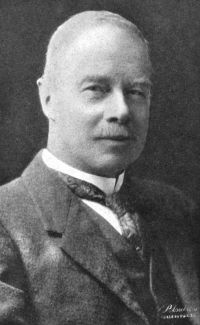 G. V. Hudson,
New Zealand Moths and Butterflies…
“ When disturbed, the insect adds to this deception by keeping its wings quite motionless and rigidly extended, and allowing itself to fall through the air like a leaf. The resemblance in this case to the inanimate object is very perfect, and has no doubt enabled the moth to escape from many enemies. ”
William S. Furneaux, Butterflies and Moths (British…
“ As you walk towards your proposed hunting ground you will do well to examine the trunks of trees, old walls, and wooden fences. In this way you will meet with moths fast asleep, which are consequently easily taken. All you have to do is to hold the open killing bottle obliquely just below the insect, and then push it gently downward with a small twig or stalk. As a rule the moth will drop direct into the bottle and make no attempt to fly away; but some are very light sleepers, ready to take flight at the slightest disturbance ”
Gene Stratton-Porter,
Moths of the Limberlost: A Book About Limberlost Cabin
“ The struggle it takes to emerge is a part of the life process of the moth and quickens its circulation and develops its strength for the affairs of life afterward. If the feet have a steady pull to drag forth the body, they will be strong enough to bear its weight while the wings dry and develop.All lepidopterists mention the wet condition of the moths when they emerge. Some explain that an acid is ejected to soften the pupa case so that the moth can cut its way out; others go a step farther and state that the acid is from the mouth. ”
Richard South, The Moths of the British Isles…
“ The moths are out in April and May, and the males may be seen on sunny days flying at a great pace over heaths, moorlands, and mosses, also about the borders of woods. The female flies at night, but it may occasionally be met with resting on heather or other herbage in the daytime. A freshly emerged female moth will, as a rule, attract as many specimens of the opposite sex as one would care to take; all that one has to do is to take her in a box to some likely spot, and there await the coming of the males. ”
 Jennette Lee,
The Scientist and the Moth
(1905)
“ I can only mention that, although during thirty years' pursuit of bugs and moths he had lived almost constantly in the woods, the Scientist had never before encountered a wood-nymph or dreamed of one. To meet two at a first encounter was naturally somewhat embarrassing. He took a safe moment to look again at the elder of the two. She was big and gentle, and the hair on her low forehead was of the softest brown. It occurred to the Scientist that one might like to touch it. His second thought was that it was the color of the moth he had come to find. ”
Theodore Wood, Butterflies and Moths, Shown to the Children (1909)
“ Of course you know this pretty insect very well indeed by sight, for it is one of the commonest of all our British moths. You cannot possibly mistake it for any other, because of its snowy white wings and the thick tuft of long yellow hairs at the end of its body, from which it gets its name of “Gold-tail.” In the female moth this tuft is very long and thick indeed, and she puts it to a most curious purpose. For when she has laid her eggs she strips off the golden down from her tail and covers them carefully over with it, leaving the tip of her body almost bare! ”
 Ernest Ingersoll,
Zoölogy: The Science of Animal Life
“ Instead of a naked pupa, that of the moth is inclosed in some sort of envelope called a "cocoon." This may be an earthen cell underground, or a woolly tuft fastened to some such support as the bark of a tree, or a leaf rolled and tied by silken threads into a tube, or a burrow in dead wood, or a paperlike case fastened to a twig; but in every case some special provision is made for the easy emergence of the imago when the time comes for its birth as a moth. The moths themselves do no harm. ”
Richard South, The Moths of the British Isles… (1920)
“ Palings, especially old ones and those enclosing wooded parks, etc., are often frequented by numbers of moths. These should be examined as early as possible in the morning, although a later looking over may not be unprofitable. When, however, the wind is dead on them, or where they stand exposed to full sunshine, few insects will be found upon them. Various species are to be obtained from open post and rail fences, and even iron hurdles sometimes yield a good moth or two. ”
Related terms
Authors who wrote about “death's-head moth”
Gene Stratton-PorterRichard South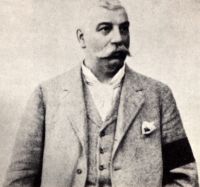 Augustus Radcliffe GroteWilliam S. FurneauxTheodore WoodAlexander Smith
 John MiltonGeorge AdamsC. J. Cornish
 A. S. PackardRobert Evans SnodgrassDavid SharpMrs. Brightwen
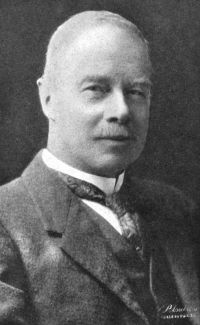 George Vernon HudsonJonas de GélieuW. J. HollandVariousJames H. Head
 Sir Francis Bond HeadRichard Head
