 George W. Bush,
State of the Union Address
“ It is not fair to tax the same earnings twice, once when you earn them and again when you die, so we must repeal the death tax. ”
George W. Bush,
State of the Union Address
“ It is not fair to tax the same earnings twice, once when you earn them and again when you die, so we must repeal the death tax. ”
Elizabeth Dole, Address North Carolina Chamber's Manufacturing Council Summit (2007)
“ If a couple works hard, lives within their means, and saves to have a nest egg for retirement and assets to pass on to their children, it should not be the policy of our government to take up to 45 percent upon their death. Clearly, this is an unfair and counterproductive taxation, and the death tax should be eliminated once and for all. ”
 Harlan F. Stone,
Fernandez v. Wiener — Opinion of the Court
“ But the power of Congress to impose death taxes is not limited to the taxation of transfers at death. It extends to the creation, exercise, acquisition, or relinquishment of any power or legal privilege which is incident to the ownership of property, and when any of these is occasioned by death, it may as readily be the subject of the federal tax as the transfer of the property at death. ”
George W. Bush,
Presidential Radio Address
(2006)
“ And we worked with Congress to phase out the death tax, because government should not tax farmers or small business owners twice -- once when you make your money and a second time when you try to pass the fruits of your life's work on to your loved ones. ”
George W. Bush,
Presidential Radio Address
(2004)
“ American small businesses received new tax incentives to invest in equipment and software: They should keep those incentives. Every American family, including every farmer, rancher, and small business owner, will see the death tax disappear in 2010, then reappear in 2011. But the death tax should stay buried. Now is not the time to turn our backs on America's families and workers and entrepreneurs by letting much needed tax relief expire. Making tax relief permanent is a simple step that would keep our economy growing, so that every American who wants to work can find a job. ”
George W. Bush,
Presidential Radio Address
(2006)
“ We cut taxes on capital gains and dividends to promote investment and jobs. And to reward family businesses and farmers for a lifetime of hard work and savings, we put the death tax on the path to extinction. ”
Lawrence Ari Fleischer, Press Briefing by Ari Fleischer… (2001)
“ The estimate by the Joint Committee on Taxation on repeal of the death tax assumes an immediate, full repeal of death taxes, which, of course, is not the President's proposal. The President has proposed a phased-in repeal of the death tax over an extended period of years. ”
George W. Bush,
Presidential Radio Address
(2005)
“ You need a reformed tax code that is simple, fair, and easy to understand, and rewards your hard work and entrepreneurial spirit. And Congress needs to do its part by making the tax relief we passed permanent and burying the death tax forever. ”
George W. Bush,
State of the Union Address
“ Congress listened to the people and responded by reducing tax rates, doubling the child credit, and ending the death tax. For the sake of long-term growth and to help Americans plan for the future, let's make these tax cuts permanent. ”
George W. Bush,
George Walker Bush's Fourth State of the Union Address
(2004)
“ Unless you act, millions of families will be charged 300 dollars more in Federal taxes for every child. Unless you act, small businesses will pay higher taxes. Unless you act, the death tax will eventually come back to life. ”
 Bernard Sanders,
"The Speech"
(2010)
“ Less than three-tenths of 1 percent of American families paid any tax on the estates they were left. So 99.7 percent of American families did not pay one cent in estate taxes. That is the simple truth. The so-called death tax our Republican friends talk about a whole lot is the estate tax, and 99.7 percent of families don't pay a nickel on it. The people who do pay are not the rich; they are the very, very rich. Let me give you one example of the absurdity of lowering the tax rate or, even worse, ending the estate tax, as some of our Republican colleagues would like to do. ”
George Sutherland, Heiner v. Donnan — Opinion of the Court
“ There is no doubt of the power of Congress to provide for including in the gross estate of a decedent, for purposes of the death tax, the value of gifts made in contemplation of death; and likewise no doubt of the power of that body to create a rebuttable presumption that gifts made within a period of two years prior to death are made in contemplation thereof. But the presumption here created is not of that kind. It is made definitely conclusive-incapable of being overcome by proof of the most positive character. ”
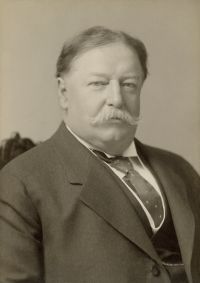 William Howard Taft,
United States v. Supplee-Biddle Hardware Company…
“ The benefit to be gained by death has no periodicity. It is a substitution of money value for something permanently lost, either in a house, a ship, or a life. Assuming, without deciding, that Congress could call the proceeds of such indemnity, income, and validly tax it as such, we think that, in view of the popular conception of the life insurance as resulting in a single addition of a total sum to the resources of the beneficiary, and not in a periodical return, such a purpose on its part should be express, as it certainly is not here. ”
George Sutherland, Helvering v. St. Louis Union Trust Company…
“ The 'generating source' of such a gift is to be found in the facts of life and not in the circumstance of death. And the death afterward of the donor in no way changes the situation; that is to say, the death does not result in a shifting, or in the completion of a shifting, to the donee of any economic benefit of property, which is the subject of a death tax, Chase Nat. ”
 William O. Douglas,
State Tax Commission of Utah v…
“ The imposition of unpredictable assessments from many sources makes it impossible for the state of domicile to make intelligent use of its own taxing power as an instrument of enlightened social policy. Chaos serves no social end.3. A large majority of the states by experience prior to the First National Bank of Boston v. State of Maine decision found the system of taxation which this Court imposes on all states today to be unworkable and to constitute a threat to the death tax on intangibles as a state source of revenue. ”
Harlan F. Stone,
Texas v. Florida — Opinion of the Court
“ By the law of each state a decedent can have only a single domicile for purposes of death taxes, and determination of the place of domicile of decedent will determine which of the four states is entitled to impose the tax on intangibles so far as they have no situs different from the place of domicile. No relief is sought to restrain collection of the tax or to interfere with the determination of its amount by appropriate state procedure. ”
Harlan F. Stone,
Curry v. McCanless — Opinion of the Court
“ The questions for decision are whether the States of Alabama and Tennessee may each constitutionally impose death taxes upon the transfer of an interest in intangibles held in trust by an Alabama trustee but passing under the will of a beneficiary decedent domiciled in Tennessee; and which of the two states may tax in the event that it is determined that only one state may constitutionally impose the tax. ”
Frank Murphy, Harrison v. Northern Trust Company…
“ The will contained no provision as to the payment of federal or state death taxes except for a direction that all inheritance, legacy, succession and estate taxes upon certain specific bequests to individuals should be paid out of the general estate. The residuary estate, after deducting funeral and administration expenses and specific bequests but not the federal estate tax, amounted to $463,103.08, all of which sum respondents claim they are entitled to deduct from the statutory gross estate in computing the federal estate tax. ”
Harlan F. Stone,
Fernandez v. Wiener — Opinion of the Court
“ The present statute, which was enacted in order to secure a more equitable distribution of the burden of federal death taxes, [15] is assailed because the tax is lacking in uniformity. But the uniformity in excise taxes exacted by the Constitution is geographical uniformity, not uniformity of intrinsic equality and operation. ”
Lawrence Ari Fleischer, Press Briefing by Ari Fleischer… (2001)
“ There is a singular event taking place in the House of Representatives today that the President is paying close attention to, which is the passage of his plan -- or a plan to repeal death taxes, and the President is very pleased to see the House of Representatives taking action on the domestic agenda, which includes a tax cut which is moving through. It's a singular event that the House of Representatives today will pass a bill to abolish death taxes. The President is keeping very close tabs on the Senate where the budget resolution is before the Senate. ”
George W. Bush,
Presidential Radio Address
(2002)
“ Tax relief helps the working people of our country with more money to provide for their families and pay their bills. And perhaps the best news of all is that even more relief is on the way for many years to come. The tax bill will continue to increase the child credit up to $1,000 per child by the year 2010. The marriage tax will be reduced. And the unfair death tax will be completely abolished. Millions of successful small businesses that pay on the personal income tax schedule will find their taxes are going down. ”
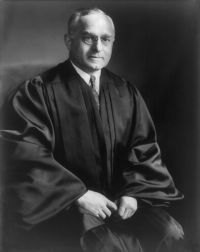 Felix Frankfurter,
Whitney v. State Tax Commission of New York…
“ The contested statute, New York Laws of 1932, ch. 320, derives meaning as an incident in the history of New York's present system of death taxes. That system had its beginning in 1885. The original act taxed individual economic benefits derived upon death rather than the total amount of the estate. Laws of 1885, ch. 483. Under this legislation, the transmission of property subject to powers of appointment, either general or special, was attributed to the estate of the donor. Matter of Stewart, 131 N.Y. 274, 30 N.E. 184, 14 L.R.A. 836; and the subsequent exercise of the power was not taxed. ”
Edward Douglass White, Knowlton v. Moore — Opinion of the Court
“ Although different modes of assessing such duties prevail, and although they have different accidental names, such as probate duties, stamp duties, taxes on the transaction, or the act of passing of an estate or a succession, legacy taxes, estate taxes, or privilege taxes, nevertheless tax laws of this nature in all countries rest in their essence upon the principle that death is the generating source from which the particular taxing power takes its being, and that it is the power to transmit, or the transmission from the dead to the living, on which such taxes are more immediately rested. ”
George W. Bush,
Proclamation 7465
“ My Administration also will support tax-deferred savings accounts to help farming and ranching families guard against downturns. To keep farms and ranches in a family from generation to generation, we are eliminating the death tax. ”
Lawrence Ari Fleischer, Press Briefing by Ari Fleischer… (2001)
“ The only reason they have to get estate planners and carry out all these tax avoidance procedures is for the purpose of keeping their farms. If it wasn't for all those procedures they have to put in place, which cost them a tremendous amount of money, they certainly would lose the family farm. And that's why they do it; they're worried about losing the family farm. If you abolish the death tax, people won't have to hire all these planners to help them keep the land that's rightfully theirs. Q Ari, back on China for a moment. ”
Lawrence Ari Fleischer, Press Briefing by Ari Fleischer… (2001)
“ And he continues to urge the Senate to take action so the tax cut can be the right size, so the American people can have a doubled child credit, can have the death tax repealed, can have across-the-board income tax rate cuts for all income taxpayers. ”
Edward Douglass White, Knowlton v. Moore — Opinion of the Court
“ All courts and all governments, however, as we have already shown, conceive that the transmission of property occasioned by death, although differing from the tax on property as such, is, nevertheless, a usual subject of taxation. Of course, in considering the power of Congress to impose death duties, we eliminate all thought of a greater privilege to do so than exists as to any other form of taxation, as the right to regulate successions is vested in the states and not in Congress. ”
George Sutherland, Tyler v. United States — Opinion of the Court
“ If the event is death and the result which is made the occasion of the tax is the bringing into being or the enlargement of property rights, and Congress chooses to treat the tax imposed upon that result as a death duty, even though, strictly, in the absence of an expression of the legislative will, it might not thus be denominated, there is nothing in the Constitution which stands in the way. ”
William O. Douglas,
State Tax Commission of Utah v…
“ And while today the Court sustains only a death transfer tax, its theories are equally serviceable to sustain an income or excise tax on dividends from such stock or interest on bonds or a sales tax, or a gift tax. Whether each chartering or issuing state will be permitted to calculate its tax on some formula that will consider the total property owned by the decedent, I do not know, but in the present trend of decision there is little restraint on such formulas. ”
United States v. Jones (236 U.S. 106…
“ The only right which can be said to vest in them at the time of the death is a right to demand and receive at some time in the future whatever may remain after paying the debts and expenses. But that this right was not intended to be taxed before there was an ascertained surplus or residue to which it could attach is inferable from the taxing act as a whole, and especially from the provision whereby the rate of tax was made to depend upon the value of the legacy or distributive share. ”
 Bill Clinton,
Death Tax Elimination Act of 2000…
“ Repeal would also be unwise because estate and gift taxes play an important role in the overall fairness and progressivity of our tax system. These taxes ensure that the portion of income that is not taxed during life (such as unrealized capital gains) is taxed at death. Estate tax repeal would benefit only about 2 percent of decedents, providing an average tax cut of $800,000 to only 54,000 families in 2010. More than half of the benefits of repeal would go to one-tenth of one percent of families, just 3,000 families annually, with an average tax cut of $7 million. ”
 Andrew Carnegie,
The Gospel of Wealth
(1889-06)
“ The growing disposition to tax more and more heavily large estates left at death is a cheering indication of the growth of a salutary change in public opinion. The State of Pennsylvania now takes—subject to some exceptions—one-tenth of the property left by its citizens. The budget presented in the British Parliament the other day proposes to increase the death-duties; and, most significant of all, the new tax is to be a graduated one. Of all forms of taxation, this seems the wisest. ”
Harlan F. Stone,
Chase National Bank of City of New York v…
“ And we see no necessity to debate the question whether the policies themselves were so transferred, for we think the power to tax the privilege of transfer at death cannot be controlled by the mere choice of the formalities which may attend the donor's bestowal of benefits on another at death, or of the particular methods by which his purpose is effected, so long as he retains control over those benefits with power to direct their future enjoyment until his death. ”
Edward Douglass White, Knowlton v. Moore — Opinion of the Court
“ On the very threshold, the theory that the tax is not on particular legacies or distributive shares passing upon a death, but is on the whole amount of the personal property of the deceased, is rebutted by the heading, which describes what is taxed, not as the estates of deceased persons, but as 'legacies and distributive shares of personal property.' This, whilst not conclusive, is proper to be considered in interpreting the statute, when ambiguity exists and a literal interpretation will work out wrong or injury. ”
Bill Clinton,
Death Tax Elimination Act of 2000…
“ This surplus comes from the hard work and ingenuity of the American people. We owe it to them—and to their children—to make the best use of it. This bill, in combination with the tax bills already passed and planned for next year, would squander the surplus—without providing the immediate estate tax relief that family farms, small businesses, and other estates could receive under the fiscally responsible alternatives rejected by the Congress. ”
William O. Douglas,
Guggenheim v. Rasquin — Opinion of the Court
“ But the owner of a fully paid life insurance policy has more than the mere right to surrender it; he has the right to retain it for its investment vitues and to receive the face amount of the policy upon the insured's death. That these latter rights are deemed by purchasers of insurance to have substantial value is clear from the difference between the cost of a single-premium policy and its immediate or early cash-surrender value-in the instant case over $135,000. All of the economic benefits of a policy must be taken into consideration in determining its value for gift-tax purposes. ”
Harlan F. StoneGeorge SutherlandLawrence Ari FleischerGeorge W. BushEdward Douglass WhiteLouis Brandeis Adam SmithCharles Evans HughesBernard SandersWilliam O. Douglas
 Hugo Black
 Barack Obama
 Ronald ReaganPierce Butler
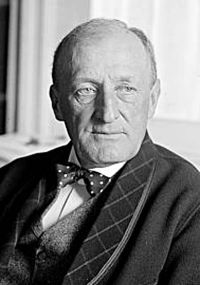 James Clark McReynolds
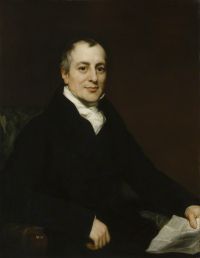 David RicardoOliver Wendell Holmes, Jr.Felix FrankfurterJohn RobertsFrank Murphy
