“ Finally, the oldest of the children, a girl of ten or eleven, manages to insert her digging-stick in the creature’s eye. A few violent lashings, and the ray lies still.The girl remains leaning on the stick, holding the great fish firmly transfixed. The other children fall over each other in a scramble to get near it. All seek to pierce the dead body with their sticks and to pull it away. But their implements are too weak and dull. Some grasp with their fingers at the slimy thing, but to no avail. The girl stands unmoved. ”
Digging stick
Definition and stakes
The theme of “digging stick” has been addressed by authors such as Albert B. Reagan, Baron Rowland George Allanson-Winn Headley, Joseph H. Adams, W. Hamilton Gibson and Otis Tufton Mason. It is often associated with terms like animal, bait, tool, walking and ash.
Quotes about “digging stick”
J. G. Wood, Nature's Teachings: Human Invention Anticipated by Nature
“ It is evident that the first earth-breaking tool must have been a pointed stick, and we find that in Southern Africa, in parts of Asia, and in Australia the Digging-stick is still in use for the purpose of breaking up the ground. ”
J. G. Wood, Nature's Teachings: Human Invention Anticipated by Nature
“ The Australians are wonderful adepts in the use of the Digging-stick, which is one of the simplest of instruments, being merely a stick some two feet in length, pointed at one end, and the point hardened in the fire. ”
 James George Frazer,
The Golden Bough: A Study in Magic and Religion…
“ In this hole the girl squats with crossed legs and is covered with sand from the waist downwards. A digging-stick is planted firmly in the sand on each side of her, and the place is surrounded by a fence of bushes except in front, where her mother kindles a fire. Here the girl stays all day, sitting with her arms crossed and the palms of her hands resting on the sand. She may not move her arms except to take food from her mother or to scratch herself ”
Various, Popular Science Monthly (1888)
“ A Santa Barbara Indian, to whom a specimen was shown, a man sixty or more years of age, unhesitatingly affirmed, the moment he saw it, that it was a digging stick weight. This implement, he said, was formerly in use among the women in his tribe. The stick must be strong and very hard; the wood usually employed grew only in the mountains. ”
 Edward John Eyre,
Journals of Expeditions of Discovery into Central Australia and Overland from Adelaide to King George's Sound in the Years 1840-1…
“ The throwing sticks have generally a sharp piece of quartz or flint gummed on at the lower end, which is used as a knife or chisel; flints or muscle shells are used for skinning animals, dissecting food, cutting hair, etc.Plate IV. Native ImplementsThe ngak-ko, a strong chisel-pointed stick, from three to four feet long, is used for dissecting the larger animals and fish, for digging grubs out of the trees, for making holes to get out opossums, etc., for stripping bark, ascending trees, for cutting bark canoes, and a variety of other useful purposes. ”
C. Stansfeld Hicks, The Boy's Own Book of Indoor Games and Recreations
“ Later on this fashion of elaborate walking sticks was adopted by the old ladies, and it was quite common to see the dames out walking with wood, ivory, whalebone, or green glass sticks, five or six feet in length, having the ends bent over like a shepherd’s crook, and twisted back again towards the ground.In these days, now that the means of communication have been so much improved and the world become one huge country, foreign sticks have lost much of their rarity. They come to us in tons, and a stick importer’s warehouse is a sight to see. The goods in the rough do not look inviting ”
 Mrs. Jameson,
A Commonplace Book of Thoughts…
“ Men were employed for this purpose, and they generally carried a short heavy stick, which they flung at the poor proscribed animal with such certain aim as either to kill or maim it mortally at one blow. It happened one day that, close to the edge of the river, near the Ferdinand’s-Brücke, one of these men flung his stick at a wretched dog, but with such bad aim that it fell into the river. The poor animal, following his instinct or his teaching, immediately plunged in, redeemed the stick, and laid it down at the feet of its owner, who, snatching it up, dashed out the creature’s brains. ”
Robert Cortes Holliday, Walking-Stick Papers
“ Anybody returning from the Alps should bring back an Alpine stock with him; every one who has visited Ireland upon his return has presented some close friend with a blackthorn stick; nobody has made a walking tour of England without an ash stick. In London all adult males above the rank of costers carry "sticks"; in New York sticks are customary with many who would be ashamed to assume them did they live in the Middle West, where the infrequent sticks to be seen upon the city streets are in many cases the sign of transient mummers. ”
 C. A. Johns,
British Birds in Their Haunts
“ Fatigued at length with repeated efforts, and completely foiled in its numberless attempts to introduce the stick, it lets it fall to the ground, and immediately goes in quest of another, probably to experience another disappointment on its return. When time and chance have enabled it to place a quantity of sticks at the bottom of the hole, it then goes to seek for materials of a more pliant and a softer nature.' These are usually straw, wool, and feathers; but, as we have seen, nothing comes amiss that catches its fancy. ”
Baron Rowland George Allanson-Winn Headley, Broad-Sword and Single-Stick
“ A split ash-plant is as dangerous as a buttonless foil, and just as likely as not to go through the meshes of a mask, and blind where you only meant to score. As the chief fault of single-stick as a training for the use of the sabre is that the stick does not properly represent the weight of the weapon which it simulates, it is not a bad thing to accustom yourself to using the heaviest sticks in the gymnasium. This will strengthen your wrist, and when in a competition you get hold of a light ash-plant, you will be all the quicker for your practice with a heavier stick. ”
 W. Hamilton Gibson,
Camp Life in the Woods and the Tricks of Trapping and Trap Making
“ The second should be about eight inches long; a notch should be cut in each end. The upper one being on the side from which the branch projects, and the other on the opposite side of the stick, and at the other end, as is made plain by our illustration. The third stick may consist merely of a hooked crotch of some twig, as this is always to be found. Indeed, nearly all the parts of this trap may be found in any woods; and, with the exception of a jack-knife, bait, and string, the trapper need not trouble himself to carry any materials whatever. ”
 Richard Jefferies,
The Gamekeeper at Home: Sketches of Natural History and Rural Life
“ Just at present “natural” sticks—that is, those cut from the stem with the bark on—are rather popular, both for walking and for umbrella handles, which causes this kind of search to be actively prosecuted. The best “natural” sticks are those which when growing were themselves young trees, sprung up direct from seed or shoots—saplings, which are stronger and more pliant than those cut from a stole or pollard. To cut such a stick as this is equivalent to destroying a future tree, and of course a good deal of mischief may be easily done in a short time. ”
Baron Rowland George Allanson-Winn Headley, Broad-Sword and Single-Stick
“ Stick play is a fine test of a man’s condition. At first every hit leaves an ugly mark, but as soon as the player gets really “fit,” it takes a very heavy blow indeed to bruise him. The sticks themselves should be ash-plants, about forty inches in length and as thick as a man’s thumb, without knots and unpeeled.If you want them to last any time it is as well to keep a trough of water in the gymnasium, and leave your ash-plants to soak in it until they are wanted. ”
 Mayne Reid,
The man-eaters and other odd people
(1860)
“ The Digger community then all turn out—men, women, and children—and deploy themselves into a wide circle, enclosing as large a tract as their numbers will permit. Each individual is armed with a stick, with which he beats the sage-bushes, and makes other violent demonstrations: the object being to frighten the grasshoppers, and cause them to move inward towards the pit that has been dug. The insects, thus beset, move as directed,—gradually approaching the centre,—while the “beaters” follow in a circle constantly lessening in circumference. ”
 Talbot Baines Reed,
Tom, Dick and Harry
“ I began to throw stones into the water, small to begin with, then larger, then bits of stick about six inches long. Then I smuggled the unlucky pistol out of my pocket in my handkerchief, and whistled still more cheerfully. Although no one was looking, it seemed prudent to adopt an air of general boredom, as if I was tired of throwing sticks into the pond. I would only throw one more. ”
F. F. Roget, Ski-runs in the High Alps
“ To go forth so simply equipped means that you are leaving your brains at home on that day—a thing I often do myself—but, I assure you, only when out for mere play!A stick that cannot be used on an emergency either as an anchor or as a sounding-line to take castings with, is a poor friend. It is instructive to look curiously into the hole made by one’s stick. ”
Joseph H. Adams, Harper's Outdoor Book for Boys
“ There are many other deadfalls in use. Among the most deadly is what may be called the “wigwam.” It is thus constructed: With a hatchet or an axe break some small sticks, and driving them into the ground in the shape of a crescent build the bait-pen or house. Bring them together at the top as in Fig. 13. Next cut a green stick about four inches in diameter and about eight feet long. Lay in front of the pen, directly up against it. Peg it firmly there by driving wooden pins against it at the ends. So much done. 346Now get another stick of the same length and lay it on top of the first pole. ”
Richard Jefferies,
The Gamekeeper at Home: Sketches of Natural History and Rural Life
“ Holly is another favourite wood for sticks, and fetches more money than oak or ash, on account of its ivory-like whiteness when peeled. To get a good stick with a knob to it frequently necessitates a considerable amount of cutting and chopping, and does far more damage than the loss of the stick itself represents. ”
Edward Sylvester Ellis, Camp-fire and Wigwam
“ Inasmuch as the only helps to be employed were the long, forked sticks carried in their hands, it will be seen that the game offered a boundless field for the roughest sort of play, mingled with no little dexterity and skill. Some swarthy-hued rascal, while on a dead run, would thrust the point of his stick under the crotch, and lifting it high above his head, start or rather continue with might and main toward his goal. ”
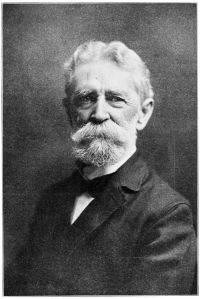 Otis Tufton Mason,
Throwing-sticks in the National Museum
“ These holes exactly fit two ivory pegs projecting from the harpoon shaft. When the hunter has taken his throwing-stick in his hand he lays his harpoon shaft upon it so that the pegs will fall in the two little holes of the stick. ”
 Lucy Thompson,
To the American Indian
(1916)
“ Some of these sticks grow up to a height of three feet and are gathered for making the large baskets and also the wood baskets. They gather these sticks by the thousands and30 take them home where the women, children and men all join in peeling the bark off the sticks. They take up a handful in the right hand, then place the butt end of one of them in their mouth, taking hold of it with their teeth and the left hand, giving it a twist so as to peel the bark around the end, and as they get the bark started they give the stick one quick jerk and the bark peels off at one effort. ”
Richard Jefferies,
The Amateur Poacher
“ The stick itself, rising above the grass, is visible at some distance, and when thrown it holds the hare or rabbit up for any one to see that passes by. With a wire set in the present manner the captured animal lies extended, and often rolls into a furrow and is further hidden. ”
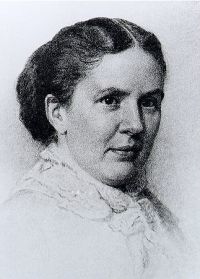 Alice C. Fletcher,
Indian Games and Dances with Native Songs
“ When he has finished dividing the sticks in this manner they are in two bunches, one toward the East and the other toward the West. The blindfold is then removed. When that is done, all the players run to the two heaps and each takes his own stick, recognizing it by the design marked or cut upon the stick. All those whose sticks were in the pile to the East must tie on a badge or streamer the color of the East, red. All those whose sticks were in the bunch toward the West must tie on the color of the West, yellow. ”
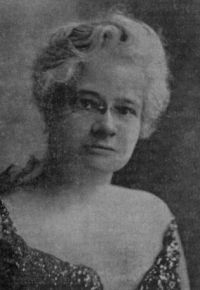 Jessie Hubbell Bancroft,
Games for the Playground, Home…
“ The players endeavor to catch it on their sticks, and keep it moving from one to another, so as to evade the odd man, who tries to recover his property. Should he succeed, he changes places with the one from whom he recovered it. The sticks must be kept upright in the air. A dropped cap may be picked up only by hand, not on a stick. ”
“ And what have you brought home with you?""A sack and a stick, and a very valuable stick, too," said the son."What!" cried the old man. "A stick! Why, you can cut a stick off any tree!""Not a stick like this, for I have only to say, 'Come forth, Stick!' and it immediately slips out and lays about the shoulders of anyone who would injure me, so that he has to cry for mercy. By the aid of my stick I have got back the magic table and lucky ass which the thief of a landlord stole from my brothers. ”
W. Hamilton Gibson,
Camp Life in the Woods and the Tricks of Trapping and Trap Making
“ There is another mode of adjusting the pieces of the dead-fall, commonly employed by professional trappers, whereby the trap is sprung by the foot of the animal in quest of the bait. This construction is shown correctly in the accompanying cut, which gives the front view, the pen being made as before. The stout crotch represented at (a) is rested on the summit of a strong peg, driven into the ground beneath the outside edge of the suspended log; (b) is the treacherous stick which seals the doom of any animal that dares rest his foot upon it. ”
Edward John Eyre,
Journals of Expeditions of Discovery into Central Australia and Overland from Adelaide to King George's Sound in the Years 1840-1…
“ A stick is sometimes made use of, if the hole be not very deep, for the same purpose, after inserting it in the hole, and twisting the rough end round and withdrawing it, he looks to see if any fur is left on the point, if so, the animal is there, but if the point of the stick shews no fur, he goes to the next hole or tree, and so on until he finds it. ”
“ Sticks should be so long that they reach to just above the waist and should not be very heavy though strong sticks are necessary for all real touring. They should have padded leather knobs at the tops, as these prevent the stick from slipping out of the hand and being dropped during a run, as well as saving the hand from blisters when the stick is much used in practising lifted stem or jump turns. ”
Girl Scouts of the United States of America, Scouting For Girls, Official Handbook of the Girl Scouts
“ Select three of your best sticks for kindling. Shave each of them almost through, for half its length, leaving lower end of shavings attached to the stick, one under the other. Stand these in a tripod, under the hanging pot, with their curls down. Around them build a small conical wigwam of the other sticks, standing each on end and slanting to a common center. The whole affair is no bigger than your hat. Leave free air spaces between the sticks. Fire requires air, and plenty of it, and it burns best when it has something to climb up on ”
Otis Tufton Mason,
Throwing-sticks in the National Museum
“ At the bottom is a hole for the reception of one finger, which enables them to grasp the piece of wood much firmer and to throw with greater force." Captain Cook's implement corresponds exactly to the specimens just described and renders it probable that this thin, parallel-sided, shallow-grooved throwing-stick, with index-finger hole placed at one side of the spear-shaft groove, extended all along the southern border of Eskimoland as far as the Aleuts of Unalashka and Attoo. ”
Otis Tufton Mason,
Throwing-sticks in the National Museum
“ At the front end of the throwing-stick a narrow piece of ivory is pegged to prevent splitting. As before intimated, this type of throwing-stick is radically different from all others in its adjustment to the pegs on the heavy harpoon. In all other examples in the world the hook or spur is on the stick and not on the weapon. ”
Rudolph Adolph Acher, The American Journal of Psychology (1910)
“ Soon the stick comes into use. Those who suffer most from this are toys, the cat, the dog, other children and adults. This tendency increases, especially with boys, from 5 to 10. Whips are made from straps and sticks or are cut from bushes and carried by the boys who constantly strike at everything that comes within reach as the following quotations will show: M., 7, carried club, stick, or cane for gun. Loved to play school and be teacher so he could whip. M., 7, struck trees and fences as "J a k: the Giant Killer." ”
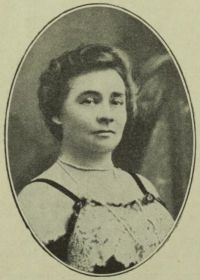 K. Langloh Parker,
Australian Legendary Tales
(1896)
“ She felt in the hole with her yam stick, and soon felt that there was something large there in the water. She cut a forked stick and tried to raise the body and get it out, for she felt sure it must be her son. But she could not raise it; stick after stick broke in the effort. ”
Related terms
Authors who wrote about “digging stick”
Albert B. ReaganBaron Rowland George Allanson-Winn HeadleyJoseph H. AdamsW. Hamilton GibsonOtis Tufton Mason Herbert Basedow
 Walter Hough
 Robert Brough SmythL. H. BransonRudolph Adolph Acher
 Katharine FurseC. Stansfeld HicksJ. G. WoodA. Neely HallD. M. M. Crichton SomervilleA. A. StewartAlice C. FletcherK. Langloh Parker
 Randolph B. MarcyVarious
W. Hamilton GibsonOtis Tufton MasonHerbert BasedowWalter HoughRobert Brough SmythL. H. BransonRudolph Adolph AcherKatharine FurseC. Stansfeld HicksJ. G. WoodA. Neely HallD. M. M. Crichton SomervilleA. A. StewartAlice C. FletcherK. Langloh ParkerRandolph B. MarcyVarious