Energeia

Definition and stakes

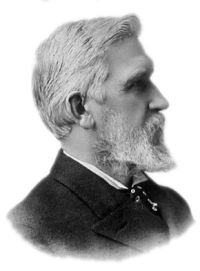
Portrait of Balfour Stewart Balfour Stewart,  The conservation of energy (1875)

“ My understanding of the doctrine is, that there are five chief powers or forces in Nature: one mechanical, or molar, the momentum of moving matter; the others molecular, or embodied in the molecules, also supposed in motion—these are, heat, light, chemical force, electricity. To these powers, which are unquestionable and distinct, it is usual to add vital force, of which, however, it is difficult to speak as a whole; but one member of our vital energies, the nerve-force, allied to electricity, fully deserves to rank in the correlation. ”
Source: Gutenberg

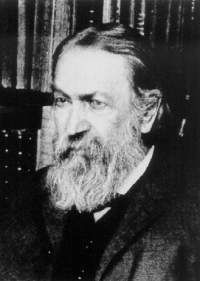
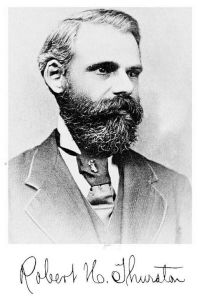
Portrait of Robert Henry Thurston Robert Henry Thurston,  A History of the Growth of the Steam-Engine

“ We find kinetic energy in the motion of the winds and the flow of running water, in the heat-motion of the sun’s rays, in heat-currents on the earth, and in many intermittent movements of bodies acted on by applied forces, natural or artificial. The potential energy of fuel and of food has already been seen to have been derived, at an earlier period, from the kinetic energy of the sun’s rays, the fuel or the food being thus made a storehouse or reservoir of energy. ”
Source: Gutenberg

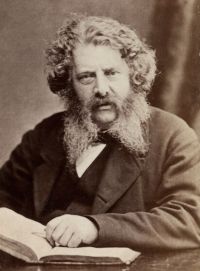
William George Hooper,  Aether and Gravitation

“ All changes of energy, therefore, are simply changes due to the difference in form in which the energy is manifested. At one time it will be manifested in the form of light, then of heat, then in mechanical motion, and so on. Joule gave us some good illustrations of this principle of the conservation of energy. He showed us how electricity could be changed into heat, and the heat into work. When light, which is a form of energy, is absorbed by any opaque body, it is found that the body which has absorbed it has become hotter. ”
Source: Gutenberg

Get perspective with Kwize: daily news enlightened by great literature