“ Fifteen times the guns have roused the many echoes of the cemetery, shaken the wreaths of jet and everlasting flowers—the light ex-voto offerings suspended at the corners of the monuments—and while a reddish mist floats and rolls with a smell of gunpowder across the city of the dead, ascends and mingles slowly with the smoke of factories in the plebeian district, the innumerable assembly disperses also, scattered through the steep streets, down the lofty steps all white among the foliage, with a confused murmur, a rippling as of waves over rocks. ”
Ex voto
Definition and stakes
The theme of “ex voto” has been addressed by authors such as Alphonse Daudet, Anonymous, Ida Husted Harper and Gaston Riou. It is often associated with terms like election, ballot, suffrage, vote and elector.
Quotes about “ex voto”
 Alphonse Daudet,
Letters from My Windmill
“ Some Maltese settling a point, no doubt, at the point of a knife....I return slowly along the ramparts to the hotel. A gorgeous scent of oranges and thujas wafts up from the plain. The air is mild and the sky almost clear.... At the end of the road, yonder, an old, walled phantom reaches upwards—the debris of some old temple. This wall is sacred. Every day, Arab women come to hang ex-voto gifts, bits of haiks and foutas, long tresses of red hair tied with silver wire, and bits of burnous.... ”
Anonymous, An Account of the Proceedings on the Trial of Susan B. Anthony…
“ Is the right to vote one of the privileges or immunities of citizens? I think the disfranchised ex-rebels, and the ex-state prisoners will all agree with me, that it is not only one of them, but the one without which all the others are nothing. Seek first the kingdom of the ballot, and all things else shall be given thee, is the political injunction.Webster, Worcester and Bouvier all define citizen to be a person, in the United States, entitled to vote and hold office. ”
 John Stuart Mill,
Thoughts on Parliamentary Reform
(1859)
“ The habit of voting at the bidding of an employer, or of a landlord, was so firmly established, that hardly anything was capable of shaking it but a strong popular enthusiasm, seldom known to exist but in a good cause. A vote given in opposition to these influences was therefore, in general, an honest, a public-spirited vote: but in any case, and by whatever motive dictated, it was almost sure to be a good vote, for it was a vote against the monster evil—the overruling influence of oligarchy. ”
 Galusha Anderson,
The story of a border city during the Civil War
(1908)
“ The stringent oath of allegiance, framed by the old Convention and rigidly required of every voter, kept many from making any attempt to deposit their ballots; not because they were not, even under such a severe test, legal voters, but because they shrank from the catechizing to which they would be subjected at the polls by men who looked with suspicion upon any one with conservative views. ”
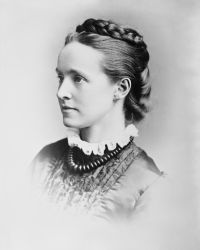 Millicent Garrett Fawcett,
Electoral Disabilities of Women
(1872)
“ The mere possession of a vote does not confirm or intensify any opinion. If any man here, at present without electoral power, became a voter to-morrow, would the mere possession of a vote affect any change in his political convictions? ”
John Rogers Commons and Edward Thomas Devine and Lilian Brandt and Thomas Sewall Adams and Ellery Channing Chilcott and Davis Rich Dewey and Albert Bushnell Hart, 1922 Encyclopædia Britannica (1922)
“ Experience has shown that the load of responsibility placed upon the voters by these new measures was sometimes more than they were willing to bear. The scanty primary votes, and the inattention to some of the referendum and initiative questions put on the ballots, were seized upon as showing that the voter was interested only in men. On the other hand, the ballots of most cities, towns and states were loaded down with long lists of officers to be chosen at each election, so that the “vote for men” was in many cases a vote in the dark. ”
Charles W. Penrose, Journal of Discourses — Volume 20…
“ There is a carelessness growing upon the people, and we perceive it to some extent in our religious affairs and public meetings, but we see it more clearly when it comes to voting, for many who have a right to vote stay away from the polls. ”
Henry Hunt, Memoirs of Henry Hunt, Esq. — Volume 2
“ This was the route which I had marked out for what I called my evening general canvass. 1t must be recollected that I never solicited or canvassed one individual for his vote; it was, on my part, a specimen of real purity and freedom of election; whilst on the other side every thing corrupt, every means of bribery, cajolery, fraud, perjury, intimidation by threats, and even violence, was resorted to for the purpose of bringing up votes, many hundreds of whom came to the poll in all appearance as reluctantly and as much against their will as a man goes to the gallows. ”
Henry A. Murray, Lands of the Slave and the Free…
“ I will now turn to a topic which probably interests the British public more than any other—except the franchise—I mean the Ballot. So much has been said about the coercion of voters by those on whom they are dependent, and so much disgraceful jobbery at elections in this country has been laid bare, that if the Ballot were really a panacea for the evil, every patriot should exert his utmost energies to forward the introduction of so essential a measure. ”
 William Jennings Bryan,
In His Image
“ Would you not think that people who inherit such a government as this would be grateful for the priceless gift and live up to every obligation of citizenship? It would seem so, and yet those acquainted with politics know that the difficult task is to get the vote out. Even in a hotly contested presidential election we never get the full vote out. If ninety per cent of the vote is polled we are happy; if eighty-five per cent, is polled we are satisfied. If it is an intermediate election the vote may be less than eighty per cent., or even seventy-five. ”
Patrick Henry, Debates in the Several State Conventions on the Adoption of the Federal Constitution (1907)
“ What can be more defective than the clause concerning the elections? The control given to Congress over the time, place, and manner of holding elections, will totally destroy the end of suffrage. The elections may be held at one place, and the most inconvenient in the state; or they may be at remote distances from those who have a right of suffrage: hence nine out of ten must either not vote at all, or vote for strangers; for the most influential characters will be applied to, to know who are the most proper to be chosen. ”
David Dudley Field, The Vote That Made the President
“ Whether the statute itself has its warrant in the Constitution is a question not necessary now to be considered. For my part, I cannot see the authority for taking out of the ballot-boxes the ballots of lawful voters and throwing them away because other voters did not vote, whatever may have been the cause of their not voting, whether they were frightened, foolish, or perverse. ”
John Stuart Mill,
Thoughts on Parliamentary Reform
(1859)
“ This is accomplished by enabling him to vote in secret; for, in that case, the man who could otherwise compel his vote, is ignorant in what direction it has been given. In all cases,therefore, in which the independent interests of the voter, those which, in propriety of language, may be called his own interests, would dictate the good and useful vote; but in which cases, at the same time, he is liable to be acted upon in the way either of good or of evil, by men whose interests would dictate a base and mischievous vote, the ballot is a great and invaluable security ... ”
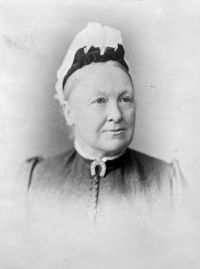 Catherine Helen Spence,
An Autobiography
“ So that reformers everywhere were eager to hear of a system of voting that would free the electors from the tyranny of parties, and at the same time render a candidate independent of the votes of heckling minorities, and dependent only on the votes of the men who believed in him and his politics. ”
 Edmund Burke,
The Works of the Right Honourable Edmund Burke…
“ No regulation was made to abolish the pernicious custom of voting by The ballot.ballot, by means of which acts of the highest concern to the Company and to the state might be done by individuals with perfect impunity; and even the body itself might be subjected to a forfeiture of all its privileges for defaults of persons who, so far from being under control, could not be so much as known in any mode of legal cognizance. ”
John Stuart Mill,
Considerations on Representative Government
“ The spirit of vote by ballot—the interpretation likely to be put on it in the mind of an elector, is that the suffrage is given to him for himself—for his particular use and benefit, and not as a trust for the public. For if it is indeed a trust, if the public are entitled to his vote, are not they entitled to know his vote? ”
 Thomas Paine,
The Writings of Thomas Paine, Complete
“ The Candidate pays the Elector for his vote, instead of the Nation paying the Representative for his time and attendance on public business. The complaint for an undue election is brought by the Candidate, as if he, and not the Electors, were the party aggrieved; and he takes on himself, at any period of the election, to break it up, by declining, as if the election was in his right and not in theirs. ”
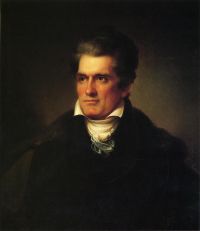 John C. Calhoun,
Works of John C. Calhoun
(1854)
“ But the few of each, who form the ticket, actually make the appointment of the electors; for the people individually, have no choice, but to vote for the one or the other ticket — or otherwise, virtually, to throw away their vote — for there would be no chance of success against the concentrated votes of the two parties. Never was there a scheme better contrived to transfer power from the body of the community, to those whose occupation is to get or hold offices, and to merge the contests of party into a mere struggle for the spoils. ”
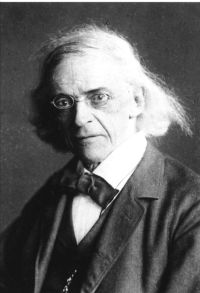 Theodor Mommsen,
The History of Rome, Book V
“ Accordingly the nobility contented themselves with making a feeble attempt to check electioneering intrigues by issuing a new law respecting the purchase of votes—which, however, was thwarted by the veto of a tribune of the people—and with turning over their votes to a candidate who, although not acceptable to them, was at least inoffensive. ”
L. K. Washburn, Is The Bible Worth Reading, and Other Essays
“ The honest, virtuous, intelligent, independent vote is the noblest power of a freeman, but the purchasable vote, the ignorant vote, the vicious and servile vote, is the opportunity of the knave and the scoundrel. The purity of the ballot is the only safety of a Republic, and no greater danger threatens this nation to-day than that which arises from the corruption of the suffrage. ”
John Stuart Mill,
Thoughts on Parliamentary Reform
(1859)
“ That if the opinion of the non-electors is likely to make the elector vote more honestly, or more beneficially, than he would vote if left to himself, they are more fit to be electors than he is, and ought to have the franchise. That whoever is fit to influence electors, is fit to be an elector. That those to whom voters ought to be responsible, should be themselves voters; and, being such, should have the safeguard of the ballot, to shield them from the undue influence of powerful individuals or classes to whom they ought not to be responsible. ”
Wiliam Cabell Bruce, Benjamin Franklin; Self-Revealed…
“ No man expressed the least inclination to be chosen. Instead of humble advertisements, entreating votes and interest, one saw before every new election requests of former members, acknowledging the honor done them by preceding elections, but setting forth their long service and attendance on the public business in that station, and praying that in consideration thereof some other person might be chosen in their room. After a dissolution, the same representatives might be and usually were re-elected without asking a vote or giving even a glass of cider to an elector. ”
D. C. Bloomer, Life and writings of Amelia Bloomer (1895)
“ Votes are unnecessarily multiplied now by so many men voting; a few could do it all, as well as to take the mass of men from their business and their families to vote. My husband votes the republican ticket, and many other men vote just as he does; then why not let my husband’s vote suffice for all who think as he does, and send the rest about their business? What need of so many men voting when all vote just alike? ”
Benjamin Harrison, Benjamin Harrison's Inaugural Address (1889)
“ It is very gratifying to observe the general interest now being manifested in the reform of our election laws. Those who have been for years calling attention to the pressing necessity of throwing about the ballot box and about the elector further safeguards, in order that our elections might not only be free and pure, but might clearly appear to be so, will welcome the accession of any who did not so soon discover the need of reform. ”
Modern Eloquence: Vol II, After-Dinner Speeches E-O
“ By what fair rule shall the stigma be put upon one section, while the other escapes? A congressional election in New York last week, with the polling place in touch of every voter, brought out only 6,000 votes of 28,000—and the lack of opposition is assigned as the natural cause. In a district in my State, in which an opposition speech has not been heard in ten years and the polling places are miles apart—under the unfair reasoning of which my section has been a constant victim—the small vote is charged to be proof of forcible suppression. ”
Anonymous, An Account of the Proceedings on the Trial of Susan B. Anthony…
“ And it is on this line that we propose to fight our battle for the ballot—all peaceably, but nevertheless persistently through to complete triumph, when all United States citizens shall be recognized as equals before the law. ”
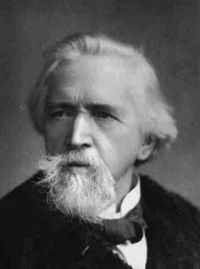 George Jacob Holyoake,
Bygones Worth Remembering, Vol…
“ New electors, who had never known the responsibility of voting, would not soon acquire the sense of it Mr. Mill thought it conduced to manliness for an elector to act in despite of his interest or resentment of his neighbours, his employer, his landlord, or his priest, when his vote became known. At every election there were martyrs on both sides ”
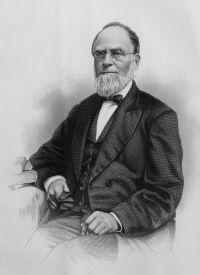 John S. C. Abbott,
The French Revolution of 1789, as Viewed in the Light of Republican Institutions
“ The nobles had obtained the decision that the people should not be allowed the secret ballot, but should vote with an audible voice. They cherished the hope that inferior people so dependent upon the higher and wealthy classes, would not venture openly to vote in opposition to the wishes of their superiors. [87] It was thought that the nobles might thus be able to control the popular election. To render this more certain, the people, in their primary assemblies, were only to choose electors; and these electors were to choose the delegates. ”
John Stuart Mill,
Thoughts on Parliamentary Reform
(1859)
“ There are occasions on which the use of the ballot is advantageous: there are occasions on which it is hurtful. If we look steadily to the end, to which all institutions profess to be directed, we shall not find it very difficult to draw the line of demarcation. 'A voter may be considered as subject to the operation of two sets of interests: the one, interests arising out of the good or evil for which he is dependent upon the will of other men; the other, interests in respect to which he cannot be considered as dependent upon any determinate man or men. ”
John Stuart Mill,
Considerations on Representative Government
(1861)
“ At every election the votes are more and more the voter's own. It is their minds, far more than their personal circumstances, that now require to be emancipated. They are no longer passive instruments of other men's will—mere organs for putting power into the hands of a controlling oligarchy. The electors themselves are becoming the oligarchy. "Exactly in proportion as the vote of the elector is determined by his own will, and not by that of somebody who is his master, his position is similar to that of a member of Parliament, and publicity is indispensable. ”
 Carl Schurz,
Speeches, correspondence and political papers of Carl Schurz
(1913)
“ That the result of Presidential elections may depend upon a very small number of electoral votes, these votes to come from States in a disturbed and abnormal condition; and 2. That the Constitutional method of counting the electoral vote, of deciding questions of legality connected with them and of determining the final result, has become a matter of dispute between interested parties. No doubt all patriotic citizens desire only to have the offices of President and Vice-President awarded to those who have been rightfully elected to them, no matter to what political party they may belong. ”
 Theodore Parker,
Speeches, Addresses, and Occasional Sermons…
“ The last election has shown us what resolute men can do on a trifling occasion, if they will. You know the efforts of the three parties—what meetings they held, what money they raised, what talent was employed, what speeches made, what ideas set forth: not a town was left unattempted; scarce a man who had wit to throw a vote, but his vote was solicited. You see the revolution which was wrought by that vigorous style of work. ”


