Faculty (psychology)

Definition and stakes

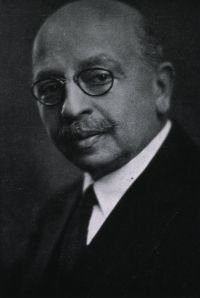
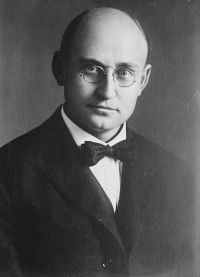
Portrait of Boris Sidis Boris Sidis,  The Foundations of Normal and Abnormal Psychology… (1914 | notes)

“ Turning now to the faculty-hypothesis, we find that it is nothing else than spiritualism under a somewhat different form. The faculty-hypothesis chops the mind into many different parts, termed faculties, one is for reading, another for speaking, another for remembering, another still for willing, and so on. Sometimes they are limited to a few, and sometimes they are multiplied to infinity. ”
Source: Wikisource

George John Romanes,  Mental Evolution in Man: Origin of Human Faculty

“ And as with memory, so with other of our mental powers, we may, I think, distinguish between a higher and a lower faculty of each; between our higher, self-conscious, reflective mental acts—the acts of our intellectual faculty—and those of our merely sensitive power. This distinction I believe to be one of the most fundamental of all the distinctions of biology, and to be one the apprehension of which is a necessary preliminary to a successful investigation of animal psychology. ”
Source: Gutenberg

M. Valentine,  Theoretical Ethics

“ There38 is, indeed, no validity in the claim of some recent psychologists that the term must be abandoned on the ground that psychology discovers only mental acts, without a psychic subject with distinct faculties back of the acts. Yet the term faculty has often been used and understood in a way inconsistent with the essential and conscious unity of the personal ego or self, making the soul seem a bundle of independent and separately acting parts of a psychical organism. ”
Source: Gutenberg

Get perspective with Kwize: daily news enlightened by great literature