Filament (botany)

Definition and stakes

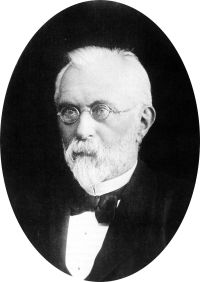
Portrait of Douglas Houghton Campbell Douglas Houghton Campbell,  Elements of Structural and Systematic Botany

“ The protoplasm of the cells has a few small granules scattered through it, and is colored uniformly of a pale blue-green. No nucleus can be seen.
If the filament is broken, there may generally be detected a delicate, colorless sheath that surrounds it, and extends beyond the end cells (Fig. 6, c) . The filament increases in length by the individual cells undergoing division, this always taking place at right angles to the axis of the filament. New filaments are produced simply by the older ones breaking into a number of pieces, each of which rapidly grows to full size.
”

Source: Gutenberg

Jane Newell Moore,  Outlines of Lessons in Botany, Part I; from Seed to Leaf

“ The use of the glass filament is simply to increase the size of the circle described, and thus make visible the movements of the stem. All young parts of stems are continually moving in circles or ellipses. "To learn how the sweeps are made, one has only to mark a line of dots along the upper side of the outstretched revolving end of such a stem, and to note that when it has moved round a quarter of a circle, these dots will be on one side; when half round, the dots occupy the lower side; and when the revolution is completed, they are again on the upper side. ”
Source: Gutenberg

Portrait of Douglas Houghton Campbell Douglas Houghton Campbell,  Elements of Structural and Systematic Botany

“ The upper part now rapidly elongates, and dividing repeatedly by cross walls, develops into a filament like the original one. In many species special zoöspores are formed, smaller than the ordinary ones, that attach themselves to the filaments bearing the female reproductive organ (oögonium) , and grow into small plants bearing the male organ (antheridium) , (Fig. 16, B) .
Fig. 16.—A, portion of a filament of Œdogonium, with two oögonia (og.) . The lower one shows the opening. B, a similar filament, to which is attached a small male plant with an antheridium (an.)
”
Source: Gutenberg

Get perspective with Kwize: daily news enlightened by great literature