Paul Klapper, College Teaching
“ This is as it should be, for after all, while the high school prepares students for college, its chief purpose is to act as a finishing school for those larger numbers of students who never go to college. ”
Paul Klapper, College Teaching
“ This is as it should be, for after all, while the high school prepares students for college, its chief purpose is to act as a finishing school for those larger numbers of students who never go to college. ”
Ralph Albert Parlette, The University of Hard Knocks
“ Unless the place is a grave! I shiver as I see the pages of school advertisements in the journals labeled "Finishing Schools," and "A Place to Finish Your Child." I know the schools generally mean all right, but I fear the students will get the idea they are being finished, which finishes them. We never finish while we live. A school finishing is a commencement, not an end-ment. ”
John S. Hart, In the School-Room: Chapters in the Philosophy of Education
“ The exit from the curriculum of the College or School, is, in truth, only the entrance into a more extended course. When your studies are nominally ended, they have really only begun. The longer you live, the more will you understand that the period of school-going is not the only, or even the main time of learning. The more thoroughly you have been taught here, the more certainly will you be a learner hereafter. I want no better test of the character of a school than the extent to which the idea prevails among its pupils and alumni, that it is a place for "finishing" one's studies. ”
Helen Reimensnyder Martin, Her Husband's Purse
“ Well named 'finishing schools!' They certainly are a girl's finish so far as common sense, capacity for usefulness, and ability to think for herself are concerned! And there actually are parents of daughters who seriously regard such schools as institutions of 'education!' Yes, education, by God! ”
Mosiah Hall, Parent and Child Volume III., Child Study and Training
“ The great question, after all, is not how much learning have you been able to put into him, but how much of the finer ambitions, how much power, how deeply and strongly they hunger for the very best. An ounce of inspiration at this time is worth more than a pound or a ton of learning; I am no foe of learning, either. The high school is and will remain the people's college. ”
P. Hume Brown, The Youth of Goethe
“ But while he was putting in a perfunctory attendance at lectures, his education was proceeding in another school—the school which, as in his after years he so insistently testified, affords the only real discipline for life—the world of real men and women. ”
 James Hutchins Baker,
Education and life
(1900)
“ We believe that a critical examination of rational courses of study in the schools would show that little of the work could well be omitted; that nearly all contributes toward the end of a well-rounded education, indeed is necessary to that end; and that the training of faculty is only well begun at the end of the high-school course. Even the study of the classics, besides other incidental advantages, trains the critical powers, refines the taste, and is in an important sense a subjective study. ”
John Kline, Student Success Act ( HR5 ; 113th Congress… (2013)
“ To help such children succeed in school, meet the State academic standards that all children are expected to meet, and graduate from high school prepared for postsecondary education and the workforce without the need for remediation. ”
Various, Popular Science Monthly (1908)
“ But accepting our colleges and universities as they are, at the same time discarding the results of tradition and of half-hearted experiment, what should the high school do? By high school we mean the instruction in the public school for four years of school life from the age of 13 or 14 to that of 17 or 18, resting on the primary and grammar school on the one hand and presumably leading to the college on the other—in most cases the last of the years in which a student lives at home and goes to school. ”
Thomas E. Sanders, Twenty Talks to Teachers (1908)
“ The high school course will prepare your boy for the deeper and broader training of the university.—If he is made of the right material he will get the university training for himself, or urge you to help him to secure it. If he does not go to the university the high school course will fit him to become a successful leader in business or lay the foundation for a professional course or career. ”
Charles S. Bryant, Popular Science Monthly (1881)
“ When the higher grades are reached, the pupils take more and more optional studies, and less and less required. And, as the curriculum widens toward the end of the course, the linguistic and scientific studies yield more and more to the inclination of the parent or the pupil, until the post-graduates of the high-school, as well as of the university, severally fall into chosen specialties, as their tastes and preparation may dictate. ”
Thomas E. Sanders, Twenty Talks to Teachers (1908)
“ Keep pupils in school longer. Hundreds of pupils are kept in school and do good work because of their desire and their parents’ desire that they graduate. The desire for a diploma may not be the highest motive for an education, but so far all of our best institutions have found it necessary to hold to the custom. ”
Willis Fletcher Johnson, "My country, 'tis of thee!"
“ But, to come back to original facts, why does it take seven or eight years to impart a common, a very common, school course which any bright boy or girl of fifteen years could master alone and unaided in a quarter of the time? ”
Civilization in the United States… (1922)
“ And now the undergraduate will emphasize study. But a sharp line must be drawn between study that looks forward merely to the A.B. degree as the end of schooling and the beginning of business, and study that is a part of professional training, that looks forward to some professional degree at Commencement or to matriculation in a graduate school. ”
 H. G. Wells,
The Salvaging of Civilization
“ As the college stage of those who do not, as a matter of fact, go to college, we have now in every civilized country the evening continuation school, the evening technical school and the works school. ”
Loyce J. McIlhenny, Careers in Atomic Energy
“ Again, as always, this is where hard work in elementary and in high school pays off: good grades in “solid” subjects are master keys to university gates. Entrance exams required by many schools are stiff, but a background of twelve years of conscientious study usually prepares you to deal with them. ”
Various, Popular Science Monthly (1910)
“ Starting, then, with the principle that the period of mental discipline is closed at the end of the school career, and that those who pass to the university come with fair mental training and sufficient intelligence, let me inquire what should be the relation of university teaching to that which the student has received at school. ”
Francis B. Pearson, The Vitalized School
“ The studies are adapted to the boy and not the boy to the studies. No boy need discontinue school to find on the outside something that is congenial, for, within the school, he may find work that represents life in all its phases. ”
Edmond Holmes, What Is and What Might Be
“ What, then, are the faculties which education is supposed to train? In my attempt to answer this question I will confine myself to the elementary school,—the only school which I can pretend to know well. A glance at the time-table of an ordinary elementary school might suggest to us that there were two chief groups of faculties to be trained—those which perceive and those which express, those which take in and those which give out. When such subjects as History, Geography, or Science are being taught, the child's perceptive faculties are being trained. ”
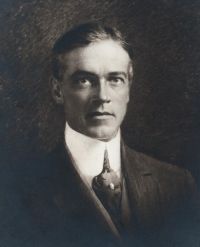 Victor Mapes,
Heart and Soul by Maveric Post
“ Even if your boy has never seen the inside of a school-book, before the age of thirteen or fourteen, that need not prevent him from being prepared for college, just as well and at about the same time, as the average boy who has been attending school from the age of five, or six. ”
Adoniram Judson Ladd, On the Firing Line in Education
“ Do you know that about one-fourth of all students who enter the freshman classes of our high schools, thruout the United States, drop out before the close of the first semester? Do you know, too, that the elimination continues right along until that one-fourth is made more than one-half before graduation day arrives? Now, these boys and girls enter full of hope and expectation, eager and ambitious for what the high school is supposed to do for them; they do not plan to drop out before completing the course—nor do their parents plan to have them do so. ”
H. Fielding, The Passing of Empire
“ Now seeing this difference, how much education is there in school or college? In the classrooms there is none. All that is given in classes is instruction, which may be useful or detrimental inasmuch as it helps personality or not. ”
John Percival, Popular Science Monthly (1904)
“ The interval has confirmed me in the opinion that it would be a distinct gain to many boys to take advantage of such a scheme if made available. They would go out into the world from the university at the age of twenty far better equipped and prepared for life, both as regards knowledge and interests, tastes and character, than by going straight from school at nineteen. ”
John Franklin Bobbitt, What the Schools Teach and Might Teach
“ On the other hand, those who are practically certain to drop out of school at the end of the grammar grades or junior high school should have full opportunities for applied science, applied design, practical mathematics, civics, hygiene, vocational studies, etc. ”
 Rose Wilder Lane,
Henry Ford's Own Story
(1917)
“ To my mind, the usefulness of a school ends when it has taught a man to read and write and figure, and has brought out his capacity for being interested in his line. After that, let the man or boy get after what he is interested in, and get after it with all his might, and keep going ahead—that is school. ”
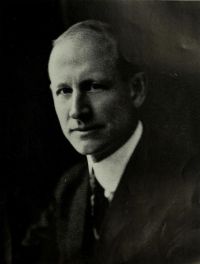 Frank Pierrepont Graves,
A student's history of education
“ In connection with higher education there are such new tendencies as university extension, correspondence courses, summer sessions, university interest in the practical problems of the people, the correlation of the first two years of college with the secondary school, more flexible entrance requirements, an increasing number of fields of professional work, and, above all, the professional training of teachers through Departments of Education, Teachers Colleges, and Schools of Education. ”
“ Much has been heard of the educational ladder—incidentally it may be noted that the educational sieve is equally necessary, though not equally popular—and some attempts have been made to enable a boy or girl of parts to climb from the elementary school to the university without excessive difficulty. To supplement the glaring deficiencies of elementary education a few—ridiculously few—continuation schools have been established. ”
Charlotte M. Mason, An Essay Towards a Philosophy of Education…
“ I have put the case for Continuation Schools as strongly as may be, but there is a more excellent way. In these days of high wages it may well happen that parents will be willing to let their children remain at school until the end of their seventeenth year, in which case they will be able to go on with the ‘secondary education’ which they have begun at the age of six and we shall see a new thing in the world. ”
Caroline French Benton, The Complete Club Book for Women
“ Beautifying the schoolhouse and schoolroom, having a library and a few pictures and casts, and making school life attractive are suggestions to be worked out, and the value of teaching sewing, cooking, the care of babies to girls, and manual training to boys.IV—HIGH SCHOOLSThe subject of the high schools will naturally succeed this and the first paper may take up the question, Why do so few boys and girls go to high school? Is it only because so many go into business life? Is the preparation for college adequate? ”
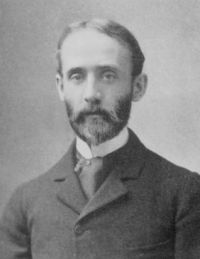 Varnum Lansing Collins,
1922 Encyclopædia Britannica
(1922)
“ The elective principle was broadened so as to bridge the gaps between preparatory school and college, and underclass and upperclass years, giving the student in his underclass years a broad general training in subjects deemed fundamental to real education, and in his upperclass years requiring him to follow continuous work in one of three divisions of studies, the literary-philosophical, the historical-economic, or the mathematical-scientific. ”
 Angela Brazil,
The Girls of St. Cyprian's: A Tale of School Life
“ Those who looked forward to a University degree, or any career in which public examinations must play an important part, were placed on the "Collegiate" side, and trained accordingly in the necessary classics, mathematics and physics, which would fit them for matriculation, or as candidates for certain scholarships. ”
 John Masefield,
ODTAA: A novel
(1926)
“ You go to a prep. school for three years, then to a public school for five years, then you ask to be kept for another seven while you learn a profession, and by God, when you’ve learnt it, you can’t make a living at it. ”
 Manly P. Hall,
The Initiates of the Flame
“ Those who would go into the greater colleges and universities must first, day by day, and year by year, work through the common school of life, and present to their new teachers the diplomas they have won, upon which is written the name that none may read save those who have received it. ”
Charles Hubbard Judd, Introduction to the scientific study of education
“ The growth of summer schools at universities and the frequent transfer of normal-school graduates to college and graduate courses show with clearness the desire of teachers to enjoy the advantages of all kinds of higher education. ”
Marguerite Dickson, Vocational Guidance for Girls
“ To-day we have many courses, or in the larger cities different schools fit boys and girls for varying paths in life. The college-preparatory course or the classical high school leads to college. The commercial course or school leads to office work. The manual training or industrial or practical arts course or high school leads to efficient handwork. The trade school leads to definite occupations. ”
 Fredrika Bremer,
The Homes of the New World
(1853)
“ She leaves discipline and severity to the school, to which the child is sent early. And the school does what it can; gives style and grace to the outward being, but leaves the inward very much, probably, as it found it. ”
M. Alderton Pink, Procrustes; or, the future of English education (1927)
“ The fact is that the ordinary secondary school is attempting—unsuccessfully, of course—to give the same treatment to pupils of various types who, owing to lack of sufficiently varied provision for higher education, now find themselves herded together. ”
C. O'Brien, Frank Hardy's choice
“ Evening schools, then, are meant to make up to the young working man or woman for the short period of their early school life, by giving them opportunities of learning thoroughly what in most cases was only learned imperfectly. ”
Adoniram Judson Ladd, On the Firing Line in Education
“ Recall what is meant by the work of a semester hour and you will easily see how broad our academic requirement is. It means that in addition to one's high school work he is required to carry the subject in practically daily recitation for from 21⁄2 to 3 years in the University. To some that may seem too much, but we feel that the first requirement for teaching in the high school should be a thoro grounding in the subjects to be taught. ”
H. J. Wilmot-Buxton, The Life of Duty, v. 2
“ I want you to think of another school, and another kind of lessons, which are far more important than all else in the world. The time comes when the schoolboy can lay his books by, and when the young man quits college, they have finished their education. ”
Edith Ferguson Black, A Beautiful Possibility
“ High school and college can give much, but these are never on their programmes. All the book processes that we go to the schools for and commonly call our 'education' give no more than opportunity to win the indispensables of education. ”
Thomas E. Sanders, Twenty Talks to Teachers (1908)
“ A high school education will make your boy a more positive force in his community, his state, and the nation, socially, economically, and politically.—With many noted exceptions, in the future as in the past, our real constructive men, men whose monuments are their work, will be men trained and disciplined in the best schools of the country. ”
Laura A. Knott, Vesper Talks to Girls
“ School days deal with an earlier period of life than the college age, when the student is usually more susceptible to strong influences. The school that first gave you the determination to do something worth while in the world, the school that called forth your best self and set your heart on fire with a noble purpose, has a claim upon you that you can never forget. ”
Adoniram Judson Ladd, On the Firing Line in Education
“ No normal school now completes its work with less than one full year beyond the completion of a four-year high school course, and two years beyond is rapidly getting to be the standard. So that normal school graduation gives the prospective teacher of the grades at least four years of academic, and from one to two years of professional and academic work beyond the point to be reached by "his most advanced pupil." ”
 Alec WaughCharles Hubbard JuddJohn Franklin BobbittFrank Pierrepont GravesFrancis B. PearsonM. Alderton PinkJohn L. AlexanderMarguerite DicksonLaura A. KnottC. O'BrienJohn PercivalJames Hutchins BakerVictor MapesH. J. Wilmot-Buxton
 Ellen KeyWillis Fletcher Johnson
 Simon Newcomb
