
Finite verb

Definition and stakes

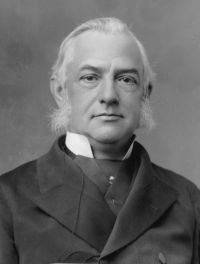
Portrait of Goold Brown Goold Brown,  The Grammar of English Grammars…

“ For though the infinitive verb never agrees with a subject or nominative, like a finite verb, it most commonly has a very obvious reference to something which is the subject of the being, action, or passion, which it expresses; and this reference is one of the chief points of difference between the infinitive and a noun. S. S. Greene, in a recent grammar, absurdly parses infinitives "as nouns," and by the common rules for nouns, though he begins with calling them verbs. ”
Source: Wikisource

Portrait of Goold Brown Goold Brown,  The Grammar of English Grammars

“ The nominative case is that form or state of a noun or pronoun which usually denotes the subject of a finite verb.
Fall, or Shall fall, is an irregular active-intransitive verb, from fall, fell, falling, fallen; found in the indicative mood, first-future tense, third person, and plural number. 1. A verb is a word that signifies to be, to act, or to be acted upon. 2. An irregular verb is a verb that does not form the preterit and the perfect participle by assuming d or ed. 3. An active-intransitive verb is a verb that expresses an action which has no person or thing for its object.
”
Source: Gutenberg

Get perspective with Kwize: daily news enlightened by great literature