Foreshortening

Definition and stakes

William Henry Lang,  1911 Encyclopædia Britannica (1911)

“ In the former the prothallus produces one or more fern-plants vegetatively, the projection which develops into the sporophyte in many cases occupying the position of an archegonium. In some apogamous Ferns sporangia may occur on the prothallus and the vegetative organs of the sporophyte may also occur singly. In apospory the converse phenomenon is seen, the gametophyte springing vegetatively from the sporangium, receptacle of the sorus, or leaf-margin of the fern-plant. In a number of cases, though not in all, apospory appears to be correlated with a failure of the sporangia to develop. ”

Source: Wikisource

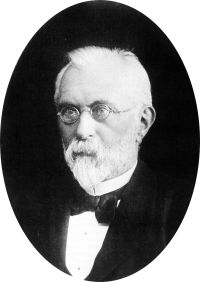
Portrait of A. C. Seward A. C. Seward,  Fossil plants, Vol. 2: A text-book for students of botany and geology (1910)

“ The sporangia [106] (fig. 126, D, F) are usually reniform and compressed in a direction parallel to the surface of the cone-scales; they are developed from the upper surface and close to the base of the fertile leaf to which they are attached by a short and thick stalk (e.g. L. inundatum) or by a longer and more slender pedicel (L. Phlegmaria, fig. 126, E) . On maturity the sporangia open as two valves in the plane of compression 45and the line of dehiscence is determined in some species at least by the occurrence of smaller cells in the wall. ”
Source: Gutenberg

Portrait of Maxwell T. Masters Maxwell T. Masters,  Vegetable Teratology

“ The word Displacement is here used to signify the unusual position of an organ; while Heterotaxy may serve to include those cases where a new growth makes its appearance in an unwonted situation, as, for instance, a leaf-bud on a root, &c. Prolification is also included under this heading, the unusual position of the buds in these cases being of graver import than the mere increase in number. Alterations in the position of the sexual organs are spoken of under the head of Heterogamy. ”
Source: Gutenberg

Get perspective with Kwize: daily news enlightened by great literature