Fuss

Definition and stakes

Albert Barrère,  Argot and Slang

“ Faire ——, to make a great fuss. Concerning this term Michel says:—“Terme des camelots et des saltimbanques, emprunté à l’ancienne germania espagnole ou [302] ‘hacer pala’ se disait quand un voleur se plaçait devant la personne qu’il s’agissait de voler, dans le but d’occuper ses yeux.” (Printers’) Pallas, emphatic speech. Faire ——, to make a great fuss apropos of nothing. Concerning the expression Boutmy says:—“C’est sans doute par une reminiscence classique qu’on a emprunté ironiquement, pour désigner ce genre de discours, l’un des noms de la sage Minerve, déesse de l’éloquence.” ”
Source: Gutenberg

Agnes Giberne,  Everybody's business

“ On Sunday—only this last Sunday—I gave out that one hundred pounds more would be required; and the giver of this has evidently reckoned that the neighbourhood might make up ten pounds of that amount. He has reckoned rightly too. Seven of the ten we have already; less than three more wanted. A mere nothing! But ninety pounds! And brought to the back door in such a quiet way. No fuss or ostentation. I am utterly at a loss. And we shall have to be at a loss. The good man does not mean it to be known—whoever he is and of course we cannot try to find out. He has a right to his secret if he chooses. ”
Source: Gutenberg

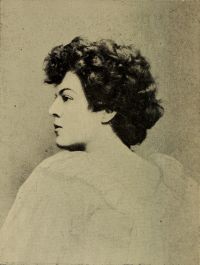
Portrait of Dora Sigerson Shorter Dora Sigerson Shorter,  The Foolish Old Man (1907)

“ If you should wed, may a father's curse
⁠Be your swift and sure undoing.
“My curse shall feed on your fields of corn,
⁠On your roof-tree make its nesting,
Your wife shall wish your child unborn
⁠As he pines on her sore heart resting.”
Now when this cruel oath he said
⁠The youth did chide him, crying,
“Since I have neither field nor bed
⁠Your curse shall fall to dying.
”
Source: Wikisource

Get perspective with Kwize: daily news enlightened by great literature