 F. Scott Fitzgerald,
Tender Is the Night
(1934)
F. Scott Fitzgerald,
Tender Is the Night
(1934)
“ "I never understood what common sense meant applied to complicated problems--unless it means that a general practitioner can perform a better operation than a specialist." ”
A general practitioner (GP) is a medical doctor specializing in primary care, offering holistic, ongoing healthcare tailored to patients' diverse needs. Their role encompasses preventive care, the management of chronic conditions, and mental health support, which can vary depending on the region and context. Authors such as F.
Scott Fitzgerald emphasized the broad scope of GPs' expertise in contrast to that of specialists, while Oliver Wendell Holmes highlighted the demanding nature of their lifestyle compared to their specialized counterparts. Arthur Conan Doyle portrayed GPs as essential members of the community, linking clinical knowledge with a sense of social duty. These viewpoints reinforce the GP’s lasting significance as a fundamental pillar of accessible, well-rounded healthcare, combining scientific precision with individualized care.
F. Scott Fitzgerald,
Tender Is the Night
(1934)
“ "I never understood what common sense meant applied to complicated problems--unless it means that a general practitioner can perform a better operation than a specialist." ”
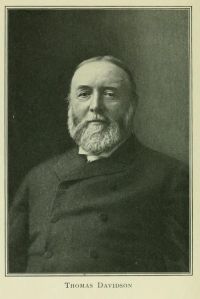 Thomas Davidson,
Chambers's Twentieth Century Dictionary 1908…
(1908)
Thomas Davidson,
Chambers's Twentieth Century Dictionary 1908…
(1908)
“ General practitioner, a physician who devotes himself to general practice rather than to special diseases; General principle, a principle to which there are no exceptions within its range of application ”
Ray Vaughn Pierce, The People's Common Sense Medical Adviser in Plain English
“ Thus it so often happens that the general practitioner pursues old methods of treatment which science has long since replaced with others, acknowledged to be superior. The specialist, on the contrary, by confining his studies and researches to one class of diseases only, is enabled to inform himself thoroughly and accurately on all the improvements made in the methods and means of practice in his special department. ”
Sylvester Maxwell Lambert, A Yankee Doctor in Paradise
“ The general practitioner, who attends one patient at a time, must know something of the sick man’s habits, environment and psychic condition. The health physician in primitive countries has these problems multiplied by thousands. ”
| override_editor, Bench and bar of Colorado (1917)
“ The physician, whether as a specialist or a general practitioner, by years of study, experience and ability, becomes an authority, and the record of his experience and his dissertations fill the pages of the medical journals, and his name and fame exist in records more enduring than brass. ”
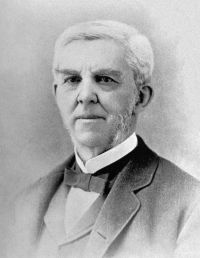 Oliver Wendell Holmes Sr.,
Over the Teacups
(1891)
Oliver Wendell Holmes Sr.,
Over the Teacups
(1891)
“ It is a great luxury to practise as a specialist in almost any class of diseases. The special practitioner has his own hours, hardly needs a night-bell, can have his residence out of the town in which he exercises his calling, in short, lives like a gentleman; while the hard-worked general practitioner submits to a servitude more exacting than that of the man who is employed in his stable or in his kitchen. ”
 Elizabeth Cleghorn Gaskell,
Mrs. Gaskell
Elizabeth Cleghorn Gaskell,
Mrs. Gaskell
“ The great Sir Everard Home used to say, ‘A general practitioner should either have a very good manner, or a very bad one.’ Now, in the latter case, he must be possessed of talents and acquirements sufficient to ensure his being sought after, whatever his manner might be. ”
 Howard Atwood Kelly,
American Medical Biographies
(1920)
Howard Atwood Kelly,
American Medical Biographies
(1920)
“ He thus became by successive degrees a leading consultant in a great metropolis, a well-read scientific physician, an acceptable teacher, and a pathologist to a grade rarely found in the ranks of our general practitioners. ”
Various, The Hospital Bulletin, Vol. V, No…
“ Changed as our relationship to the community may be in some respects XXby the translation of many of the brightest and best of our cult into the ranks of the specialist, it is still and always will be the general practitioner who is looked up to as "the physician," and by his work in professional and private life our profession will be judged. ”
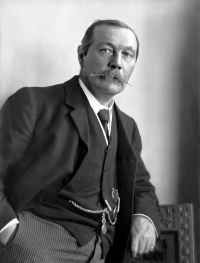 Arthur Conan Doyle,
Round the Red Lamp: Being Facts and Fancies of Medical Life
Arthur Conan Doyle,
Round the Red Lamp: Being Facts and Fancies of Medical Life
“ The second, with the ruddy face and the merry brown eyes, is a general practitioner, a man of vast experience, who, with his three assistants and his five horses, takes twenty-five hundred a year in half-crown visits and shilling consultations out of the poorest quarter of a great city. ”
 Havelock Ellis,
Essays in War-Time: Further Studies in the Task of Social Hygiene
Havelock Ellis,
Essays in War-Time: Further Studies in the Task of Social Hygiene
“ In the first place, medicine has outgrown the capacity of any individual doctor; the only adequate private practitioner must have a sound general knowledge of medicine with an expert knowledge of a dozen specialties; that is to say, he must give place to a staff of doctors acting co-ordinately, for the present system, or lack of system, by which a patient wanders at random from private practitioner to specialist, from specialist to specialist ad infinitum, is altogether mischievous. ”
Henry William Fuller, Advice to medical students (1857)
“ Show yourselves possessed of these qualifications, devoted to your profession, and willing to make the sacrifices it entails, and you are certain of success, whether you be physicians, surgeons, or general practitioners. Without these qualities your career will be uncertain, and will be marked by constant vexation and disappointment. Your dearest friends will be unable to assist you, and the public will not give you their confidence. ”
Worthington Hooker, Physician and patient (1849)
“ But no one can be considered as a regular practitioner, or a fit associate in consultation, whose practice is based on an exclusive dogma, to the rejection of the accumulated experience of the profession, and of the aids actually furnished by anatomy, physiology, pathology, and organic chemistry. ”
Oliver Wendell Holmes, Medical Essays, 1842-1882
“ Oftentimes in finding how sadly ignorant of really essential and vital facts and rules were some of those whom we had been larding with the choicest scraps of science, I have doubted whether the old one-man system of teaching, when the one man was of the right sort, did not turn out better working physicians than our more elaborate method. The best practitioner I ever knew was mainly shaped to excellence in that way. ”
A system of practical medicine…
“ Consequently, the practitioner who not only sees clearly the objects most desirable to accomplish, but who most judiciously selects and adjusts the means or agents he uses to the special conditions of each patient, will meet with the highest degree of clinical success. ”
James J. Walsh, Makers of Modern Medicine
“ The physician who is not also a scholar may be a more or less successful practitioner, but his influence will be confined, his methods mechanical and his interests narrow. The doctor, the lawyer and the minister of religion can do but inferior work, unless to a knowledge of their several sciences they bring the insight, the wide outlook, and the confidence which nothing but intimate acquaintance with the best that has been thought and said can confer. ”
Various, The Practitioner. May, 1869
“ These are the aims of the modern practitioner—not so much the alleviation of symptoms as the removal of the morbid state—not soothing his patient, but saving his life. That he is capable of doing this by studying pathology and disregarding the authority of the ancients is no longer a matter of opinion, but is positively demonstrated, by attending to the other principle, which also is not referred to by Dr. ”
R. G. Latham, Opuscula: Essays chiefly Philological and Ethnographical
“ I am quite satisfied that as far as the merits or demerits of an education contribute to the position of a profession, we may take ours as we find it, and yet hold our own. Nevertheless, lest the position given to medicine by its pre-eminent prominence, in conjunction with the church and bar, as one of the so-called learned professions, should encourage the idea that a multiplicity of accomplishments should be the character of a full and perfect medical practitioner, one or two important realities in respect to our position should be indicated. ”
 Thomas Henry Huxley,
Lay Sermons, Addresses and Reviews
Thomas Henry Huxley,
Lay Sermons, Addresses and Reviews
“ There is another profession, to the members of which, I think, a certain preliminary knowledge of physical science might be quite as valuable as to the medical man. The practitioner of medicine sets before himself the noble object of taking care of man's bodily welfare ”
Oliver Wendell Holmes, Medical Essays, 1842-1882
“ If there happened to be among my audience any person who wished to know on what principles the patient should choose his physician, I should give him these few precepts to think over: Choose a man who is personally agreeable, for a daily visit from an intelligent, amiable, pleasant, sympathetic person will cost you no more than one from a sloven or a boor, and his presence will do more for you than any prescription the other will order. Let him be a man of recognized good sense in other matters, and the chance is that he will be sensible as a practitioner. ”
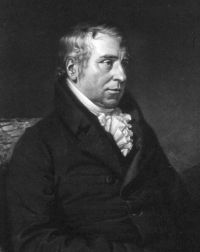 John Haslam,
Observations on Madness and Melancholy
John Haslam,
Observations on Madness and Melancholy
“ To have a thorough knowledge of the nature, extent, and rectitude of the human faculties, is particularly incumbent on him who undertakes to write of them in their distempered state; and, in a legal point of view, it is most important that the medical practitioner should be enabled to establish the state of the patient’s case, as a departure from that which is reason. ”
“ And this is what the physician has to do, and in this the art of medicine consists: for medicine may be regarded generally as the knowledge of the loves and desires of the body, and how to satisfy them or not; and the best physician is he who is able to separate fair love from foul, or to convert one into the other; and he who knows how to eradicate and how to implant love, whichever is required, and can reconcile the most hostile elements in the constitution and make them loving friends, is a skilful practitioner. ”
Thomas Henry Huxley,
Science and Culture, and Other Essays
“ I speak in the presence of those who know practically what medical education is; for I may assume that a large proportion of my hearers are more or less advanced students of medicine. I appeal to the most industrious and conscientious among you, to those who are most deeply penetrated with a sense of the extremely serious responsibilities which attach to the calling of a medical practitioner, when I ask whether, out of the four years which you devote to your studies, you ought to spare even so much as an hour for any work which does not tend directly to fit you for your duties? ”
Sinclair Lewis, Arrowsmith (1925)
“ Doctor, are you sending your patients off to specialists for tonsil removal or to sanitoriums for electric, etc., treatment? If so, you are losing the chance to show yourself one of the distinguished{154} powers in the domain of medical advancement in your locality, and losing a lot of big fees. Don’t you WANT to be a high-class practitioner? ”
R. Vashon Rogers, The Law and Medical Men
“ There is an implied obligation on a man holding himself out to the community as a physician and surgeon, and practising his profession, that he should possess the ordinary skill requisite for reasonable success, and that he should attend to the case with due care (122) . If the patient knows of the practitioner’s want of skill, he cannot complain of the lack of that which he knew did not exist. ”
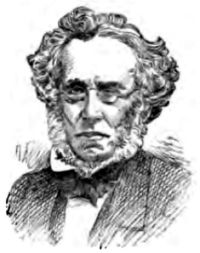 Hugh Lenox Hodge,
A Memoir of Thomas C. James, M. D.
(1843)
Hugh Lenox Hodge,
A Memoir of Thomas C. James, M. D.
(1843)
“ As a practitioner, he was remarkable for his knowledge, and for his judgment in the selection and application of remedial measures, rather than for the novelty or boldness of his prescriptions. He was well read in his profession, learned in the opinions and practices of others, well imbued with all that collateral information, so important for all professional men, especially for the physician; and interested in every thing suited to advance the interests of the profession, to enlarge the boundaries, or to increase the efficiency of medical science. He was a scientific physician ”
Worthington Hooker, Physician and patient (1849)
“ He sees that there are some agencies at work, which are hidden from his view. Under such circumstances, while the careless and adventurous practitioner makes up his theory of the case confidently, and acts upon it, supplying what is not known from his own imagination, and mingling all together in one confused mass; the judicious physician, on the other hand, cautiously distinguishes between what he actually knows and what may be supposed, acts upon this knowledge, and watches for farther developments to clear up what is doubtful. ”
Worthington Hooker, Physician and patient (1849)
“ Medicine is a liberal profession, and those admitted into its ranks should found their expectations of practice upon the extent of their qualifications, not on intrigue or artifice.§ 2. A physician, in his intercourse with a patient under the care of another practitioner, should observe the strictest caution and reserve. No meddling inquiries should be made; no disingenuous hints given relative to the nature and treatment of his disorder; nor any course of conduct pursued that may directly or indirectly tend to diminish the trust reposed in the physician employed. ”
Edward Barlow, Transactions of the Provincial Medical and Surgical Association (1833)
“ The enlightened practitioner will, so far as science and experience can guide him, lean to the use of the former class of remedies as most intelligible in their operation, more manageable under varying circumstances, and, on these accounts, more certain in their results ”
James Johnson, Pilgrimages to the Spas in Pursuit of Health and Recreation
“ I have yet to learn, however, why a physician should be debarred from indulgence in general observations or reflections, and confined exclusively to professional topics. His education, habits of thought, and knowledge of human nature do not particularly disqualify him for a task which is daily undertaken by people of all grades of acquirement, and degrees of ability. ”
Multiple, Dictionary of National Biography… (1927)
“ She thereupon obtained from the Society the authorization to get her medical education privately from teachers of recognized medical schools, took the examinations of the Society, and in 1865 obtained its licence to practise, thus qualifying as a medical practitioner. ”
John Victor Lacroix, Lameness of the Horse
“ How much better it would be, if the practitioner does not see fit to call in a competent consultant, to prescribe a suitable agent to be given internally, and to recommend complete rest for the subject. ”
H. Caulton Reeks, Diseases of the Horse's Foot
“ In our opinion, the colours in which the results of the operation are there painted are far too rosy. The practitioner who has before him the task of satisfying a client as to what will or what will not be the results of an operation he has suggested will do well to weigh each side of the argument carefully, and endeavour in his explanation to strike the happy mean. ”
Edward Hazen, Popular Technology; or, Professions and Trades…
“ Diseases are often stubborn or incurable, and effectually baffle the most skilful practitioner. In most cases, however, diseases are under the control of medical skill; and the high satisfaction which a benevolent physician feels, in relieving the sufferings of his fellow-creatures, may serve as a recompense for the many adverse circumstances which attend the profession. ”
R. J. M. Buchanan, Text-book of forensic medicine and toxicology
“ The majority of medical students and practitioners may consider a simple exercise of common sense in the application of their general professional knowledge to the elucidation of problems of medico-legal import all that is requisite, and that no special training is necessary for the purpose. ”
Edward Hazen, Popular Technology; or, Professions and Trades…
“ Among the various avocations of men, that of the physician deserves to be placed in the foremost rank. The profession is founded in the multiplicity of diseases to which humanity is liable, and in the medical qualities of certain substances, which have been found to supply a remedy. ”
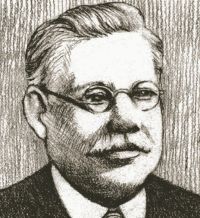 Charles Hose,
The Pagan Tribes of Borneo
Charles Hose,
The Pagan Tribes of Borneo
“ The first two modes of treatment are not considered to demand the skill of a specialist for their application, but the third and fourth are undertaken only by those who have special powers and knowledge. ”
R. Austin Freeman, The Mystery of 31 New Inn
“ At each visit on his round, the practitioner finds himself concerned with a particular, self-contained group of phenomena which he must consider at the moment with the utmost concentration, but which he must instantly dismiss from his mind as he moves on to the next case. ”
John Kidd, Observations on medical reform (1841)
“ The most prominent and most general object of the advocates of Medical Reform appears to be a uniformity of qualification, to be tested by a public examination, in all the candidates for a license to practise medicine. ”
Various, The Brooklyn Medical Journal. Vol…
“ There are many learned men in the profession and there is a wide range of special learning which is the common property of the profession, and all are more or less adept in the use of agencies of the art. There is, likewise, a vast amount of patient and uncompensated care given in the routine of practice, which is a natural outcome of the practice of the medical art. ”
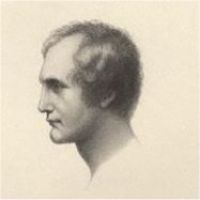 Southwood Smith,
A Treatise on Fever
Southwood Smith,
A Treatise on Fever
“ To a certain extent, however, it is even already sufficiently perfect to afford the physician an invaluable guide in the conduct of his practice; and the steps that are wanting to complete the knowledge we possess (as far as human knowledge can be complete) future labour and perseverance will assuredly supply. ”
Henry William Fuller, Advice to medical students (1857)
“ And when you quit this scene of your early labours to assume the responsibility of medical practitioners, take heed lest you allow the anxieties of life to lead you astray from the path you have chosen. Call to mind the good advice you have received within these walls, and act on it steadily and consistently. Remember that your success depends greatly upon your character, and not merely on attaining a particular grade in the profession. ”
Hugh Lenox HodgeEdward BarlowR. Vashon RogersHenry William FullerJohn Victor LacroixJohn HaslamWorthington HookerThomas Henry Huxley PlatoSinclair LewisVariousElizabeth Cleghorn GaskellHavelock Ellis| override_editorF. Scott FitzgeraldSylvester Maxwell LambertRay Vaughn PierceThomas DavidsonOliver Wendell Holmes Sr.