Glacial drift

Definition and stakes

Various,  The Journal of Geology, January-February 1893

“ The advocates of the unity of the glacial period maintain that such beds of organic matter might become interbedded with morainic debris during minor oscillations of the ice's edge. The phenomena of existing glaciers make it evident that forest beds or soils might be enclosed by the deposits of an oscillating ice edge. By repeated oscillations of the ice's edge during the general retreat of the ice, such vegetal beds might become interstratified with glacial drift more or less frequently over all the area once covered by the ice, and from which it has now disappeared. ”
Source: Gutenberg

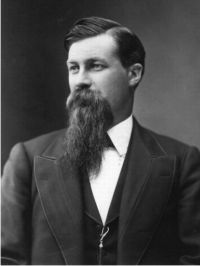
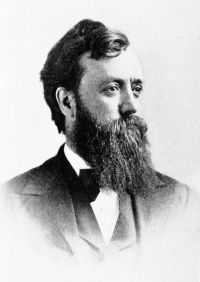
Portrait of Newton Horace Winchell Newton Horace Winchell,  Popular Science Monthly (1873)

“ It is proposed to review, in a non-technical way, the phenomena of the drift of the Northwest, and to offer a few thoughts on the glacier theory, and its application to the explanation of those phenomena.
In general, the term drift applies to whatever lies on the surface of the rocky framework unconsolidated, whatever be its origin or lithological character. Glacial drift is that which has been transported by the agency of ice, or by ice and water, from regions farther north, and spread over the surface of the country. It may embrace bowlders, gravel, and clay.
”
Source: Wikisource

Wallace Walter Atwood,  The Geography of the Region about Devil's Lake and the Dalles of the Wisconsin

“ Another characteristic of glacial drift, and one which clearly distinguishes it from all other formations with which it might be confounded, is easily understood from its method of formation. If the ice in its motion holds down rock debris upon the rock surface over which it passes with such pressure as to polish and striate the bed-rock, the material carried will itself suffer wear comparable to that which it inflicts. ”
Source: Gutenberg

Get perspective with Kwize: daily news enlightened by great literature