Guttural consonant

Definition and stakes

The Book of the Thousand Nights and a Night… (1886)

“ But among those consonants there are three, called weak letters (Hurúf al-illah) , which have a particular organic affinity to these vowel sounds: the guttural Hamzah, which is akin to a, the palatal Yá, which is related to i, and the labial Wáw, which is homogeneous with u. Where any of the weak letters follows a vowel of its own class, either at the end of a word or being itself followed by another consonant, it draws out or lengthens the preceding vowel and is in this sense called a letter of prolongation (Harf al-Madd) . ”
Source: Gutenberg

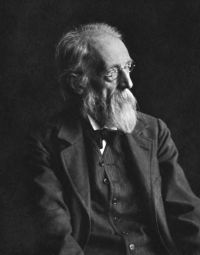
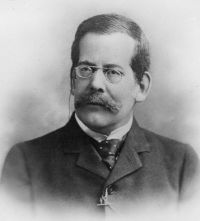
Portrait of Henry Sweet Henry Sweet,  1911 Encyclopædia Britannica (1911)

“ Combinations of stops and vowel-like consonants (tr, gl, kw) are glideless in English and most other languages. In English the breath-glide after a voiceless stop unvoices the beginning of the following vowel-like consonant; thus try is almost (trhrai) .
Vowel-glides.—Vowels are begun and ended in various ways. In the “gradual beginning,” which is the usual one in English and French, the glottis is gradually narrowed while breath is being emitted. In the “clear” beginning the breath is kept back till the glottis is closed for voice, which begins without any “breathiness.”
”
Source: Wikisource

Harold Newton Clare,  The Choirmaster's Manual (1908)

“ We can hardly exaggerate the effect of a consonant, unless it be "s" or "f," and such diphthongs as "ch" and "sh." Nevertheless, the final consonant of a word or syllable must never be heard unless the very end of the value of the note is reached on the vowel-sound. ”
Source: Wikisource

Get perspective with Kwize: daily news enlightened by great literature