“ From Harmony, from heavenly Harmony This universal frame began: When nature underneath a heap Of jarring atoms lay And could not heave her head, The tuneful voice was heard from high Arise, ye more than dead! Then cold, and hot, and moist, and dry In order to their stations leap, And Music's power obey. From harmony, from heavenly harmony This universal frame began: From harmony to harmony Through all the compass of the notes it ran, The diapason closing full in Man. What passion cannot Music raise and quell? ”
Harmony (music)
Definition and stakes
The theme of “harmony (music)” has been addressed by authors such as Daniel Gregory Mason, John Sullivan Dwight, H. Ernest Hunt, John Weeks Moore and Aubertine Woodward Moore. It is often associated with terms like melody, rhythm, emotion, soul and musical.
Quotes about “harmony (music)”
Lilian Staveley, The Golden Fountain
“ Since coming into this new way of living, the more I come into contact with music the more I sense a mysterious connection between melody—the soul—and her origin. Alone out of all the sciences and arts, music has no foundation upon anything on earth. There is no music in nature until the soul, come to a perfect harmony within herself, brings out the hidden harmony in all creation, and, turning it to melody within herself, returns it to her Lord in song, whether by outward instrument or inward love. ”
Various, The Continental Monthly, Vol. 4…
“ Unity is first manifested in the rhythm; then, as the tones consecutively follow each other, the succeeding one always born and growing immediately from the one just expiring, in the consequent melody; and lastly, as the tones progress simultaneously, hand to hand, and heart to heart, with the single line or passion of the melody, conditioned and responding to it in all its varied phases— (the individual and collective, the soul and its surroundings) —the grand diapason of harmony rolls on—and the magic unity of music is complete! ”
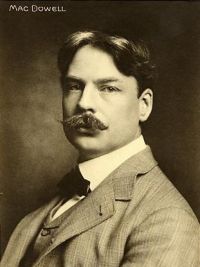 Edward MacDowell,
Critical and Historical Essays
“ To define the rôle of harmony in music is no easy matter. Just as speech has its shadow languages, gesture and expression; just as man is a duality of idealism and materialism; just as music itself is a union of the emotional and the intellectual, so harmony is the shadow language of melody; and just as in speech this shadow language overwhelms the spoken word, so in music harmony controls the melody. ”
Giovanni Duprè, Thoughts on Art and Autobiographical Memoirs of Giovanni Duprè
“ Oh, music comes directly from heaven! The harmony of sounds is something of a more intimate, secret, and mysterious nature than the harmony of lines and colours; for what constitutes the beauty, harmony, [414] and attraction of exterior things, is not there alone in appearance, but radiates from the spirit within: therefore it is that the beautiful, emanating from the divine harmony of sound, is more exquisite and more living, because it is the manifestation of the soul and the spirit without encumbrance. ”
H. Ernest Hunt, Spirit and Music
“ The bird sings, but he is ever expressing his soul in song: it is only the human singer who can utter sounds without significance. Music is never mere notes, never sound alone, but always the outer form as the expression and unfoldment of something deeper. Rhythm, melody, and harmony are simply the three-fold means of expression, both of the musician and of Mother Nature. Of the two, Nature makes the better Music, being closer to the heart of God. ”
 James M. Trotter,
Music and Some Highly Musical People
“ Its tones of melody and harmony require only to be heard in order to awaken in the breast emotions the most delightful. And yet who can speak at all of an agency so charming in other than words of warmest praise? Again: if music be a thing of such consummate beauty, what else can be done but to tender an offering of praise, and even of gratitude, to those, who, by the invention of most pleasing combinations of tones, melodies, and harmonies, or by great skill in vocal or instrumental performance, so signally help us to the fullest understanding and enjoyment of it? ”
 Henry Edward Krehbiel,
How to Listen to Music, 7th ed
“ In this kind of music, harmony, the real seat of emotionality in music, is an eloquent factor, and, indeed, there is no greater mystery in the art, which is full of mystery, than the fact that the lowering of the second tone in the chord, which is the starting-point of harmony, should change an expression of satisfaction, energetic action, or jubilation into an accent of pain or sorrow. ”
Various, Harper's Round Table, February 18…
“ For once a week there is the lesson in harmony, which is one of the driest and most discouraging topics in the world. Yet no one can be said to know anything about music who does not understand harmony. Just think of it—harmony, counterpoint and fugue, form, theory, composition, instrumentation, sight-reading, history of music. ”
John Weeks Moore, Complete Encyclopaedia of Music… (1880)
“ It calls in my spirits, composes my thoughts, delights my ear, recreates my mind, and so not only fits me for after business, but fills my heart at the present with pure and useful thoughts ; so that, when the music sounds the sweetliest in my ears, truth commonly flows the clearest in my mind. And hence it is that I find my soul is become more harmonious by being accustomed so much to harmony, and adverse to all manner of discord, that the least jarring sounds, either in notes or words, seem very harsh and unpleasant to me. ”
James M. Trotter,
Music and Some Highly Musical People
“ II. THE MUSIC OF NATURE. TO the inventive genius of man must, of course, be attributed the present developments, and the beautiful, diversified forms, existing in musical art. But, before man was, the great Author of harmony had created what may be called the music of Nature.Afterwards, the human ear, penetrated by sounds of melody issuing from wind, wave, or bird, the rapt mind in strange and pleasing wonder contemplating the new and charming harmonies,—then it was that man received his first impressions, and took his first lessons in delightful symphony. ”
 Adam Smith,
The Essays of Adam Smith
“ But Music, by arranging, and as it were bending to its own time and measure, whatever sentiments and passions it expresses, not only assembles and groups, as well as Statuary and Painting, the different beauties of Nature which it imitates, but it clothes them, besides, with a new and an exquisite beauty of its own; it clothes them with melody and harmony, which, like a transparent mantle, far from concealing any beauty, serve only to give a brighter colour, a more enlivening lustre and a more engaging grace to every beauty which they infold. ”
 Arthur Schopenhauer,
The World as Will and Idea (Vol…
“ The melody itself enters as an integral part into the harmony, as the harmony enters into it, and only thus, in the full harmonious whole, music expresses what it aims at expressing. Thus also the one will outside of time finds its full objectification only in the complete union of all the steps which reveal its nature in the innumerable ascending grades of distinctness. ”
John Weeks Moore, Complete Encyclopaedia of Music… (1880)
“ These in turn are caught up and repeated, and in other forms of melody and combinations of harmony they again burst forth upon the ear. And thus they go circling through lands, flashing from soul to soul : the air is pervaded by a musical spirit, the ear is more delicately tuned, the soul more enlarged and spiritualized ; and beauty, which is God's primal benediction to his children, is celebrated with pious joy and reverence.Nature, through all her depths, is full of music — varied in its tones and rich in its melody. There is a music in the stillness of the twilight hour ”
Various, Graham's Magazine, Vol. XIX, No…
“ How often have we thought that in these low mysterious tones might exist a meaning of which we little dream, a language as full of adoration as it is of harmony. But be that as it may, is not all nature an instrument from which the fingers of God are drawing perpetual music? ”
 John Sullivan Dwight,
Aesthetic Papers
(1849)
“ Is not this foretold in music, the natural language of these passions, whieh cannot express corruption nor any evil feeling, without ceasing to be music; which has no tone for any bad passion, and translates into harmony and beauty whatever it expresses? The blending of all these passions harmoniously into one becomes the central love, the deepest and most undivided life of man. ”
H. Ernest Hunt, Spirit and Music
“ We live in a three dimensional world, and in its length, breadth, and solidity do we disport ourselves. Music also has its three-fold manner of expression, its rhythm, its melody, and now its harmony. The rhythm is for balance, the melody for the outline, while the harmony constitutes the texture. Here again in other directions we may trace the same essentials: there is a texture of colouring, a style in Literature, and an appropriate technique for harmony in every branch of Art, just as there is an harmonic scheme in Music. ”
Thomas Whitney Surette, Music and Life: A study of the relations between ourselves and music
“ As contrasted with the long line of melody and the regular impulses in time of rhythm, harmony deals in masses. Melody carries the mind from one point to another; harmony strikes simultaneously and produces an immediate sensation. Its effect upon us is probably due to a subtle physical correspondence within ourselves to combinations of sounds that spring direct from nature. The whole history of music shows a gradual assimilation by human beings of new combinations of sounds, and it is probable that only the first chapters of that history have been written. ”
Harvard Psychological Studies, Volume 2
“ And if such feeling-tones exist independently from harmony it is evident that they would enter into every melody in addition to the strictly musical feelings of harmony and that they deserve consideration as a factor of music. ”
 Pierre Lasserre,
The Spirit of French Music
(1921)
“ Now, if it is naturally the part of melody to convey sentiment in its stages of simplicity, pronounced determination, or frank expression, yet the subtle use of all the resources of harmony is necessary to render the fine shades of sentiment, because it is in the nature of harmony to provide countless shades—at least if the composer has the ability to use it as some have done. ”

“ To-morrow, like the music of which Aristotle and Plato tell us, the noble Dorian music of the Greek, it may perform the office of a physician, and give us an anodyne against pain, and heal the spirit that is wounded, and ‘bring the soul into harmony with all right things.’ And what is true about music is true about all the arts. Beauty has as many meanings as man has moods. Beauty is the symbol of symbols. Beauty reveals everything, because it expresses nothing. ”
 John Wesley Powell,
Esthetology, or the science of activities designed to give pleasure
(1899)
“ Thus the blending of tones in melody becomes at last the blending of tones in harmony. The pleasure derived from harmony does not inhere in sounds themselves; sounds are colorless to the ear. The spoken word is but sound until it is informed with a meaning; so sound as sound has no power to create emotion until it is informed with an emotional meaning, and harmony is developed as a pleasure only by long experience. Perfect evidence of this is furnished through the modern and scientific investigation of folk music. ”
Carleton Eldredge Noyes, The Gate of Appreciation: Studies in the Relation of Art to Life
“ The terms of painting are color and form, the terms of music are tones. Colors and forms are brought together into harmony and balance that by their juxtaposition they may be made expressive and beautiful. Tones are woven into a pattern according to principles of harmony, melody, and rhythm, and they become music. When technique is turned to such uses, not for the vainglory of a virtuoso, but for the service of the artist in his earnest work of expression, then it identifies itself with art. ”
Thomas Tapper, Music Talks with Children
“ Harmony and counterpoint stand to music very much as spelling and grammar stand to language. They are the fundamentals of good writing and of good—that is, of correct—thinking in music. Harmony is the art of putting tones together so as correctly to make chords. ”
 Georg Wilhelm Friedrich Hegel,
The Philosophy of Fine Art, volume 3…
“ In other words, harmony possesses merely the essential relations, which establish the law of necessity in the world of tone; but these are not in themselves, any more than beat and rhythm are, actually music: they are rather the substantive basis, the foundation of rule and principle, upon which the soul in its freedom expatiates. ”
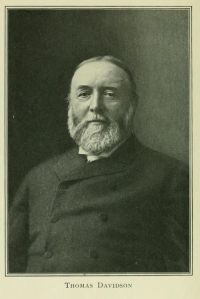 Thomas Davidson,
Aristotle and Ancient Educational Ideals
“ Music, they held, brought harmony, first into the human being himself, by putting an end to the conflict between his passions and his intelligent will, and then, as a consequence, into his relations with his fellows. Harmony within was held to be the condition of harmony without. ”
W. H. Hadow, Studies in Modern Music, Second Series
“ It will thus be seen that the manner in which we are impressed by Music is enormously complex. First, there is the sensuous appeal, the different characteristics of timbre and tone, of rich harmony and full orchestration, of all those devices which are usually described in metaphors of taste and colour. Second, and inclusive of the first, is the emotional appeal, the exhilaration of rapid movement, the gravity of stately chords and broad diatonic melody, the restlessness of broken rhythm and frequent modulation, the shades of surprise which follow upon a sudden change or an unexpected crisis. ”
Various, The Harmonicon. Part the First
“ Again it may be said, that our ideas in music arise from the choice of sounds and their measures. The time alone in sounds, only gives birth to ideas emanating little or not at all from sentiment; in music, as in poetry, great poetical effects may be produced without the charm of poetry: such movements belong to harmony; melody possesses essentially the beauty of sentiment. We know that in natural, and even in moral philosophy, nothing can exist without motion ”
 Percy Bysshe Shelley,
The Prose Works of Percy Bysshe Shelley…
(1897)
“ Music is then the knowledge of that which relates to love in harmony and system. In the very system of harmony and rhythm, it is easy to distinguish love. The double love is not distinguishable in music itself; but it is required to apply it to the service of mankind by system and harmony, which is called poetry, or the composition of melody ”
Various, Graham's Magazine, Vol. XXX, No…
“ They evince refinement of thought and sentiment, richness and warmth of fancy, and singular delicacy and strength in the use of language. Perhaps the finest characteristic of their diction is the feeling they display of the harmony of sound and color, in the expression of thought and emotion. The music of the verse corresponds to the imagery which flushes through it, and thus the figures which the poet’s prolific fancy conjures up, are all endowed with life and motion—or rather seem to make the harmony in which they move. ”
 Joseph Dietzgen,
The Positive Outcome of Philosophy
“ But it is not alone the harmony of music which has such a power over the mind. The harmony of colors, every art and science, has the same power. Even the most common craft, and the most prosaic of all prose, the chase after the dollar, may take possession of a man's soul and prostrate him in adoration before its idol. ”
 Loie Fuller,
Fifteen years of a dancer's life
(1913)
“ Harmony was there; man, classifying and arranging the sounds, created music.We all know what man has been able to get from it since then.Man, past master of the musical realm, is to-day still in the infancy of art, from the standpoint of control of light. ”
Various, The Harmonicon. Part the First
“ Hence harmony is peculiarly suited to many voices, where deep pathos and passion are impossible; and it is an abuse to apply it to the higher species of music.It is evident, too, that, in descriptive or epic music, harmony may form the background of the picture—the accompaniment of the narration,—in the front of which some kind of melody appears; and of this the most admirable examples are to be found in the works of Beethoven, the most profound and philosophical of composers. But whoever mistakes this for the highest species of music is not in a condition to understand the present paper. ”
 Herbert Spencer,
Essays on Education and Kindred Subjects
“ The strange capacity which we have for being so affected by melody and harmony may be taken to imply both that it is within the possibilities of our nature to realise those intenser delights they dimly suggest, and that they are in some way concerned in the realisation of them. On this supposition the power and the meaning of music become comprehensible ”
Georg Wilhelm Friedrich Hegel,
The Philosophy of Fine Art, volume 3…
“ Thirdly, and finally, it is the melody, by virtue of which on these foundations of a beat characterized by rhythmical vitality and of distinctions and movements of harmony itself that the realm of tones is unitedly discharged in a spiritually free mode of expression, and conducts us thereby to the final main section of our subject, which will undertake to consider music in its concrete unity with the spiritual content it is intended to express in beat, harmony, and rhythm. ”
Related terms
Authors who wrote about “harmony (music)”
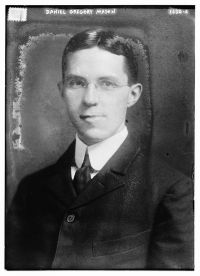 Daniel Gregory MasonJohn Sullivan DwightH. Ernest HuntJohn Weeks Moore
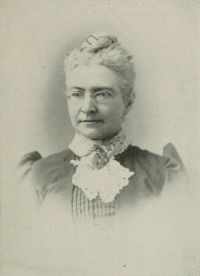 Aubertine Woodward MooreJames M. TrotterThomas Whitney SuretteEdward MacDowellPierre Lasserre
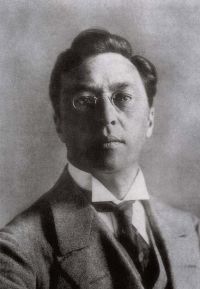 Wassily KandinskyW. H. HadowThomas TapperOskar BieEdward Baxter PerryDe Witt H. Parker
 E. T. A. Hoffmann
 W. S. B. MathewsThomas Davidson
 Vernon LeeWilliam Smyth Rockstro
