“ The harvest was in full swing, and as the dusk was filling, Janet Leighton, who had just returned herself from the fields, could watch the scene going on in the wheat-field beyond the farm-yard, where, as the reaping machine steadily pared away the remaining square of wheat, two or three men and boys with guns lay in wait outside the square for the rabbits as they bolted from their fast lessening shelter. The gold and glow of harvest was on the fields and in the air. ”
Harvest field
Definition and stakes
The theme of “harvest field” has been addressed by authors such as Elliott Smith, Mrs. Humphry Ward, A. Mary F. Robinson, Rowland Evans Robinson and George Eliot. It is often associated with terms like wheat, grain, soil, crop and maize.
Quotes about “harvest field”
 A. Mary F. Robinson,
The fields of France
(1905)
“ The farm grows almost all the necessaries of our table. Our soil is too poor for wheat, but rye and buckwheat flourish on the mountain-sides; whole slopes and ledges, too dry for hay, are a garden of tall, crisp, white flowers, where the buckwheat (sarrazin) waves through August until mid-September. A little before Michaelmas the flowers die, the seed turns gradually black, the stems coral-red; and then the farm-hands come and reap the harvest, bringing great sheets of linen, which they spread in the field, and thrash thereon the grain with high-dancing flails. ”
 Elliott Smith,
The Land of Lure: A Story of the Columbia River Basin
“ An account of the trip to the harvest field was written, telling of the enormous yield and the methods used in saving the grain, also of how a sufficient amount was earned to meet the winter's requirements, but never a word of the heart breaking failure of their first planting nor of the tortures endured in the grain fields, feeling that the possibilities of a reoccurrence of these unfortunate conditions was remote. They looked only to a more successful future. ”
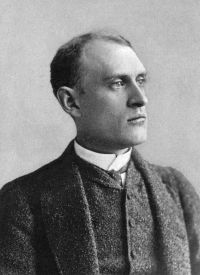 Eugene Field,
A Little Book of Profitable Tales
“ But one morning Fido sat on the front porch and wondered why the little boy had not come to the fence-corner and called to him. The sun was high, the men had been long gone to the harvest fields, and the heat of the early autumn day had driven the birds to the thickest foliage of the trees. Fido could not understand why the little boy did not come; he felt, oh' so lonesome, and he yearned for the sound of a little voice calling "Goggie, goggie, goggie." ”
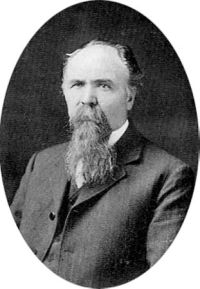 F. H. King,
Farmers of Forty Centuries; Or…
“ By planting in hills and rows with intertillage it is very common to see three crops growing upon the same field at one time, but in different stages of maturity, one nearly ready to harvest one just coming up, and the other at the stage when it is drawing most heavily upon the soil. By such practice, with heavy fertilization, and by supplemental irrigation when needful, the soil is made to do full duty throughout the growing season. ”
 Matilda Betham-Edwards,
Holidays in Eastern France
“ The fertility of the soil is not more astonishing than the variety of produce we find here, though pasturage and cheese-making are their chief occupations, and fruit crops are produced in other parts. We find, as has been before mentioned, fruit-trees everywhere, corn, fruit, and vegetables all growing with unimaginable luxuriance. The pastures are also very fine, but we see no cattle out to graze; the harvest work requires all hands, and, as there are no fences between field and meadow, there is no one to tend them. ”
Henry M. Field, From Egypt to Japan
“ Nowhere in Europe, not even in Lombardy nor in England, have I seen a richer country. Every foot of ground is in a high state of cultivation. Not only are the plains and valleys covered with rice-fields, but the hills are terraced to admit of carrying the culture far up their sides. Here, as in Western Java, it was the time of the harvest, and the fields were filled with joyous reapers. To this perfect tilling of the earth it is due that this island is one of the most populous portions of the globe. The country literally swarms with inhabitants, as a hive swarms with bees ”
 Isabel Florence Hapgood,
Russian Rambles
“ In the afternoons and evenings, we took breezy gallops through the forests, along the boundary sward of the fields, across the rich black soil of that third of the land which, in the "three-field" system of cultivation, is allowed to lie fallow after it has borne a crop of winter grain, rye, and one of summer grain, oats. ”
Jack R. Williams, The Indians of Carlsbad Caverns National Park
“ Farming was confined to the sandy soil in the stream bottom land. All farming was a man’s job except the harvest when women helped. A two-handed planting stick was used. Corn was eaten green, roasted or dried and shelled by women. ”
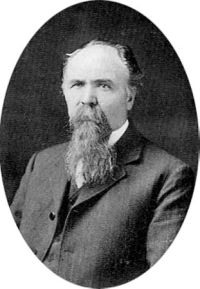 Franklin Hiram King,
Farmers of forty centuries
(1911)
“ In growing such dry land crops as barley, beans, buckwheat or dry land rice the soil of the field is at first fitted by plowing or spading, then furrowed deeply where the rows are to be planted. Into these furrows fertilizer is placed and covered with a layer of earth upon which the seed is planted. When the crop is up, if a second fertilization is desired, a furrow may be made alongside each row, into which the fertilizer is sowed and then covered. ”
Alva Agee, Crops and Methods for Soil Improvement
“ The portion of the farm reduced in productive power for the moment goes to grass, while the labor and fertilizers are concentrated upon the fields that are broken for grain and vegetables. The removal of all the crop at harvest, and probably the pasturing of after-math, are the only matters of interest that the fields, depleted by cultivation and seeded down to grass, have for the owner until the poor hay yield and the need of a sod for corn draw attention again to them. ”
 Jethro Tull,
Horse-hoeing husbandry
“ Therefore, whenever a Soil receives more Supplies of fine Earth from the Atmosphere, than is exhausted by all the Plants that grow in the Soil, it becomes richer; but if the contrary, then it becomes poorer. [253] On an undung’d low Six feet Ridge, we have Three Rows, Eight Inches asunder, all which being equal, during the Winter, but each of the Two outside Rows at Harvest producing Ten times as much Wheat as the middle Row doth, all Three together produce a Quantity equal to One-and-twenty of this middle Row. ”
Joseph Russell Smith, Tree Crops (1929)
“ As plants the cereals are weaklings. They must be coddled and weeded. For their reception the ground must be plowed and harrowed, and sometimes it must be cultivated after the crop is planted. This must be done for every harvest. When we produce these crops upon hilly land, the necessary breaking up of the soil prepares the land for ruin—first the plow, then rain, then erosion. Finally the desert. CAN WE GET ECONOMICS INTO BOTANY? Must we continue to depend primarily upon the type of agriculture handed to us by primitive woman? It is true that we have improved the old type. ”
“ Adjoining meadows and grain-fields, one may see an inclosure of many acres covered with a thick growth of oak and chestnut sprouts, six or eight or twelve feet high. These are the copses one has so often heard about, and they are a valuable and productive part of the farm. They are planted and preserved as carefully as we plant an orchard or a vineyard. Once in so many years, perhaps five or six, the copse is cut and every twig is saved; it is a woodland harvest that in our own country is gathered in the forest itself. ”
 Nathaniel Parker Willis,
Canadian Scenery, Volume 2 (of 2…
“ Another reason is, that when the snow has fallen to some depth, the light timbers cannot be cut close to the ground, or the dead branches and other encumbrances collected and thrown into heaps.We shall have about three acres ready for spring crops, provided we get a good burning of that which is already chopped near the site of the house; this will be sown with oats, pumpkins, Indian corn, and potatoes: the other ten acres will be ready for putting in a crop of wheat. So you see it will be a long time before we reap a harvest. ”
Mrs. Lance Rawson, Australian enquiry book of household and general information… (1894)
“ The rotation of crops means—taking a surface crop, such as wheat, oats, maize, &c., off the land, and then ploughing and planting a root crop, say turnips, potatoes, &c., &c. One of the best ways to manure a field impoverished by successive cropping without rest or manure is by sowing broadcast some such crop as peas, vetches, turnips, or any quick growing tender leaf plant, and when it is a few weeks old, or when the plants have leafed out well, plough it under and leave the field fallow till the following spring. ”
A. Mary F. Robinson,
The fields of France
(1905)
“ This fallacy of fallow lands still obtains among the lower class in France, though the agricultural schools have taught the well-to-do farmer to exact a harvest every year from land enriched with chemical manures, or refreshed by an occasional crop of clover, vetch or buckwheat, ploughed into the soil while green, between harvest and autumn seed-time. ”
Trumbull White, The War in the East: Japan, China…
“ The most valuable quality of this peculiar soil is its marvelous fertility, as the fields composed of it require scarcely any other dressing than a sprinkling of its own fresh loam. The farmer in this way obtains an assured harvest two and even three times a 104year. ”
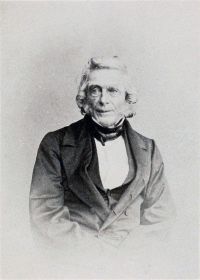 Patrick Matthew,
On Naval Timber and Arboriculture
“ It is a fact well known to every intelligent farmer, that infield or croft land, that is land, which, having been earliest cultivated, was, of course, the best soil at first, and which has also been long highly manured at the cost of the outfield, and therefore containing much oleaginous and other matter, products of organization, produces grasses and other vegetables much more nutritive to cattle than the outfield, even though these vegetables be of the same species, and by reason of more careful culture of those of the outfield, also of the same size of plant. ”
T. B. Wood, The Story of a Loaf of Bread
“ Rotation husbandry also distributes the labour of the farm over the year. After harvest the farmyard manure is carted on to the land. This is followed by wheat sowing. In the winter there is the stock to be fed. The spring brings barley sowing, the early summer the cleaning of the land for the roots. ”
 Susan Fenimore Cooper,
Rural Hours
(1851)
“ In another direction, again, lies a field of new land, ploughed and seeded for the first time within the last few weeks; the young maize plants, just shooting out their glossy leaves, are the first crop ever raised there, and when harvested, the grain will prove the first fruits the earth has ever yielded to man from that soil, after lying fallow for thousands of seasons. ”
 William Benjamin Smith,
The Color Line: A Brief in Behalf of the Unborn
“ It plays with man the function of care and training, of cultivation and domestication, with the lower animals and with the products of the soil. By diligent tillage, by the spade, the hoe, the plough, by irrigation and fertilization, the planter may greatly increase the yield of his field or his orchard and even refine, in a measure, the quality of his fruit or his grain. ”
C. A. Bogardus, One Thousand Secrets of Wise and Rich Men Revealed
“ In relation to managing your fields, be sure not to exhaust your soil; if you are in timber land, sow wheat every other year on your corn-fields; this will keep your land constantly improving from ordinary land to rich land. If you live in prairie country where your wheat will not pay, never sow oats unless you let your hogs take them before cutting. Always have one clover field for your hogs to run on in the hard months of summer and fall. ”
 Willa Cather,
O Pioneers! — Neighboring Fields…
(1913)
“ The rich soil yields heavy harvests; the dry, bracing climate and the smoothness of the land make labor easy for men and beasts. There are few scenes more gratifying than a spring plowing in that country, where the furrows of a single field often lie a mile in length, and the brown earth, with such a strong, clean smell, and such a power of growth and fertility in it, yields itself eagerly to the plow ”
Writers' Program of the Work Progress Administration, Washington, A Guide to the Evergreen State (1941)
“ Indian bands hunted, dug roots, and pastured their ponies. Quick to recognize the productivity of the soil, the newcomers staked claims, strung miles of barbed-wire fences, and set to work breaking the sod, in the meantime turning their cattle out on the range to fatten. Within a few years, thousands of acres had been planted to wheat and were producing exceptional yields. Wheat continues to be the chief crop of the region. In the spring the entire countryside, seen from an eminence, is a checkerboard of green fields and dark brown squares of fallow land. ”
Geo. T. Fairchild, Rural Wealth and Welfare: Economic Principles Illustrated and Applied in Farm Life
“ Farmers have for many centuries contrived, by keeping nature's forces under control in the wheat field, to combine certain elements of the soil, including its moisture, into grain. The single seed has multiplied a hundredfold through being placed in favorable conditions, with the raw materials at hand in the fertile soil. ”
Edmund Morris, Ten Acres Enough
“ Underdraining as the foundation, and deep ploughing as the superstructure, with ample manuring and generous tillage, will secure us ample crops, such as any section of our country has rarely seen. Our corn should average seventy bushels per acre. Every field should be ready to grow wheat, if required. Every grass-lot should be good for three tons of hay per acre. Abundant fruits should gladden our fields and enrich our farmers’ tables. ”
The New Student's Reference Work (1914)
“ Near the streams is a rich black soil; a sandy loam on the bench lands; and grazing lands on the bluffs. Dry farming has been satisfactorily tried on the uplands, and the experiment station encourages this method. In the order of relative importance the crops are corn, wheat, oats, barley and hay. ”
 Peter McArthur,
In Pastures Green
“ Besides the time when the work of putting in the crop is done, I thought it looked fine when the first showing of green spread over the field, and every time I have passed it seemed good to see a few inches added to the growth, and it listens fine to have real farmers say with a wise look as they sweep the oat field with a critical eye: "Those oats of yours have a splendid colour." In fact when things are going well it strikes me that a good field of grain looks good at any time. But this dip into real farming is making me see crops with other eyes. ”
 Brand Whitlock,
The 13th District: A Story of a Candidate
“ Viewed from some impossible altitude, the great, green corn fields were broken here and there by smaller fields of wheat, in which some venturesome farmer reaped a little crop hardly indigenous to that black soil, and to the eastward, over the broad pastures of virgin prairie, blocky cattle browsed and fattened at their leisure. ”
 Andy Adams,
The Log of a Cowboy: A Narrative of the Old Trail Days
“ Why, my uncles, when they think of planting the old buck field or the widow’s acre into any crop, they first go projecting around in the soil, and, as they say, analyze it, to see what kind of a fertilizer it will require to produce the best results. ”
A. Mary F. Robinson,
The fields of France
(1905)
“ Now the wood-cutters set to work and replenish the store of beech-trunks in the shed; now the carts come down from the moors, piled with an aromatic load of broom-twigs neatly tied in faggots; now the heather is cut; now the leaves are piled in sacks, to furnish fodder all the winter long. The first-sown corn is already green above the sod, and still, day after day, the plough is in the field, while on the steeper hills the oxen draw a mere curved tooth of wood—the Roman aratro, our araire. The cattle still browse the meadows; all night the hillsides are melodious with their chiming bells. ”
A. J. Schem, The American Cyclopædia (1879)
“ In some of the northern states crops of grain are raised on a certain portion of the farm for several successive years, after which the field is allowed to lie fallow from three to seven years, according to the number of lots into which the farm is divided. ”
Henry A. Murray, Lands of the Slave and the Free…
“ The extent farmed is 2000 acres, of which 400 are in wood, 400 in meadow, 400 under plough, and 800 in pasture. On the wheat lands, summer fallow, wheat, and clover pasture, form the three years' rotation. In summer fallow, the clover is sometimes ploughed in, and sometimes fed off, according to the wants of the soil and the farm. Alluvial lands are cultivated in Indian corn from five to ten years successively, and then laid down in grass indeterminately from three to forty years. ”
 Frances Fuller Victor,
All Over Oregon and Washington
(1872)
“ The soil is uniform, and a change is the exception and not the rule; being a rich, sandy loam, producing a thick, heavy mat of bunch-grass. On all the streams there is more or less timber; but the mountains have to supply lumber, and rails for fencing." Prolific in all her productions, her principal grains are wheat, corn, oats, barley, rye, and buckwheat. Her fruits are apples, pears, peaches, plums, cherries, grapes, and small fruits of all kinds. Cattle remain fat the year round on the bunch-grass. The streams abound in fish. The climate is one which for salubrity may challenge the world ”
Related terms
Authors who wrote about “harvest field”
Elliott Smith Mrs. Humphry WardA. Mary F. Robinson
 Rowland Evans Robinson
 George EliotF. H. KingEugene FieldMatilda Betham-EdwardsHenry M. FieldJethro TullJoseph Russell SmithJack R. WilliamsAlva AgeeNathaniel Parker Willis
 John BurroughsT. B. WoodTrumbull White
 William Shakespeare
 Ella Wheeler Wilcox
 Jonathan Swift
