Homology (biology)

Definition and stakes

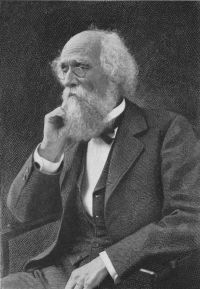
Portrait of Joseph LeConte Joseph LeConte,  Evolution: Its nature, its evidence…

“ It is seen, also, that analogy is a superficial resemblance, easily detected by the popular eye, and therefore embodied in popular language; while homology is a deep-seated and essential resemblance, detected often only by profound study and extensive comparison. Now, one of the strongest proofs of the truth of evolution is taken from the homologies of animal structure. Common origin completely explains homology. Every other explanation is transcendental, and therefore unscientific. ”
Source: Gutenberg

George Barry O'Toole,  The case against evolution (1925)

“ Homology is a technical term used by the systematists of botany, zoölogy and comparative anatomy to signify basic structural similarity as distinguished from superficial functional similarity, the latter being termed analogy. Organisms are said to exemplify the phenomenon of homology when, beneath a certain amount of external diversity, they possess in common a group of correlated internal resemblances of such a nature that the organisms possessing them appear to be constructed upon the same fundamental plan. ”
Source: Gutenberg

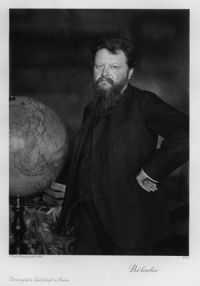
Portrait of Ernst Haeckel Ernst Haeckel,  The Wonders of Life: A Popular Study of Biological Philosophy

“ Most embryologists neglect paleontology, most paleontologists embryology, while comparative anatomy, the most difficult part of morphology, involving most extensive knowledge and sound judgment, is neglected by both. Besides these three sources of phylogeny there is valuable proof afforded by every branch of biology, especially by chorology, œcology, physiology, and biochemistry. ”
Source: Gutenberg

Get perspective with Kwize: daily news enlightened by great literature