Thomas Holmes, London's Underworld
“ The week's washing for the family she must do, the mending and darning for the household is her task, the children must be washed and clothed and properly cared for by her. Of her many duties there is no end. ”
Thomas Holmes, London's Underworld
“ The week's washing for the family she must do, the mending and darning for the household is her task, the children must be washed and clothed and properly cared for by her. Of her many duties there is no end. ”
C. Hélène Barker, Wanted, a Young Woman to Do Housework…
“ For the first time in her life, this housewife asked herself the following questions: Why should she allow her household employees to live in her house? Why should she consent to board them at her expense? Why should she continue to place at their disposal a bedroom each, a private bathroom, a sitting room or a dining room? Why should she allow them to make use of her kitchen and laundry to do their own personal washing, even providing them with soap and starch, irons and an ironing board, fuel and gas? Why should she do all this for them when no business employer, man or woman, ever does it? ”
 Arnold Henry Savage Landor,
Corea or Cho-sen: The Land of the Morning Calm
Arnold Henry Savage Landor,
Corea or Cho-sen: The Land of the Morning Calm
“ The moment they receive the order to do so, the inhabitants hurriedly remove all their household goods; the entire families, and those friends who have been called in to help, carrying away brass bowls, clothes and cooking implements, amid a disorder indescribable. ”
H. R. Wilton Hall, Social Life in England Through the Centuries
“ Too often no care is taken to provide proper places where food and clothing can be kept, and where that very necessary but unpleasant process of washing and drying of clothes can be carried on without spoiling the comfort and health of the household. ”
 Ida Husted Harper,
The Life and Work of Susan B. Anthony…
Ida Husted Harper,
The Life and Work of Susan B. Anthony…
“ In the olden times, when the daughters of the family, as well as the wife, were occupied with useful and profitable work in the household, getting the meals and washing the dishes three times in every day of every year, doing the baking, the brewing, the washing and the ironing, the whitewashing, the butter and cheese and soap making, the mending and the making of clothes for the entire family, the carding, spinning and weaving of the cloth—when everything to eat, to drink and to wear was manufactured in the home, almost no young women "went out to work." ”
Elizabeth Hale Gilman, The Library of Work and Play: Housekeeping
“ One should especially beware while house cleaning of what Bishop Hall calls the "lust of finishing." Try to clean only as much each day as can be put back into habitable order by the time the men of the household come home. One room a day is all a woman unaided should try to do. Mankind are [338] pleased to make jokes about house cleaning and glad am I that they can take it that way, for really it is a trial of character to come home tired and hungry and find the house cold, the rooms in disorder and a picnic supper spread in the kitchen by an overwrought wife. ”
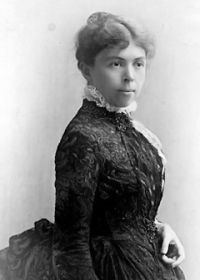 Alice Freeman Palmer,
The Teacher: Essays and Addresses on Education
Alice Freeman Palmer,
The Teacher: Essays and Addresses on Education
“ Workingmen’s homes showed on how small a sum a family could live, and live well. Arrangements for sterilizing water and milk were there, Atkinson cookers, gas and kerosene stoves. The proper sanitation of the home was taught, and boards of health turned out to the plain gaze of the world their inquisitorial processes. Numberless means of increasing the health, ease, and happiness of the household with the least expenditure of time and money were here studied by crowds of despairing housekeepers. ”
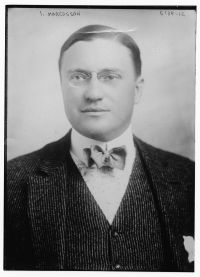 Isaac Frederick Marcosson,
The War After the War
Isaac Frederick Marcosson,
The War After the War
“ Home baking is strenuously suggested. It is shown how reduction in personal and household expenditure can be effected, for example, in the laundry by using curtains and linen that can be washed in the house. ”
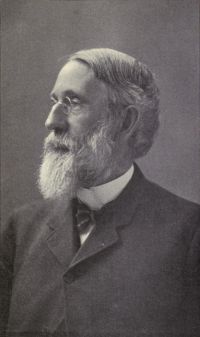 Isaac Phillips Roberts,
The farmstead: The making of the rural home and the lay-out of the farm
(1900)
Isaac Phillips Roberts,
The farmstead: The making of the rural home and the lay-out of the farm
(1900)
“ With the exception of poor management, poor service is probably the most wasteful factor of all in the household, yet there are conditions in which poor service is certainly less wasteful of the family resources, than none at all. The end of housekeeping is the health, comfort, and serenity of the family. The two main factors in producing this result are the family income and the mother’s strength and energy. Saving, however desirable, is merely an incidental end. ”
Kate Stephens, American Thumb-prints: Mettle of Our Men and Women
“ In housekeeping—which in her conservative neighborhood and among her primary values meant, almost up to this hour, not directing nor helping hired people in heaviest labors, but rather all that the phrase implied in pioneer days—her energies were spent—herself cooking; herself spinning the thread and weaving, cutting out and sewing all family garments and household linen ”
Emmett J. Scott, Booker T. Washington, Builder of a Civilization
“ An amazingly energetic and capable woman had explained at one of these gatherings how she had paid off the mortgage on their farm by the proceeds from her eggs, her kitchen garden, and her preserving in her spare moments when she was not helping her husband in the cotton field, washing and dressing her six children, or cooking, mending, washing, and scrubbing for the household. ”
Elizabeth Hale Gilman, The Library of Work and Play: Housekeeping
“ A household run on a strict schedule becomes an institution, not a home; on the other hand, a household in which the work is done at any time or no time is neither clean, restful nor knit together with the bonds of mutual service and mutual compliance.Housework is some of it daily, and some of it periodical. Bedmaking is daily; sweeping is periodical. There is also work which may be done by the workers in the house, or by others coming from without. In one family the laundry work, bread making, window cleaning, floor polishing and the like will be done by those in the house ”
Household Administration, Its Place in the Higher Education of Women
“ But the corn, meat, milk, cheese, and eggs would be all home-grown, and as it was easier in the state of transport at that time to bring the family to the food than the food to the family, part of the duties of housekeeping consisted in so arranging the sojourn of the household as to draw food-supplies from each manor in the most convenient way. ”
Household Administration, Its Place in the Higher Education of Women
“ It is the foundation upon which 286 depends the welfare of each member of a household; for it is the housekeeper who plans the food and is responsible for its character and suitability to age, season, health, and occupation. It is she who superintends, if she does not carry out, the details of cleanliness, so arduous and discouraging in our great cities. It is she who selects the clothing of her family; who directs the order of their lives:—their work and play, their rest and exercise, their sleep and their habits. ”
John T. Emmett, The Ethics of Urban Leaseholds (1879)
“ The 'husbands' are above, or possibly beneath, the manly household duty of inspecting plumbers' work and drains. The 'housewives' also, occupied with elegancies, find efficient household work and care unsuitable; and fevers, typhoid, and diphtheria are allowed to decimate their families. Besides, the house in sanitary matters is not separate from the furniture that it contains, nor this, again, from clothing and the family that wear it. ”
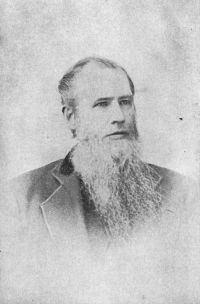 James J. Williamson,
Prison Life in the Old Capitol and Reminiscences of the Civil War
(1911)
James J. Williamson,
Prison Life in the Old Capitol and Reminiscences of the Civil War
(1911)
“ There is always enough to feed three or four abundantly, and none of it is ever wasted.We take turns in the household work—cooking and cleaning up—two men being detailed for this duty each day. It is unnecessary to say our cooking arrangements are very simple. ”
Mrs. Beeton, The Book of Household Management
“ What moved me, in the first instance, to attempt a work like this, was the discomfort and suffering which I had seen brought upon men and women by household mismanagement. I have always thought that there is no more fruitful source of family discontent than a housewife's badly-cooked dinners and untidy ways. ”
 Charlotte M. Yonge,
The Pillars of the House; Or, Under Wode…
Charlotte M. Yonge,
The Pillars of the House; Or, Under Wode…
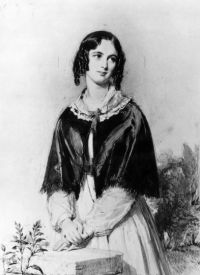
“ Lighter household tasks were natural to the young ladies. They kept their own rooms in order, dusted the books and ornaments, took care of the household linen, and performed delicate cookeries, so as to keep down the number of needful servants ”
 Christine Terhune Herrick,
The Expert Maid-Servant
Christine Terhune Herrick,
The Expert Maid-Servant
“ It is a proof of the carelessness with which many homes are managed, and of the slackness which maids take for granted, that the household equipment is so often conspicuously poor. I have been in houses that were well furnished above-stairs where I have seen the maids attempting to do careful cookery with utensils that were utterly inadequate. ”
Twentieth Century Negro Literature
“ Day Service.—A large number of single women and housewives work out regularly in families, or take washing into their homes; and, like house servants, are paid by the week, or if they work by the day from 30 to 50 cents a day. This absence of mothers from home not only occasions a neglect of their household duties but also of their children, especially of girls. ”
 Harriet Beecher Stowe,
Household Papers and Stories
Harriet Beecher Stowe,
Household Papers and Stories
“ In France no family makes its own bread, and better bread cannot be eaten than what can be bought at the appropriate shops. No family does its own washing; the family’s linen is all sent to women who, making this their sole profession, get it up with a care and nicety which can seldom be equaled in any family.How would it simplify the burdens of the American housekeeper to have washing and ironing day expunged 153 from her calendar! ”
 H. G. Wells,
The dream: A novel
(1923)
H. G. Wells,
The dream: A novel
(1923)
“ And each house had its own kitchen where food was cooked—there was no public eating-place in Cherry Gardens—and each, its separate store of household gear. In most houses there was a man who went out to work and earn a living—they didn't so much live in those days as earn a living—and came home to eat and sleep, and there was a woman, his wife, who did all the services, food and cleaning and everything, and also she bore children, a lot of unpremeditated children—because she didn't know any better. ”
 Jane Addams,
The American Journal of Sociology
(1896)
Jane Addams,
The American Journal of Sociology
(1896)
“ The difficulties really begin when the family income is so small that but one person can be employed in the household for all these varied functions, and the difficulties increase and grow almost insurmountable as they fall altogether upon the mother of the family, who is living in a flat, or worse still, in a tenement house, where one stove and one set of utensils must be put to all sorts of uses, fit or unfit, making the living room of the family a horror in summer, and perfectly insupportable in rainy washing days in winter. ”
Ethel R. Peyser, Cheating the Junk-Pile: The Purchase and Maintenance of Household Equipments (1922)
“ Many a house-wife without a maid has found ironing good sport with a good ironer and the labor saving devices have often made marriage possible—where a servant was too much of a luxury.Roughly, the ordinary laundry takes about half a day—one [25] hour for eight pieces for the average family of five, including all things from table linen to handkerchiefs. ”
Harriet Beecher Stowe,
The Atlantic Monthly
(1866)
“ In the country, you see a household perhaps made void some fine morning by Biddy's sudden departure, and nobody to make the bread, or cook the steak, or sweep the parlors, or do one of the complicated offices of a family, and no bakery, cookshop, or laundry to turn to for alleviation. A lovely, refined home becomes in a few hours a howling desolation ”
Estelle M. Hurll, Jean François Millet
“ In well-to-do families there are enough for six months' use, the family washing taking place only twice a year, in spring and fall, like house-cleaning in America. We judge that our housekeeper is well provided, by the pile of neatly folded sheets on the press. ”
 Alice Henry,
The Trade Union Woman
Alice Henry,
The Trade Union Woman
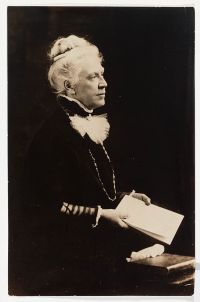
“ But the home industries are not yet fully accounted for and disposed of. Some of the household occupations, essential once to the comfort and well-being of the family, are shrinking in importance, prior to vanishing before our eyes, because now they do not for the most part represent an economical expenditure of energy. Meanwhile, however, they linger on, a survival in culture, and in millions of homes today the patient housewife is striving with belated tools to keep her family fed and clothed and her house spotless.Take the cleaning process, for example, and watch what is happening. ”
 Sophonisba Preston Breckinridge,
New Homes for Old
Sophonisba Preston Breckinridge,
New Homes for Old
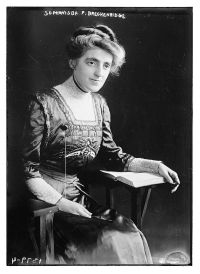
“ The work that the housewife must do in the care of the house is the maintenance of such standards of cleanliness and order as are to prevail. It includes the daily routine tasks of bedmaking, cooking, sweeping, dusting, dishwashing, disposing of waste, and the heavier work of washing, ironing, and periodic cleanings. ”
 Abby Morton Diaz,
A Domestic Problem : Work and Culture in the Household
Abby Morton Diaz,
A Domestic Problem : Work and Culture in the Household
“ Clothes, especially outside clothes, they must have and will have; consequently the saving must be made on food. Some, too poor to pay board, hire attic rooms, and pinch themselves in both fire and food. ”
 Hamlin Garland,
A Son of the Middle Border
Hamlin Garland,
A Son of the Middle Border
“ Although a constantly improving collection of farm machinery lightened the burdens of the husbandman, the drudgery of the house-wife's dish-washing and cooking did not correspondingly lessen. I fear it increased, for with the widening of the fields came the doubling of the harvest hands, and my mother continued to do most of the housework herself—cooking, sewing, washing, churning, and nursing the sick from time to time. ”
“ The women seemed willing to perform almost any of the regular household duties of cooking, sweeping, remodeling and washing at any time. It seemed to make little difference if they had to assume the extra burden of cooking and washing and cleaning for any of the golden men who were still unmarried or were so unfortunate as to have suffered the loss of their mates. ”
Elizabeth Hale Gilman, The Library of Work and Play: Housekeeping
“ In the two-maid household, the cook washes, the waitress assists, and the mistress frequently does some of the daily work. In the three-maid household it is possible for each to do her usual part of the daily work and give some assistance with the laundry.The sorting and mending of the clean clothes is the work of the mistress or of an upstairs maid. The sorting should be done when the wash is finished. The mending, if heavy, often has to wait for odd times.The next heaviest periodical work to the washing is the weekly cleaning. ”
Harriet Beecher Stowe,
Household Papers and Stories
“ If all the money that each separate family spends on the outfit and accommodations for washing and ironing, on fuel, soap, starch, and the other et ceteras, were united in a fund to create a laundry for every dozen families, one or two good women could do in firstrate style what now is very indifferently done by the disturbance and disarrangement of all other domestic processes in these families. Whoever sets neighborhood laundries on foot will do much to solve the American housekeeper’s hardest problem. ”
Anna M. Cooley, Foods and Household Management…
“ This means much labor, and some people cannot accomplish it every week; and different rooms should have different cleaning days. But such thorough cleaning occasionally is necessary for keeping all articles in good condition and also for the health of the family. ”
Mrs. Beeton, The Book of Household Management
“ The authoress says, with respect to the great wash—"Amongst all the occasions in which it is most difficult and glorious to keep muddle out of a family, 'the great wash' stands pre-eminent; and as very little money is now saved by having everything done at home, many ladies, with the option of taking another servant or putting out the chief part of the washing, have thankfully adopted the latter course." ”
Mrs. Cornelius, The Young Housekeeper's Friend
“ Consequently many have to learn, after marriage, how to take care of a family; and thus their housekeeping is, frequently, little else than a series of experiments; often unsuccessful, resulting in mortification and discomfort in the parlor, and waste and ill temper in the kitchen. ”
Mrs. Beeton, The Book of Household Management
“ The cleaning of the kitchen, pantry, passages, and kitchen stairs must always be over before breakfast, so that it may not interfere with the other business of the day. Everything should be ready, and the whole house should wear a comfortable aspect when the heads of the house and members of the family make their appearance. ”
Various, The Atlantic Monthly, Volume 17…
“ In France, for example, no house-keeper counts either washing, ironing, or bread-making as part of her domestic cares. All the family washing goes out to a laundry; and being attended to by those who make that department of labor a specialty, it comes home in refreshingly beautiful order. ”
Anna M. Cooley, Foods and Household Management…
“ The young people of the family should each have some regular piece of work, at least in their own rooms; and the paid helpers should have a definite plan given them, including some hours to themselves, as regular as possible. There are emergencies that upset even the most perfect system, and these must be met as they come, but a fair amount of work at regular times should be the system. ”
Jane AddamsChristine Terhune HerrickArnold Henry Savage LandorIda Husted HarperAlice Freeman PalmerIsaac Phillips RobertsIsaac Frederick MarcossonKate StephensEmmett J. ScottH. R. Wilton HallThomas HolmesJames J. WilliamsonJohn T. EmmettCharlotte M. YongeMrs. BeetonH. G. WellsHarriet Beecher StoweAlice Henry