 Richard Jefferies,
The Story of My Heart: An Autobiography
Richard Jefferies,
The Story of My Heart: An Autobiography
“ I believe in the human form; let me find something, some method, by which that form may achieve the utmost beauty. ”
Richard Jefferies,
The Story of My Heart: An Autobiography
“ I believe in the human form; let me find something, some method, by which that form may achieve the utmost beauty. ”
 John Stuart Mill,
A System of Logic, Ratiocinative and Inductive
John Stuart Mill,
A System of Logic, Ratiocinative and Inductive
“ For, as we define a concrete name by enumerating the attributes which it connotes, and as the attributes connoted by a concrete name form the entire signification of the corresponding abstract name, the same enumeration will serve for the definition of both. Thus, if the definition of a human being be this, “a being, corporeal, animated, rational, shaped so and so,” the definition of humanity will be corporeity and animal life, combined with rationality, and with such and such a shape. ”
 S. S. Curry,
Browning and the Dramatic Monologue
S. S. Curry,
Browning and the Dramatic Monologue
“ Surely a form that has proven itself so adequate, so universal a help to human expression, is worthy of being regarded and carefully studied as one of the permanent modes of embodying human experience. ”
Various, Popular Science Monthly (1915)
“ Such portraitures of human peculiarities, gauged by their moral or social desirability as examples to be followed or avoided, form an attractive compendium for the interpretation of men and their ways. Their consideration, ranging from gossip to philosophy, supplies the common touch of nature that makes the world of every time and clime akin, and presents graphically for our psychological contemplation the outward issues of disposition as shaped by opportunity and circumstance. ”
 H. G. Wells,
The Island of Doctor Moreau
(1896)
H. G. Wells,
The Island of Doctor Moreau
(1896)
“ A strange persuasion came upon me, that, save for the grossness of the line, the grotesqueness of the forms, I had here before me the whole balance of human life in miniature, the whole interplay of instinct, reason, and fate in its simplest form. ”
Andrew Murray, Humility: The Beauty of Holiness
“ We know the law of human nature: acts produce habits, habits breed dispositions, dispositions form the will, and the rightly-formed will is character. ”
The Forerunner, Volume 1 (1909-1910…
“ To them this question may be put: "Can you mention any form of life that merely 'is,' without doing anything?"Taken separately and physically, we are animals, genus homo; taken socially and psychically, we are, in varying degree, human; and our real history lies in the development of this human-ness. ”
by Thomas Mann, Tonio Kröger (1913)
“ I am looking into an unborn and shapeless world that longs to be called to life and order, I am looking into a throng of phantoms of human forms which beckon me to conjure them and set them free: some of them tragic, some of them ridiculous, and some that are both at once—and to these I am very devoted. ”
 Arthur Conan Doyle,
The Vital Message
(1919)
Arthur Conan Doyle,
The Vital Message
(1919)
“ But now let us take this idea of a human being who has the power of emitting a visible substance in which are formed faces which appear to represent distinct individualities, and in extreme cases develop into complete independent human forms. ”
 Mary Baker G. Eddy,
Science and Health with Key to the Scriptures
(1889)
Mary Baker G. Eddy,
Science and Health with Key to the Scriptures
(1889)
“ It is needless that the thought or the personality, holding the transferred picture, should be individually and consciously present. Though bodies are leagues apart, and the circumstances forgotten, they float in the general atmosphere of human mind. ”
 Thomas De Quincey,
The Posthumous Works of Thomas De Quincey…
Thomas De Quincey,
The Posthumous Works of Thomas De Quincey…
“ Secondly, as all things are predisposed to the natures which must be surrounded by them, so we may see that the element of social evolution of character, manners, caprices, etc., has been adapted to the vast mass of human minds. ”
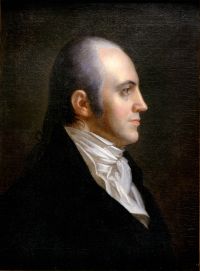 Aaron Burr,
Memoirs of Aaron Burr, Complete
Aaron Burr,
Memoirs of Aaron Burr, Complete
“ But when we take a survey of the more sublime parts of the human frame; when we behold man's internal make and structure; his mental faculties; his social propensions, and those active powers which set all in motion—the passions,—what an illustrious display of consummate wisdom is presented to our admiring view! ”
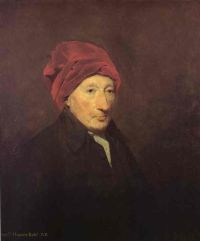 Thomas Reid,
An Inquiry into the Human Mind…
Thomas Reid,
An Inquiry into the Human Mind…
“ There are other external things which nature intended for signs; and we find this common to them all, that the mind is disposed to overlook them, and to attend only to the things signified by them. Thus there are certain modifications of the human face, which are natural signs of the present disposition of the mind. ”
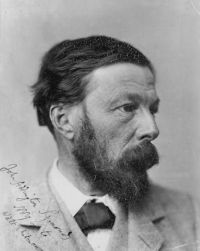 John Addington Symonds,
Sketches and Studies in Italy and Greece…
John Addington Symonds,
Sketches and Studies in Italy and Greece…
“ During that long period of time, the most delicate gradations of human personality, divinised, idealised, were presented to the contemplation of the consciousness which gave them being, in appropriate types. ”
 Georg Wilhelm Friedrich Hegel,
The Philosophy of Fine Art, volume 2…
Georg Wilhelm Friedrich Hegel,
The Philosophy of Fine Art, volume 2…
“ It is therefore in the first place concerned to personify abstract conditions of a general character or similar qualities both from the human and the natural world, such as religion, love, justice, strife, fame, war, peace, the seasons, death, and the like, and conceive them under the mode of personality. ”
 Friedrich Schiller,
Aesthetical and philosophical essays
(1899)
Friedrich Schiller,
Aesthetical and philosophical essays
(1899)
“ The sensuous impulse is awakened with the experience of life—with the beginning of the individual; the rational impulsion with the experience of law—with the beginning of his personality; and it is only when these two inclinations have come into existence that the human type is realized. ”
 F. H. Bradley,
Appearance and Reality — Chapter XXIV
(1893)
F. H. Bradley,
Appearance and Reality — Chapter XXIV
(1893)
“ And an imperfect appearance of this character we were compelled, in our last chapter, to recognize in the individual habits of the soul. Further in the beauty which presents us with a realized type, we find another form of the union of fact with principle. ”
 Charles Horton Cooley,
Human nature and the social order
(1902)
Charles Horton Cooley,
Human nature and the social order
(1902)
“ We may always expect to find a human nature sufficiently broad and sound—at least in those phases most apparent in the special means of expression chosen—to be felt as representative; also some timely contribution added to the range of thought or feeling, and faith in or loyalty to this peculiar contribution. ”
George Ticknor Curtis, Creation or Evolution? A Philosophical Inquiry
“ The essential character of any anthropomorphic or human attribute—power for example, or wisdom, or goodness—is that it is limited, imperfect, and liable to error. But when we conceive of these qualities as existing in absolute perfection and boundless capacity, while we retain the idea that they are personal qualities, we in fact divest them of their anthropomorphic or human character. ”
Frank Butterworth, Retail Shoe Salesmanship
“ The study of human nature is known also as character reading and as psychology. The purpose of this study is to bring about a clearer understanding of the laws governing the operation of the human mind. There is a relationship between a person’s disposition and his physical appearance as shown by the features of his face, the shape of his head and such like. ”
Baba Premananda Bharati, Sree Krishna, the Lord of Love (1904)
“ In the upward evolution of the man-form, the refinement of mental, moral, intellectual and spiritual attributes contributes more and more towards the man-form being made a more and more perfect image of his Maker, both externally and internally. ”
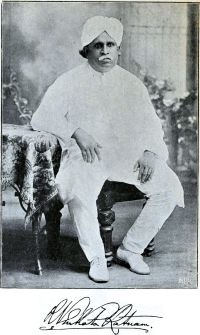 Raghupathi Venkataratnam Naidu,
The Message and Ministrations of Dewan Bahadur R. Venkata Ratnam
(1923)
Raghupathi Venkataratnam Naidu,
The Message and Ministrations of Dewan Bahadur R. Venkata Ratnam
(1923)
“ It is the formation of that habit which becomes a second nature — a prime force of life. Hence, character is something sub-conscious, if I may us© the expression—something that is formed in the unseen foundations of human life. ”
 John Wesley,
The works of the Rev. John Wesley…
John Wesley,
The works of the Rev. John Wesley…
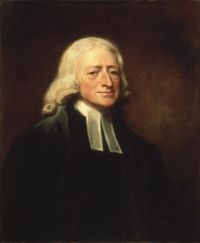
“ And in that day shall be discovered every inward working of every human soul: every appetite, passion, inclination, affection, with the various combinations of them, with every temper and disposition that constitute the whole complex character of each individual. ”
 Washington Allston,
Lectures on Art
Washington Allston,
Lectures on Art
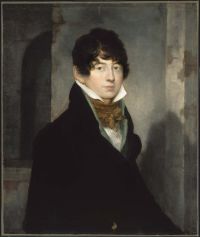
“ Now let us attempt to conceive of a being that shall represent all the diversities of mind, affections, and dispositions, that fleck this heterogeneous mass of humanity, and then to conceive of a Form that shall be in such perfect affinity with it as to indicate them all. ”
William Armes, A Defence of the Inquiry into Mesmerism & Phrenology
“ They have, in pursuance of their Theory, mapped out the human scull into compartments, to each of which they have assigned a particular faculty or sentiment, and they profess to tell, with some degree of accuracy, the individual character by the peculiar formation of the head. ”
Josef Donat, The Freedom of Science
“ Without Knowledge of the Human Nature. “Varied, according to character, are the demands made by heart and mind,” assures us a representative of modern philosophy, “corresponding to them is the image of the world to which the individual turns by inner necessity. ”
 B. H. Roberts,
Outlines of Ecclesiastical History
B. H. Roberts,
Outlines of Ecclesiastical History
“ Instead of being a personage without body, parts or passions, it revealed the fact that he had both body and parts, that he was in the form of man, or rather, that man had been made in his {279} image. ”
George Ticknor Curtis, Creation or Evolution? A Philosophical Inquiry
“ It is the fashion, I find, among a certain class of philosophers, to impute this propensity to the proneness of the human mind toward superstitious beliefs; to the mere effect of poetical or imaginary temperament in certain races of men, or to fear in other races ”
 Mercy Otis Warren,
History of the Rise, Progress, and Termination of the American Revolution
(1805)
Mercy Otis Warren,
History of the Rise, Progress, and Termination of the American Revolution
(1805)
“ The study of the human character opens at once a beautiful and a deformed picture of the soul. ”
Friedrich Schiller,
Aesthetical Essays of Friedrich Schiller
“ The object of the sensuous instinct, expressed in a universal conception, is named Life in the widest acceptation; a conception that expresses all material existence and all that is immediately present in the senses. The object of the formal instinct, expressed in a universal conception, is called shape or form, as well in an exact as in an inexact acceptation; a conception that embraces all formal qualities of things and all relations of the same to the thinking powers. ”
 Herbert Spencer,
The Data of Ethics
Herbert Spencer,
The Data of Ethics
“ The general truth disclosed by the study of evolving conduct, sub-human and human, that for the better preservation of life the primitive, simple, presentative feelings must be controlled by the later-evolved, compound, and representative feelings, has thus come, in the course of civilization, to be recognized by men ”
 Evelyn Underhill,
The essentials of mysticism
(1920)
Evelyn Underhill,
The essentials of mysticism
(1920)
“ Here, then, we have in one volume three aspects of human life as seen within the limits of one personality: the biographical facts, the supernal vision, and the ordered conclusions drawn from those facts and that vision, for the instruction of other men. ”
 Marcus Tullius Cicero,
On Invention — Book 1
Marcus Tullius Cicero,
On Invention — Book 1
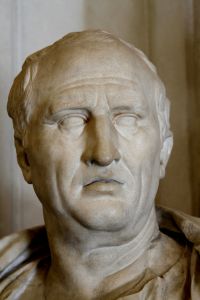
“ But when we speak of a man's habitual condition, we mean his constant and absolute completeness of mind or body, in some particular point—as for instance, his perception of virtue, or of some art, or else some science or other. ”
Various, The Monist, Vol. 1, 1890-1891
“ The continuation of form in feeling substance, not merely in the life of single individuals, but also in the life of the race, produces the growth, the development, and evolution of mind. Thus facts can be represented in their connections, and the necessity of their connection can be understood. ”
 Francis Galton,
Inquiries into Human Faculty and Its Development
Francis Galton,
Inquiries into Human Faculty and Its Development
“ Various forms of natural character and temperament would no doubt be found to occur in constant proportions among any large group of persons of the same race, but what those proportions may be has never yet been investigated. ”
 Laurence Housman,
Ploughshare and Pruning-hook
(1919)
Laurence Housman,
Ploughshare and Pruning-hook
(1919)
“ The Image of God was not seated in the features of your face but in the lineaments of your soul. In the knowledge of your powers, inclinations, and principles, the knowledge of yourself chiefly consisteth. ”
David Masson, The Three Devils: Luther's, Milton's…
“ Soul, mind, spirit, these old and simple words are the strongest, the profoundest, the surest; age cannot antiquate them, nor science undo them; they last with the rocks, and still go beyond. But, having in view rather the operation than the cause, we find a use also in such alternative phrases as “mode of thinking,” “mode of feeling and thinking,” “habit of thought,” “moral and intellectual character or constitution,” and the like. ”
 Friedrich Wilhelm Nietzsche,
The Joyful Wisdom ("La Gaya Scienza"…
Friedrich Wilhelm Nietzsche,
The Joyful Wisdom ("La Gaya Scienza"…
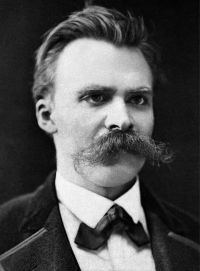
“ The reputation, the name and appearance, the importance, the usual measure and weight of things—each being in origin most frequently an error and arbitrariness thrown over the things like a garment, and quite alien to their essence and even to their exterior—have gradually, by the belief therein and its continuous growth from generation to generation, grown as it were on-and-into things and become their very body; the appearance at the very beginning becomes almost always the essence in the end, and operates as the essence! ”
Giovanni Gentile, The Reform of Education
“ For the object of consciousness is characterised, in respect to the act which constitutes it, by this stability and immutability. What we think is that and no other, whereas thought, by which we think it, is a becoming and a continuous change.But the character of man is in the object, in the contents of his thought, in what he gradually builds himself up to, in the determined personality which he constitutes by thinking, or, in other words, in his body. ”
William James, The Principles of Psychology, Volume 1…
“ It seems reasonable to me—upon the hypothesis that it is a person using another's mind or brain—that there must be more or less of that other's style or tone incorporated in the message, and that to the unseen personality, i.e., the power which impresses, the thought, the fact, or the philosophy, and not the style or tone, belongs. ”
 James Frederick Ferrier,
Blackwood's Magazine
(1842)
James Frederick Ferrier,
Blackwood's Magazine
(1842)
“ All the secondary qualities, colours, sounds, tastes, smells, heat, hardness, everything, in short, which is an affection of sense, may be generalized at one sweep into our mere knowledge of things. But the primary qualities, which are usually restricted to extension and figure, and which constitute, it is said, the objective or real essence of things, and which are entirely independent of us, into what shall they be generalized? ”
 John Ruskin,
Selections From the Works of John Ruskin
John Ruskin,
Selections From the Works of John Ruskin
“ And then consider, so far as you know anything of physiology, what sort of an ethical state of body and mind that means!—ethic through ages past! what fineness of race there must be to get it, what exquisite balance and symmetry of the vital powers! ”
Augustus J. Thébaud, The Irish Race in the Past and the Present
“ It is therefore but consistent with general analogy that in the moral as well as in the physical faculties of man, the same ever-recurring variety should appear, in the features of the face, in the shape of the limbs, in the moving of the muscles, as well as in the activity of thought, in the mobility of humor, in the combination of passions, propensities, sympathies, and aversions. ”
Newell Dwight Hillis, A Man's Value to Society: Studies in Self Culture and Character
“ Having journeyed around the earth house, each should study himself; his body as an engine of mental thought, an instrument of conduct and character; the number and nature and uses of the forty and more faculties of mind and heart with which he is endowed. ”
Hutcheson Macaulay Posnett, Comparative Literature (1886)
“ But this evolution of personal character—under which we include the actions, instincts, emotions, reason, imagination of the individual unit—must not be viewed apart from the extent to which it prevails, that is, the number of units in any social group who may be regarded as having attained a given standard of such evolution. ”
Georg Wilhelm Friedrich Hegel,
The Philosophy of Fine Art, volume 3…
“ And in proceeding to the more detailed definition of our humanity in shape and character, it must, nevertheless, exclusively rivet its attention on what is unalterable and permanent, in other words what is truly substantive in its characterization, and merely select such aspects for its content, passing over what it finds there of an accidental or evanescent nature ”
W. W. Greg, Pastoral Poetry & Pastoral Drama
“ Rather is its importance to be sought in the fact that the form is the expression of instincts and impulses deep-rooted in the nature of humanity, which, while affecting the whole course of literature, at times evince themselves most clearly and articulately here ”
Washington AllstonVariousJohn Stuart MillGeorg Wilhelm Friedrich Hegel David Hume
 George MacDonaldFriedrich Schiller
 Virginia Woolf
 Samuel Taylor ColeridgeWilliam James
 Arthur SchopenhauerGeorge Ticknor CurtisAndrew Murrayby Thomas MannMary Baker G. EddyRichard JefferiesS. S. CurryH. G. WellsThomas Reid