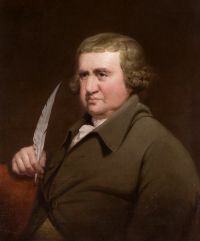
Hypochondriasis

Definition and stakes

John Hill,  Hypochondriasis: A Practical Treatise…

“ SECT. I. The Nature of the Disorder. To call the Hypochondriasis a fanciful malady, is ignorant and cruel. It is a real, and a sad disease: an obstruction of the spleen by thickened and distempered blood; extending itself often to the liver, and other parts; and unhappily is in England very frequent: physick scarce knows one more fertile in ill; or more difficult of cure. ”

Source: Gutenberg

John Hill,  Hypochondriasis: A Practical Treatise…

“ The belief that hypochondriasis was a somatic condition persisted until [Pg iii] the second half of the seventeenth century at which time an innovation was made by Dr. Thomas Sydenham. In addition to showing that hypochondriasis and hysteria (thought previously by Sydenham to afflict women only) were the same disease, Sydenham noted that the external cause of both was a mental disturbance and not a physiological one. He also had a theory that the internal and immediate cause was a disorder of the animal spirits arising from a clot and resulting in pain, spasms, and bodily disorders. ”
Source: Gutenberg

John Hill,  Hypochondriasis: A Practical Treatise…

“ For example, the title page of the copy in the British Museum reads, Hypochondriasis; a Practical Treatise On the Nature and Cure of that Disorder, Commonly called the Hyp and the Hypo. The copy in the Royal Society of Medicine contains, among other additions, the words "by Sir John Hill" in pencil, and "8vo Lond. 1766," written in ink and probably a later addition.
[2] Melancholy, hypochondriasis, and the spleen were considered in the seventeenth and eighteenth centuries to be one complex condition, a malady rather than a malaise, which is but a symptom.
”
Source: Gutenberg

Get perspective with Kwize: daily news enlightened by great literature