Hypothetical reasoning

Definition and stakes

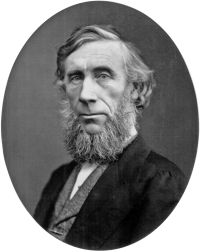
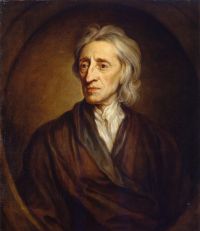
Portrait of John Stuart Mill John Stuart Mill,  A System of Logic, Ratiocinative and Inductive

“ A conclusion, therefore, however correctly deduced, in point of form, from admitted laws of nature, will have no other than an hypothetical certainty. At every step we must assure ourselves that no other law of nature has superseded, or intermingled its operation with, those which are the premises of the reasoning; and how can this be done by merely looking at the words? We must not only be constantly thinking of the phenomena themselves, but we must be constantly studying them ”
Source: Gutenberg

Carveth Read,  Logic: Deductive and Inductive

“ It is usual to point out that Psychology tries to explain the subjective processes of conception, judgment and reasoning, and to give their natural history; but that Logic is wholly concerned with the results of such processes, with concepts, judgments and reasonings, and merely with the validity of the results, that is, with their truth or consistency; whilst Psychology has nothing to do with their validity, but only with their causes. ”
Source: Gutenberg

Portrait of J. M. Robertson J. M. Robertson,  Rationalism

“ If, he says in the fourth paragraph of the Note, ‘If we examine those arguments which, in any of the sciences above mentioned, are supposed to be the mere effects of reasoning and reflection, they will be found to terminate at last in some general principle or conclusion for which we can assign no reason but observation and experience.’ If an argument be not a process of reasoning, neither word is intelligible. ”
Source: Gutenberg

Get perspective with Kwize: daily news enlightened by great literature