 George Bernard Shaw,
John Bull's Other Island
(1904)
George Bernard Shaw,
John Bull's Other Island
(1904)
“ The fact is, there are only two qualities in the world: efficiency and inefficiency, and only two sorts of people: the efficient and the inefficient. ”
George Bernard Shaw,
John Bull's Other Island
(1904)
“ The fact is, there are only two qualities in the world: efficiency and inefficiency, and only two sorts of people: the efficient and the inefficient. ”
 Theodore Roosevelt,
American problems
Theodore Roosevelt,
American problems
“ Inefficiency is a curse; and no good intention atones for weakness of will and flabbiness of moral, mental, and physical fiber; ”
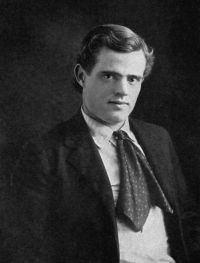 Jack London,
The People of the Abyss
(1903)
Jack London,
The People of the Abyss
(1903)
“ In every branch of industry the less efficient are crowded out. Being crowded out because of inefficiency, they cannot go up, but must descend, and continue to descend, until they reach their proper level, a place in the industrial fabric where they are efficient. It follows, therefore, and it is inexorable, that the least efficient must descend to the very bottom, which is the shambles wherein they perish miserably. A glance at the confirmed inefficients at the bottom demonstrates that they are, as a rule, mental, physical, and moral wrecks. ”
 Leslie McChesney Scott,
Oregon Historical Quarterly
(1913)
Leslie McChesney Scott,
Oregon Historical Quarterly
(1913)
“ Trifling as this particular incident is, it illustrates right well the difference between purposeful energy and poor, pitiful inefficiency. The one does things, the other whines and complains, says it can't, and wants somebody to help, or government to give it a lift. ”
 Émile Faguet,
The Cult of Incompetence
Émile Faguet,
The Cult of Incompetence
“ It is not common sense for it involves something being made out of nothing, inefficiency producing efficiency and zero extracting 'one' out of itself. This form of selection, though it does not appeal to me under any circumstances, is legitimate enough when it is exercised by a competent body. ”
Business Administration: Theory…
“ In the opinion of those whose opportunities have enabled them to get at the facts, the inefficiency in manufacturing, which undoubtedly generally exists today, in spite of the prevailing impression to the contrary, is only about one-fourth due to the things over which the employes have control and three-fourths to conditions imposed upon them by the management. ”
Jack London,
The People of the Abyss
(1907)
“ Here, then, we have the construction of the Abyss and the shambles. Throughout the whole industrial fabric a constant elimination is going on. The inefficient are weeded out and flung downward. Various things constitute inefficiency. ”
William C. Bagley, Craftsmanship in Teaching
“ In fact, if we are ever to solve the broader, bigger, more attractive problems,—like the problem of vocational education, or the problem of retardation,—we must first find a solution for some of the smaller and seemingly trivial questions of the very existence of which the lay public may be quite unaware, but which you and I know to mean an untold total of waste and inefficiency in the work that we are trying to do. ”
 Scott Nearing,
Popular Science Monthly
(1912)
Scott Nearing,
Popular Science Monthly
(1912)
“ The standard of living facts and the wage facts are indisputable; low standard conditions are appallingly frequent in some districts. What will the end be? The members of those families which are forced to live on inefficiency standards are subject to a decrease in (1) physical efficiency, (2) intellectual keenness, (3) disease-resisting power, (4) length of life. No employer who desires to maintain the efficiency of his working force, and what employer does not desire to do so, can afford to tolerate for a moment any one of these four conditions. ”
 Arnold Bennett,
Mental Efficiency, and Other Hints to Men and Women
Arnold Bennett,
Mental Efficiency, and Other Hints to Men and Women
“ There is, among a vast mass of reflecting people in this country, a clear consciousness of being mentally less than efficient, and a strong (though ineffective) desire that such mental inefficiency should cease to be. ”
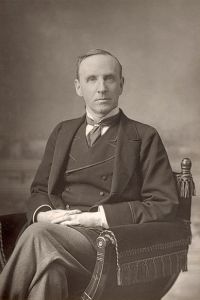 John Morley,
Critical Miscellanies, Vol. 1, Essay 2…
John Morley,
Critical Miscellanies, Vol. 1, Essay 2…
“ What seems to many of us the extreme inefficiency or worse of his solutions, still allows us to feel grateful for the vigour and perspicacity with which he has pressed on the world the urgency of the problem. ”
Delmer Eugene Croft, Supreme Personality: Fun in Living…
“ Your efficiency is kept in balance by little, invisible and automatic thought neurons. A clear brain is the test of efficiency. Plans, orders, system, application, give efficiency. Efficiency is positive thinking. Freedom-thinking, above fear-thinking. Get out and keep out of negative thinking. Just as soon as you drop negative thinking your mind will begin to rise to a new brilliance of expression. One big element in efficiency is silence. It is the strongest thing to be silent. Noise is emptiness, weakness, inefficiency. Silence is the law of greatness ”
Emory S. Bogardus, A history of social thought (1922)
“ Efficiency is a term which is the product of the mechanical era, which originated in the business world, and which is now being applied to all phases of social organization.XXVI-46 Its aim is perfection in social mechanics. Social efficiency includes not only social engineering but social knowledge, social philosophy, social ethics, and social religion. Evidences of social inefficiency are common; for example, the failure to use and apply the social knowledge that467 we have, and the loss of energy through an over-emphasis on competition. ”
 Robert Sheckley,
The Status Civilization
Robert Sheckley,
The Status Civilization
“ "Remember, the inevitable inefficiency of a huge bureaucracy will be working for you." ”
Jack London,
The People of the Abyss
(1907)
“ On the other hand, conditions remaining constant and all the workers doubling their efficiency, there would still be as many inefficients, though each inefficient were twice as capable as he had been and more capable than many of the efficients had previously been. When there are more men to work than there is work for men to do, just as many men as are in excess of work will be inefficients, and as inefficients they are doomed to lingering and painful destruction. ”
Clement Fezandié, Amazing Stories (1926)
“ The efficiency expert, however, spends his time paring down this factor of safety, cutting out a screw here, a nail there, and producing an article that will give way at the least unusual strain, leaving the owner in the lurch at a time when the idle machine means a loss to him many thousands of times the cost of the extra screw. Such experts are the bane of my existence. Only once in my life did I ever have occasion to bless an efficiency expert. ”
 Franklin Henry Giddings,
Popular Science Monthly
(1909)
Franklin Henry Giddings,
Popular Science Monthly
(1909)
“ The struggle for abundance begets the struggle for efficiency. Ideas and standards of efficiency appear. The efficient find each other out. They like each other and each other's ways. They dislike the inefficient, and begin in all possible ways to make life unpleasant for them. ”
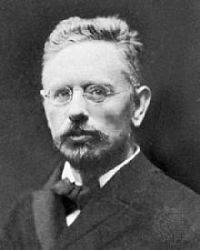 Otto Jespersen,
Language: Its Nature, Development and Origin
Otto Jespersen,
Language: Its Nature, Development and Origin
“ It will be noticed that my formula contains two requirements: it demands a maximum of efficiency and a minimum of effort. Efficiency means expressiveness, and effort means bodily and mental labour, and thus the formula is simply one of modern energetics. But unfortunately we are in possession of no method by which to measure either expressiveness or effort exactly, and in cases of conflict it may be difficult to decide to which of the two sides we are to attach the greater importance, how great a surplus of efficiency is required to counterbalance a surplus of exertion, or inversely. ”
William James, The Energies of Men
“ So one can be in what I might call 'efficiency-equilibrium' (neither gaining nor losing power when once the equilibrium is reached) , on astonishingly different quantities of work, no matter in what dimension the work may be measured. It may be physical work, intellectual work, moral work, or spiritual work.Of course there are limits: the trees don't grow into the sky. But the plain fact remains that men the world over possess amounts of resource, which only very exceptional individuals push to their extremes of use. ”
 Herbert Spencer,
Essays: Scientific, Political, & Speculative…
Herbert Spencer,
Essays: Scientific, Political, & Speculative…
“ Hence with faculties habitually exercised—as the senses of all persons, or the muscles of any one who is strong—it happens that, during moderate activity, the repair is so nearly equal to the waste, that the diminution of power is scarcely appreciable. It is only when effort has been long continued, or has been violent, that repair becomes so far in arrear of waste as to cause a perceptible enfeeblement. In all cases, however, when, by the action of a faculty, waste has been incurred, some lapse {363} of time must take place before full efficiency can be reacquired ”
Jack London,
The People of the Abyss
(1907)
“ It shall be the aim of future chapters to show, by their work and manner of living, not only how the inefficients are weeded out and destroyed, but to show how inefficients are being constantly and wantonly created by the forces of industrial society as it exists to-day. ”
Harry D. Kitson, How To Use Your Mind
“ Since we are endowed with the energy requisite for such efficient work, the obvious question is, why do we not more frequently use it? The answer is to be found in the fact that we have formed the habit of giving up before we create conditions of high efficiency. You will note that the conditions require long-continued exertion and resolute persistence. This is difficult, and we indulgently succumb to the first symptoms of fatigue, before we have more than scratched the surface of our real potentialities. ”
Arnold Bennett,
Mental Efficiency, and Other Hints to Men and Women
“ The advertisements multiply and increase in size. They cost a great deal of money. Therefore they must bring in a great deal of business. [8] Therefore vast numbers of people must be worried about the non-efficiency of their bodies, and on the way to achieve efficiency. In our more modest British fashion, we have the same phenomenon in England. And it is growing. Our muscles are growing also. Surprise a man in his bedroom of a morning, and you will find him lying on his back on the floor, or standing on his head, or whirling clubs, in pursuit of physical efficiency. ”
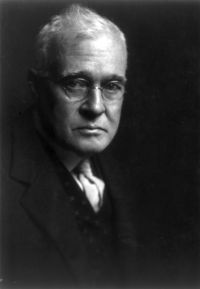 Horace Fletcher,
The New Glutton or Epicure
Horace Fletcher,
The New Glutton or Epicure
“ I am now relating the experiences of a student of hygienic epicureanism and am not considering money economy alone. Were mental or even physical improvement in efficiency to be purchased at high prices, and lack of efficiency could be had for nothing, the high-priced article would be well worth its cost, no matter what it might be, for the reason that total lack of efficiency is equivalent to death and any proportionate lack is the next thing to death. ”
Roy Rutherford Bailey, Sure Pop and the Safety Scouts
“ All this talk about 'efficiency' is really part of the same movement, though very few realize it; it's nothing more or less than cutting out guess work and waste—and what else, after all, is our Safety work? ”
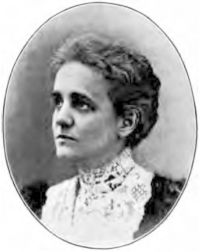 Martha Foote Crow,
The American Country Girl
Martha Foote Crow,
The American Country Girl
“ In order to accomplish all this in, say, the business and work of a factory, there must be an efficiency engineer, who shall spend days and weeks and months in finding out what the right order of motions is, what the best arrangement of the tools and materials shall be, what elimination of unnecessary acts and things can be made in order that every possible waste of energy may be pared off and the path to the end may be absolutely, sternly direct. ”
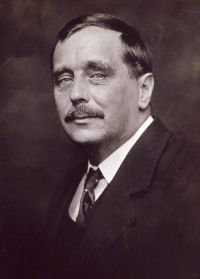 H. G. Wells,
An Englishman Looks at the World
H. G. Wells,
An Englishman Looks at the World
“ One hears nowadays a vast amount of chatter about efficiency—that magic word—and social organisation, and there is no doubt a huge expenditure of energy upon these things and a widespread desire to rush about and make showy and startling changes. ”
Harry Fuller Atwood, Back to the Republic (1921)
“ All so-called efficiency commissions with which I am familiar—and I have had years of experience in the public service—remind me of the ironical definition given by Job Hedges, that "efficiency is letting some one else run your business as they want to at your expense." Efficiency, like the word liberty, has been overworked by impostors. ”
William Henry Pyle, The Science of Human Nature: A Psychology for Beginners
“ Every year a “crank” becomes “crankier.”It is well that this is so. Everything in the world costs its price. Rigidity is the price we pay for efficiency. In order to be efficient, we must make habitual the necessary movements. ”
William James, Memories and Studies
“ When I speak of "energizing," and its rates and levels and sources, I mean therefore our inner as well as our outer work.Let no one think, then, that our problem of individual and national economy is solely that of the maximum of pounds raisable against gravity, the maximum of locomotion, or of agitation of any sort, that human beings can accomplish. That might signify little more than hurrying and jumping about in inco-ordinated ways; whereas inner work, though it so often reinforces outer work, quite as often means its arrest. ”
Mihai Nadin, The Civilization of Illiteracy
“ The ability to achieve maximum efficiency based on the recognition that raw materials and energy mean nothing unless the creative mind, applied to tasks relevant to human experiences of self-constitution, makes something out of them. ”
Martha Foote Crow,
The American Country Girl
“ We have to pierce through the crust of our national conceit and find there the truth that our people are painfully in need of more efficiency and that therefore it is a matter of the most vital concern that we should put the home in all its phases into a condition more adapted for producing the perfectly efficient human product. ”
Austin Lewis, Proletarian and Petit-Bourgeois (1912)
“ Under the strain incident to overwork, a man may break down at forty and be discharged because he is physically or nervously unable to continue with his duties. Modern industry is run at a terrific speed which leads inevitably to a shortened working life, or decreased efficiency. ”
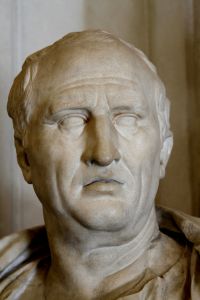 Marcus Tullius Cicero,
On Invention — Book 2
Marcus Tullius Cicero,
On Invention — Book 2
“ We call that a thing easy to be done, which can be done without great labour, or expense, or annoyance, or perhaps without any labour, expense, or annoyance at all, and in the shortest possible time. But that we call difficult to be done which, although it requires labour, expense, trouble and time, and has every possible characteristic of difficulty about it, or, at all events, the most numerous and most important ones, still, when these difficulties are encountered, can be completed and brought to an end. ”
 Thorstein Veblen,
The instinct of workmanship, and the state of industrial arts
(1914)
Thorstein Veblen,
The instinct of workmanship, and the state of industrial arts
(1914)
“ The relation of cause and effect, as commonly conceived by the vulgar and as commonly employed by the scientist, is a putative relation between phenomena which can not be said to stand in any observed relation of efficiency to one another. Efficiency, as understood in this connection, is not a fact of observation, but of imputation; and efficiency, performance of work, is the substance of the causal relation as that concept is universally employed in modern science. ”
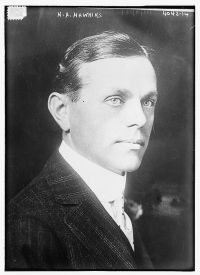 Norval A. Hawkins,
Certain Success
Norval A. Hawkins,
Certain Success
“ Your dull season is the time to have it done. I can introduce my efficiency ideas now without disorganizing your operations. Then, when you are busiest, the new system will be in perfect working order, for your service. ”
F. Marion Crawford, Corleone: A Tale of Sicily
“ People who have the requisite facility but not the indispensable energy find it so hard to realise this fact that they have inverted our modern use of the word 'genius' to account for their own failures. ”
Thorstein Veblen,
The Place of Science in Modern Civilisation…
“ Whether and how far these traits of human culture and the institutional structure built out of them are the outgrowth of material (economic) exigencies becomes a question of what kind and degree of efficiency belongs to the economic exigencies among the complex of circumstances that conduce to the formation of habits. ”
Joseph Francis MacGrail, Selling Things
“ Efficiency lies in the symmetry and perfect functioning of all of your organs. If they are not trying to help you make a sale; if you have treated them badly and they are protesting, [233] they will beat you. ”
 Joseph Conrad,
Heart of Darkness
(1899)
Joseph Conrad,
Heart of Darkness
(1899)
“ “Mind, none of us would feel exactly like this. What saves us is efficiency—the devotion to efficiency. But these chaps were not much account, really. They were no colonists; their administration was merely a squeeze, and nothing more, I suspect. They were conquerors, and for that you want only brute force—nothing to boast of, when you have it, since your strength is just an accident arising from the weakness of others. They grabbed what they could get for the sake of what was to be got. ”
 Vernon Lee,
Laurus Nobilis: Chapters on Art and Life
Vernon Lee,
Laurus Nobilis: Chapters on Art and Life
“ But play itself, being unaccountable on the basis of external advantage and disadvantage, being, from the false economic point of view, unproductive, that is to say, pure waste, has in its turn to be accounted for by the supposition of surplus energy occasionally requiring to be let off to no purpose, or merely to prevent the machine from bursting. ”
Various, Popular Science Monthly (1915)
“ Our demand for an ever-increasing efficiency has brought too great a strain upon those cerebral functions associated with the peculiar mental powers upon which efficiency depends. Efficiency demands great powers of attention, concentration, analysis, self-control, inhibition, sustained effort, all of which are extremely fatiguing and demand frequent intervals of rest and relaxation. ”
