
“ Paris has a sovereign joviality. Its gayety is of the thunder and its farce holds a sceptre. Its tempest sometimes proceeds from a grimace. Its explosions, its days, its masterpieces, its prodigies, its epics, go forth to the bounds of the universe, and so also do its cock-and-bull stories. Its laugh is the mouth of a volcano which spatters the whole earth. Its jests are sparks. It imposes its caricatures as well as its ideal on people; the highest monuments of human civilization accept its ironies and lend their eternity to its mischievous pranks. ”
Quotes about “joviality”
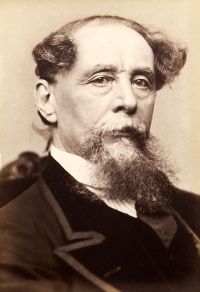 Charles Dickens,
The Posthumous Papers of the Pickwick Club…
Charles Dickens,
The Posthumous Papers of the Pickwick Club…
“ How many families, whose members have been dispersed and scattered far and wide, in the restless struggles of life, are then re-united, and meet once again in that happy state of companionship and mutual good-will, which is a source of such pure and unalloyed delight, and one so incompatible with the cares and sorrows of the world, that the religious belief of the most civilised nations, and the rude traditions of the roughest savages, alike number it among the first joys of a future condition of existence, provided for the blest and happy! ”
 William Ware,
Zenobia; or, the Fall of Palmyra
William Ware,
Zenobia; or, the Fall of Palmyra
“ Satisfied now with the amusements of the evening and the pleasures of the day, we parted from one another, filled with quite different sentiments from those which had possessed us in the morning. Do members of this great human family ever meet each other in social converse, and freely open their hearts, without a new and better strength being given to the bonds which hold in their embrace the peace and happiness of society? ”
 Johann Wolfgang von Goethe,
The Works of J. W. von Goethe
(1901–1902)
Johann Wolfgang von Goethe,
The Works of J. W. von Goethe
(1901–1902)
“ I rather wish all amiable couples the longest and most enduring happiness; and, to contribute to it myself in the surest manner, I propose to sever and abolish these most charming little segregations during our social hours. I have, he continued, "already provided for the execution of my project, if it should meet your approbation. Here is a bag in which are the names of the gentlemen: now draw, my fair ones, and be pleased to favour as your servant, for a week, him whom fate shall send you. ”
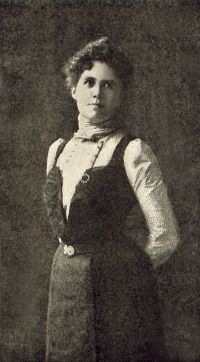 Helen Churchill Candee,
The Tapestry Book
Helen Churchill Candee,
The Tapestry Book
“ But once we can find that these people were not forever transfixed to frieze, but were as simple, as industrious, as human as we, the kinship is established, and through their veins begins to flow the stream that is common to all humanity. ”
Roscoe Burdette Tobias, Women As Sex Vendors (1918)
“ We have three main forms of the family, corresponding in general to the three main stages of human development. For savagery group marriage, for barbarism the pairing family, for civilization, monogamy supplemented by adultery and prostitution. ”
 Bjørnstjerne Bjørnson,
Three Comedies
Bjørnstjerne Bjørnson,
Three Comedies
“ Let me tell you this: the life that disregards marriage or loosens the bonds of marriage, or transforms the whole institution—you know very well what I mean—the life that is accused of using the "weapons of seduction" in its fashions, its luxury, its entertainments, its art, its theatre—that life is one of the most potent factors in these teeming cities, one of the most fruitful sources of their existence! ”
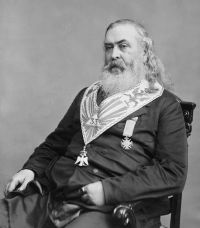 Albert Pike,
Morals and Dogma of the Ancient and Accepted Scottish Rite of Freemasonry
Albert Pike,
Morals and Dogma of the Ancient and Accepted Scottish Rite of Freemasonry
“ To comfort misfortune, to popularize knowledge, to teach whatever is true and pure in religion and philosophy, to accustom men to respect order and the proprieties of life, to point out the way to genuine happiness, to prepare for that fortunate period, when all the factions of the Human Family, united by the bonds of Toleration and Fraternity, shall be but one household,—these are labors that may well excite zeal and even enthusiasm. ”
Baron John Francis Arundell Arundell of Wardour, Tradition, Principally with Reference to Mythology and the Law of Nations
“ But from our point of view it must be regarded not as an age of barbarism, but of prosperity,—not as a state of equality, but of the subordination of the members of the family to each chief, and of families relatively to each other; an age of much mental vigour and spiritual intuition, and, so far from being a period of misery, it left reminiscences of happiness such as lingered long in the memory of mankind. ”
 Ralph Waldo Emerson,
Society and Solitude — Society and Solitude
(1870)
Ralph Waldo Emerson,
Society and Solitude — Society and Solitude
(1870)
“ A higher civility will re–establish in our customs a certain reverence which we have lost. What to do with these brisk young men who break through all fences, and make themselves at home in every house? ”
Emory Adams Allen, The Golden Gems of Life; Or, Gathered Jewels for the Home Circle
“ Marriage, then, should be made a study. Every youth, both male and female, should so consider it. It is the grand social institution of humanity. Its laws and relations are of momentous importance to the race. Shall it be entered blindly, in total ignorance of what it is, what its conditions of happiness are? Its relations involve some of the most stern duties and acts of self-denial that men are called upon to perform. Shall youth enter upon its relations without a knowledge of these duties? ”
 Havelock Ellis,
Little Essays of Love and Virtue
(1922)
Havelock Ellis,
Little Essays of Love and Virtue
(1922)
“ No doubt, however, marriage and the home will undergo modifications, which will tend to make these ancient institutions a little more flexible and to permit a greater degree of variation to meet special circumstances. We can occupy ourselves with no more essential task, whether as regards ourselves or the race, than to make more beautiful the House of Life for the dwelling of Love. ”
Frances Parker, Hope Hathaway: A Story of Western Ranch Life
“ Both of you young and gay, and in love with life and its frivolities—both the center of your set, and both rattle-brained enough to want to keep that center and throw away your lives in the whirling, rapid stream of society. ”
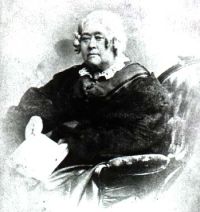 Elizabeth P. Peabody,
Aesthetic Papers
(1849)
Elizabeth P. Peabody,
Aesthetic Papers
(1849)
“ Their principle was respect and justice to the inferior, protection to the weak, and true organization for life. With the rich humor and pure mirthfulness known only to the serious and chaste, they were severe without austerity; simple in private life, that they might be splendid in all that pertained to religious rites and public duties; with pure and dignified relations of friendship, realized on both sides, by husbands and wives, by the unmarried of both sexes, and by the old and the young. ”
 David Graham Phillips,
The Husband's Story: A Novel
(1910)
David Graham Phillips,
The Husband's Story: A Novel
(1910)
“ In fact, it is not; the only social units are individuals—capable individuals. My theory, or rather my philosophy—for it is more than a theory—my philosophy is that the family is the unit of happiness. ”
Mary Wollstonecraft Shelley, The Last Man (1826)
“ Have not they each their mate—their cherished young, their home, which, though unexpressed to us, is, I doubt not, endeared and enriched, even in their eyes, by the society which kind nature has created for them? ”
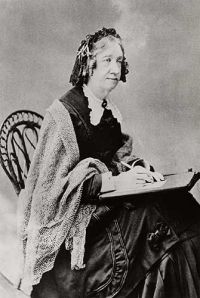 Catharine Esther Beecher,
A Treatise on Domestic Economy…
(1845)
Catharine Esther Beecher,
A Treatise on Domestic Economy…
(1845)
“ We are to seek social intercourse, to that extent, which will best promote domestic enjoyment and kindly feelings among neighbors and friends; and we are to pursue exercise and amusement, only so far as will best sustain the vigor of body and mind. For the right apportionment of time, to these and various other duties, we are to give an account to our Creator and final Judge. ”
 Hannah Webster Foster,
The Coquette, or, The History of Eliza Wharton
Hannah Webster Foster,
The Coquette, or, The History of Eliza Wharton
“ How natural and how easy the transition from one stage of life to another! Not long since, I was a gay, volatile girl, seeking satisfaction in fashionable circles and amusements; but now I am thoroughly domesticated. All my happiness is centred within the limits of my own walls, and I grudge every moment that calls me from the pleasing scenes of domestic life. ”
 Timothy East,
The Sheepfold and the Common; Or…
Timothy East,
The Sheepfold and the Common; Or…
“ And considering the immense importance of this correspondence in mental taste, tendencies, and inclinations, as a source of permanent domestic happiness, and the amazing diversity of tempers and dispositions which is known to prevail amongst human beings, will a wise man, or will a prudent female, venture to risk their felicity for life by a sudden and precipitate union? What! shall we deem it necessary to institute a severe inquiry respecting the temper, and disposition, and principles of the servants we take into our dwellings, and whom we may dismiss at our pleasure ”
Paul Janet, Elements of Morals
“ The family.—Origin and history of the family.—The family originating in the necessity of the perpetuation of the species, has gradually gained in morality until it has reached the present state, namely, monogamy, or marriage between one man and one woman: a progress so far as the dignity of woman and the equality of the sexes are concerned. ”
Oliver Wendell Holmes, John Lothrop Motley, A Memoir…
“ The society thus constituted was distinguished by great charm and grace of manner, the exclusion of all outer elements not only limiting the numbers, but giving the ease of a family party within the charmed circle. ”
George Thompson, City Crimes; Or, Life in New York and Boston
“ I 'married in haste and repented at leisure;' after my union with your father, I found him to be a cold formalist and canting religionist, continually boring me with his lectures on the sins and folly of 'fashionable dissipation,' as he termed the elegant amusements suitable to our wealth and rank and discoursing upon the pleasures of the domestic circle, and such humbugs. ”
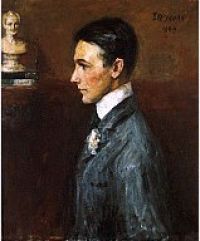 Van Wyck Brooks,
The World of H.G. Wells
Van Wyck Brooks,
The World of H.G. Wells
“ And in one of those dégagé touch-and-go sketches in which he so often sums up the history of humankind, he has presented the Normal Social Life as a "common atmosphere of cows, hens, dung, toil, ploughing, economy, and domestic intimacy," an immemorial state of being which implies on the part of men and women a perpetual acquiescence—a satisfied or hopeless consent—to the end of time. ”
William A. Smith, Lectures on the Philosophy and Practice of Slavery
“ In regard to the social principle. They are social beings. There are among them those great impulses of our nature, general love for society, and attachment to the sexes, out of which arise the affection of husband and wife, the love of parents to children, and children to parents, and all the various modifications of affection, resulting from collateral and more distant relationships. ”
Ralph Waldo Emerson,
Miscellanies
(1878)
“ Not less his eminent humanity delighted in the sense and virtue and wit of the common people. In his own household and neighbors he found characters and pets of humble class, with whom he established the best relation,—small farmers and tradesmen, shepherds, fishermen, gypsies, peasant-girls, crones,—and came with these into real ties of mutual help and good will. ”
 Jerome K. Jerome,
The New Utopia
(1891)
Jerome K. Jerome,
The New Utopia
(1891)
“ Again, wherever the Family existed, there hovered, ever contending, the angels of Joy and Sorrow; and in a world where joy and sorrow are known, Equality cannot live. One man and woman, in the night, stand weeping beside a little cot. ”
 W. E. B. Du Bois,
John Brown
(1909)
W. E. B. Du Bois,
John Brown
(1909)
“ They had risked life to help loved ones to escape its far-reaching tentacles. They had reached a laud of freedom and had begun to taste the joy of being human. Their little homes were clustering about—they had their churches, lodges, social gatherings, and newspaper. ”
Robert Montgomery Bird, The Hawks of Hawk-Hollow: A Tradition of Pennsylavania
“ Will no one have the humanity to break a leg, or his neighbour's bones, so as to afford them some employment, and us a little peace and quiet? Must we be ever afflicted with their admiration and homage? ”
 Herbert Spencer,
Popular Science Monthly
(1877)
Herbert Spencer,
Popular Science Monthly
(1877)
“ In considering deductively the connections between the forms of domestic life and the forms of social life, and in showing how these are in each type of society related to one another because jointly related to the same type of individual character, it will be convenient to deal simultaneously with the marital arrangement, the family structure, the status of women, and the status of children. ”
 Walter Lionel George,
The Intelligence of Woman
Walter Lionel George,
The Intelligence of Woman
“ There totters the family—for marriage is its base, and the more English society receives in its ranks those who have flouted it, the more it will be shaken by the new spirit which bids human creatures live together, but also with the rest of the world. ”
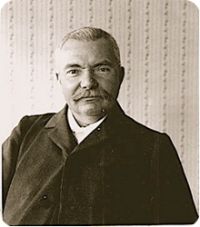 Charles Wagner,
The Simple Life
Charles Wagner,
The Simple Life
“ Worldliness wars upon the sentiment of family, and I know of no strife more impassioned. By great means and small, by all sorts of new customs, requirements and pretensions, the spirit of the world breaks into the domestic sanctuary. ”
 Jean-Jacques Rousseau,
The Social Contract
(1913)
Jean-Jacques Rousseau,
The Social Contract
(1913)
“ The first expansions of the human heart were the effects of a novel situation, which united husbands and wives, fathers and children, under one roof. The habit of living together soon gave rise to the finest feelings known to humanity, conjugal love and paternal affection. ”
“ You behold a galaxy of folk evidently born, like yourself, anew. Some, like yourself, are solitary. Others are with wives, with children—but with new wives, new children. The associations of home have been forgotten, even though home's actual appendages be here. ”
 Robert Rainy,
The Expositor's Bible: The Epistle to the Philippians
Robert Rainy,
The Expositor's Bible: The Epistle to the Philippians
“ But in morals and in spiritual life this is only the beginning of another process—namely, the subjective individual entrance into the meaning of it all and the practical appropriation of it. I know the whole of duty on the human side: I am to love my neighbour as myself. ”
 Thorstein Veblen,
The Theory of the Leisure Class
(1899)
Thorstein Veblen,
The Theory of the Leisure Class
(1899)
“ Among these alien motives which affect the devout scheme in its later growth, may be mentioned the motives of charity and of social good-fellowship, or conviviality, or, in more general terms, the various expressions of the sense of human solidarity and sympathy. ”
“ But nature was too strong for habit; her upright, fearless mind acknowledged kinship with these hard-working men and women, to whom pleasure is not save in toil, whose whole life is one long unconscious sacrifice to their country. ”
| editor, Oregon Historical Quarterly (1915)
“ If they could sit down at night as they come in from their daily labor, take up a religious periodical and read their half-clad families some interesting accounts of the triumphs of grace over depravity instead of meditating and teaching the principles of revenge, how would the family circle be cheered and the lowering cloud of our Western solitude be dissipated ! ”
 T. S. Arthur,
Heart-Histories and Life-Pictures
T. S. Arthur,
Heart-Histories and Life-Pictures
“ Day after day, as now, patient, and hopeful, the husbandman enters upon the work that lies before him, and, hand in hand with God's blessed sunshine, dews, and rain, a loving and earnest co-laborer, brings forth from earth's treasure-house of blessings good gifts for his fellow-men. Is all this commonplace? How great and good is the commonplace! ”
Jean-Jacques Rousseau,
The Social Contract & Discourses
“ They accustomed themselves to assemble before their huts round a large tree; singing and dancing, the true offspring of love and leisure, became the amusement, or rather the occupation, of men and women thus assembled together with nothing else to do. ”
 Eleanor Hallowell Abbott,
Rainy Week
Eleanor Hallowell Abbott,
Rainy Week
“ But the deliberate and relentlessly-planned assemblage of such distinctly diverse types of men and women as prodded by unusual conditions of weather, domicile, and propinquity, will best act and re-act upon each other in terms inevitably dramatic, though most naively unrehearsed! ”
 Edward Bulwer-Lytton,
The Coming Race
(1871)
Edward Bulwer-Lytton,
The Coming Race
(1871)
“ My host then proceeded to question me as to the habits and modes of life among the races on the upper earth, more especially among those considered to be the most advanced in that civilisation which he was pleased to define "the art of diffusing throughout a community the tranquil happiness which belongs to a virtuous and well-ordered household." ”
 George E. Ellis,
The Red Man and the White Man in North America
(1882)
George E. Ellis,
The Red Man and the White Man in North America
(1882)
“ These self-reliant men, not infrequently too with wives and children who match them in their vigor and resource, passing beyond the ever-moving line and tide of emigration, have been well described as hanging like the froth of the billows on its very edge. These, too, are a miscellaneous gathering from our common humanity. ”
 Charles Dudley Warner,
The Complete Essays of Charles Dudley Warner
Charles Dudley Warner,
The Complete Essays of Charles Dudley Warner
“ It is a tremendous experiment, we all admit, to separate a person from his race, from his country, from his climate, and the habits of his part of the country, by marriage; it is only an experiment differing in degree to introduce him by marriage into a new circle of kinsfolk. ”
Eva Shaw McLaren, Elsie Inglis: The Woman with the Torch
“ The members of every family, every group of blood relations, are held together by the unseen spirit of their generations. It matters little whether they can trace their descent or not; the peculiar spirit of that race which is theirs fashions them for particular purposes and work. ”
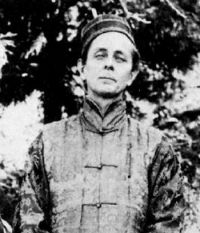 W. Y. Evans-Wentz,
The Fairy-Faith in Celtic Countries
W. Y. Evans-Wentz,
The Fairy-Faith in Celtic Countries
“ Ils reprennent leur place à leur foyer d’autrefois, ils vaquent à leurs anciens travaux, ils s’intéressent au logis, aux champs, à la barque; ils se comportent, en un mot, comme ce peuple des hommes et des femmes-fées qui formait jadis une espèce d’humanité plus fine et plus délicate au milieu de la véritable humanité. ”
