Jumper

Definition and stakes

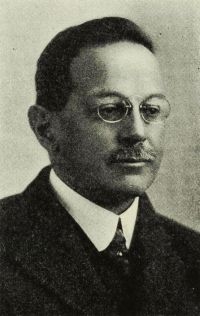
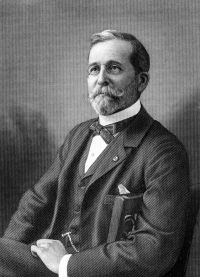
Portrait of Samuel Scoville Samuel Scoville,  Everyday Adventures

“ In a graceful curve, with tip upturned, it balances and guides him through the air in a jump which will cover over forty times his own length, equivalent to a performance of two hundred and forty feet by a human jumper. The instant he strikes, the jumper soars away again like a bird, at right angles to his first jump, and zigzags here and there through the air, so fast and so far as to baffle even the swift hawk and the dogged weasel.
Every day Mr. Jumping Mouse washes and polishes his immaculate self, and draws his long silky tail through his mouth until every hair shines.
”
Source: Gutenberg

J. P. Mills,  The Lhota Nagas (1922)

“ A good jumper can clear a reed the height of his own chin. For the long jump a flat stone is put in position to take off from, and the mark which counts is that made by the jumper’s feet in landing, whether he falls backwards or not. For the “jump-and-kick” [83] (nshü) the jumper makes a standing jump and while in the air kicks with both feet together at some mark such as a leaf stuck on the end of an upright spear. It is quite common for a man to be able to kick a mark as high above his head as he can reach with his hand. ”
Source: Gutenberg

Girls and Athletics

“ The jumper stands with both feet on the take-off, toes overlapping the outer edge to get a grip. Many jumpers like to rock back and forth on the toes, knees 58 slightly bent; the arms also are swung gently backward and forward. When the jumper is ready to spring, the arms should be held above the head and brought back with a snap as the spring is made, with the knees bent forward and all the strength concentrated for the jump. As in the running broad, the jump should be high, thus the eyes should be fixed on a spot high and beyond the distance you expect to jump. ”
Source: Gutenberg

Get perspective with Kwize: daily news enlightened by great literature