
“ Coming out of the lane along the darkness, with the dark space spreading down to the wind, and the twinkling lights of the station below, the far-off windy chuff of a shunting train, the tiny clink-clink-clink of the wagons blown between the wind, the light of Beldover-edge twinkling upon the blackness of the hill opposite, the glow of the furnaces along the railway to the right, their steps began to falter. ”
Light railway
Definition and stakes
The theme of “light railway” has been addressed by authors such as Arthur H. Beavan, Edwin A. Pratt, Samuel Smiles, William Hemingway Mills and Joseph Tatlow. It is often associated with terms like locomotive, train, rail, electricity and tunnel.
Quotes about “light railway”
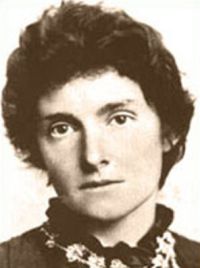 E. Nesbit,
The Railway Children
“ The railway carriage suddenly grows like night—with lamps, of course, unless you are in a slow local train, in which case lamps are not always provided. Then by and by the darkness outside the carriage window is touched by puffs of cloudy whiteness, then you see a blue light on the walls of the tunnel, then the sound of the moving train changes once more, and you are out in the good open air again, and grown-ups let the straps go. ”
Joseph Tatlow, Fifty Years of Railway Life in England…
“ Later in life, when he was Lord Allerton, and Chairman of the Great Northern Railway of England, I met him again and liked him well.In 1889 there were no light railways in Great Britain, or practically none. Except in Ireland they are of modern growth. What really constitutes a light railway it is not easy to say. Commonly it is thought to be a matter of gauge, but that is not so. Mr. Acworth says: “such a definition is in the nature of things impossible,” but that, “a light railway must be something simpler and cheaper than an ordinary railway.” ”
Arthur H. Beavan, Tube, Train, Tram, and Car; or…
“ The originators of the Act did not define what a Light Railway really is, but they evidently had in their minds, inter alia, that railways, unrestricted by Board of Trade regulations as to fencing, sidings, gradients, and permanent stations, should be permitted to run along the high roads, acting as feeders to the existing lines, to the benefit of the small towns, villages, and farms near which they passed. ”
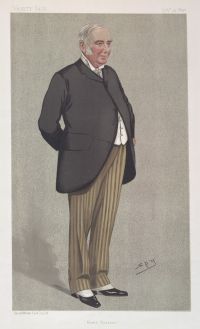 George Findlay,
The Working and Management of an English Railway
(1889)
“ It must not be supposed that the London and North Western Company, in their endeavours to secure an improved system of lighting their passenger carriages, have overlooked the question of electric lighting, or that they have been oblivious of the experiments which have been made in this direction upon various railways, but chiefly upon the Southern lines. They are, on the contrary, perfectly alive to the fact that in all probability the electric light is the light of the future for railway carriages, as for most other purposes ”
Arthur H. Beavan, Tube, Train, Tram, and Car; or…
“ At the same time I do not believe that it will be so much with the high-speed work as with the tramway and light railway work that electricity will be of the greatest service to the public in the future. ”
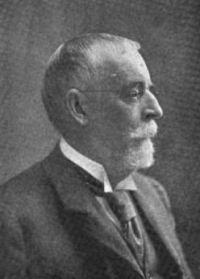 Thomas Curtis Clarke,
The American Railway: Its Construction…
“ The system is almost absolutely safe, not unreasonably expensive, and may be made to give satisfactory and even brilliant illumination; but the ideal light for railroad trains will probably be found in electricity. ”
Robert Stevenson, An Account of the Bell Rock Light-House
“ From this, as a centre, the Railways ramify in various directions. Upon these the materials for the erection of the house were conveyed, and they are still partly preserved, as convenient foot-paths and wharfs, in landing stores for the Light-house. The portions of the Railway-tracks marked with light dotted lines, were only used during the continuation of the works; while those of a deeper shade represent the permanent railways. ”
1911 Encyclopædia Britannica (1911)
“ The Light Railways Act 1896 was to remain in force only until the end of 1901 unless continued by parliament, but it was continued year by year under the Expiring Laws Continuance Act. In 1901 the president of the Board of Trade introduced a bill to continue the act until 1906, and to amend it so as to make it authorize the construction of a light railway on any highway, the object being to abolish the restriction that a light railway should run into the area of at least two local authorities ”
Samuel Smiles, Lives of the Engineers
“ It was ingenious, clever, scientific, and all that; but railways were commercial enterprises, not toys; and if the atmospheric railway could not work to a profit, it would not do. Considered in this light, he even went so far as to call it “a great humbug.” “Nothing will beat the locomotive,” said he, “for efficiency in all weathers, for economy in drawing loads of average weight, and for power and speed as occasion may require.” ”
William Hemingway Mills, Railway Construction
“ In addition to its success in the telegraph, in the telephone, and in its brilliant light, electricity is every day coming more and more to the front as a motive-power. At present many tramways and short lines, some of them in tunnel, some above ground, and many of them with very steep gradients, are successfully worked by electricity; but these, being of modern construction, were specially designed and equipped for that method of working, and none of them as yet resort to high speeds. ”
Various, Scientific American Supplement…
“ The number of carriages and trucks for the transport of passengers and goods is 118.The success thus attained by the narrow-gauge line goes far to prove how unfounded is the judgment pronounced by those who hold that light railways will never suffice for continuous traffic. These opinions are based on certain cases in the colonies, where it was thought fit to adopt a light rail weighing about 18 lb. to 27 lb. per yard, and keeping the old normal gauge. ”
William Hemingway Mills, Railway Construction
“ The heavy engines could be kept for the main-line working, and light engines for slow speeds would serve for the light standard-gauge lines. As traffic developed, and the train service required heavier and faster trains, the light rails could be removed, and replaced by those of heavier section to correspond to the main line. The similarity of gauge would permit uninterrupted transit of all vehicles to a common centre for repairs, whereas the narrow gauge carriages and waggons, being limited to running only on their own district, must have separate workshops for their repair. ”
William Hemingway Mills, Railway Construction
“ Except in tropical countries, where shade is more acceptable than strong light, a liberal amount of glass should be provided in these platform roofs. On many of our home railways they are entirely covered with glass, and the abundance of light is found to be of great assistance in the working of the traffic. ”
Thomas Curtis Clarke,
The American Railway: Its Construction…
“ As the track is the fundamental feature, the cross-ties or sleepers and rails should be the best. Iron rails are practically out of date, and it is fair to assume that the time is approaching when wooden ties will be things of the past. Where the traffic is light, heavy steel rails may not be necessary ”
Government of Hong Kong, Railway Network (2006)
“ Light Rail is a local transportation network run by the KCRC. Light Rail started operation in 1988 to meet the transport needs of the residents in the Northwest New Territories. A 4.4-kilometre extension of Light Rail to the newly developed areas of Tin Shui Wai was opened in December 2003. It now has a route length of about 36 kilometres with 68 stops. Light Rail has a maximum speed of 80 kilometres per hour and carries about 370 000 passenger trips every day. ”
Arthur H. Beavan, Tube, Train, Tram, and Car; or…
“ Electricity as a locomotive force is being presented to the public in various forms. There is the ordinary railway, like the Underground, that, cleansing itself, amending its ways, and becoming converted to the new order of traction, has been granted a new lease of life. Then there are new lines laid down, intended from the first to be electrical, with specially designed cars, diving beneath the Thames, and connecting the north and south of London. These are our metropolitan pioneer electric railways. ”
 Ernest Ingersoll,
The Crest of the Continent: A Summer's Ramble in the Rocky Mountains and Beyond
“ Think of swinging a train round a curve of only thirty degrees, on a very stiff grade, and with a bridge directly in the center of the turn! That is what this audacious railway does every few hours in the “toe” of the Muleshoe. From our lonely night-gripped dot of a house on the wild hill side, we could see squarely facing us both the Cyclopean blaze of the fierce headlight, and the two watchful red eyes glaring scornfully from the rear platform; by that we knew that the train had doubled on its own length of only six cars. ”
Frederick Arthur Ambrose Talbot, The Railway Conquest of the World (1911)
“ They weigh 135 tons, and develop about 2000 horse-power, which enables them to haul a 1000-ton train up the heavy approach grades at a minimum speed of 10 miles per hour. Moreover, since electricity was adopted, the tunnel has been kept free from the dense clouds of smoke and steam which originally converted the tube into a veritable inferno, and, what is far more important from the railway company’s point of view, the electrical system is able to meet three times the volume of traffic that exists to-day, so that there is ample provision for the future. ”
Various, Popular Science Monthly (1893)
“ Wherever traffic is dense and the distance to be traversed not too great, the conditions are already present for the advent of this form of locomotive; and when we recall the rapidity with which city and suburban railways have spread, we can not doubt that once the problems of electric railway engineering are worked out, and the necessary preliminary work of demonstration gone through with, we will witness an equally rapid extension of electric traction to the steam highways of the world. ”
Adam Gowens Whyte, Electricity in Locomotion
“ There is still some doubt in the minds of railway engineers whether electric traction is really superior to the steam locomotive on the main railway lines, where distances are great and train loads heavy. ”
Samuel Smiles, The Life of George Stephenson and of his Son Robert Stephenson
“ The system of cast-iron railways is as yet to be considered but in its infancy. It will be found to be an immense improvement on the common road, and also on the wooden railway. It neither presents the friction of the tram-way, nor partakes of the perishable nature of the wooden railway, and, as regards utility, it may be considered as the medium between the navigable canal and the common road. We may therefore hope that as this system develops itself, our roads will be laid out as much as possible on one level, and in connection with the great lines of communication throughout the country. ”
A. K. Astbury, British Railways (1951)
“ Here is one of them being pushed on to the train ferry at Harwich on its way to Holland for trials on the Dutch electrified railway system. On the top of the locomotive, folded fiat, you can see the pantograph. And yet power – steam, diesel, or electric – could not drive this vast and intricate machine of British Railways without what you might call the permanent installations of the railways – track, stations, bridges, warehouses. As far as track is concerned, our forefathers did their job well. We do not often have to lay new railways. ”
William Hemingway Mills, Railway Construction
“ Block-Telegraph Signalling.—However complete the outdoor signals and interlocking at any station, they can only control the movement of trains within their range, and something more is requisite to ensure the safe working of the traffic over the long lengths of line between stations. For some years a time-interval was allowed for the working of trains following one another on the UP and DOWN lines of a double line railway, no train being allowed to leave a station sooner than a fixed number of minutes after a previous train had started in the same direction. ”
Arthur H. Beavan, Tube, Train, Tram, and Car; or…
“ Anticipating railways and electric tubes, he would probably, with the marvellous fertility of resource that distinguished him, have formulated a plan whereby a given circular space in the metropolis would be divided into sections, a mile square, with a station in the centre and at each corner, so that all within that area would have access to a railway, at no point more than half a mile distant, the tube railways below the surface, and others above, converging at a great central depôt. ”
William Hemingway Mills, Railway Construction
“ The travelling public speak as calmly now of a speed of seventy miles an hour as they did of thirty-five a few years ago; they thoroughly recognize the value of railways, and they merely desire to travel still faster. The incentives of emulation and competition are ever present to encourage further and further reduction of the running time, and the railway that offers a special fast through service for some of its passenger and mail trains, reasonably expects its popularity and patronage to be in the ascendant. ”
Charles Melville Pepper, Panama to Patagonia
“ Night trains never have been run on the line, but this innovation may be made. Practical railroad men say that there is no more danger in the night than in the day, for in the daytime, with so many abrupt curves and tunnels, it never is possible to see very far ahead, and the locomotive headlight might really be an advantage. The chief trouble of the railway management is in preventing landslides, but the greatest damage has been wrought by cloudbursts. ”
 Edwin A. Pratt,
A History of Inland Transport and Communication in England…
(1912)
“ To see waggons with flat wheels drawn over cast-iron rails one yard long by a horse, cannot fail to interest those who watch the workings of railways, and it most clearly shows the great improvements made and the perseverance which has been required to develop the present gigantic railway system out of such small beginnings. ”
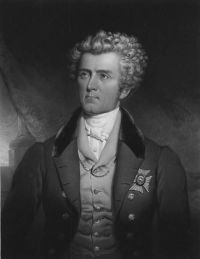 Sir Francis Bond Head,
Stokers and pokers
“ In order to distinguish the Trains while running on the Liverpool and Manchester Branch, the Grand Junction Passenger Trains will carry two White Lights, and the Merchandize Trains two Green Lights, between Liverpool and Warrington, and the North Union Passenger Trains will carry a Blue instead of a White Light on the Buffer Plank of Passenger Trains, and a Blue in addition to the Green Light on the Merchandize and Coal Trains.16. Every Train, after sunset or in foggy weather, shall carry one or more Red Tail Lights, according to the description of the Train. ”
Railway Adventures and Anecdotes…
“ The genius loci must look with wonder on the gigantic offspring of the little railway, which has swallowed up its own sire. Lean mules no longer crawl leisurely along the little rails with trucks of stone through Croydon, once perchance during the day, but the whistle and the rush of the locomotive are now heard all day long. ”
Arthur H. Beavan, Tube, Train, Tram, and Car; or…
“ On each side of the A-shaped trestle are fixed two guide-rails fitting close into horizontal grooved wheels effectually checking all oscillation. In front is the bogie locomotive motor with a pointed bow, the stern of the car also being pointed, so that the entire arrangement resembles when seen from above a great stickless rocket with a sharp and flexible snout.As the sister isle was the first to adopt electricity to a railway (vide Chapter II.) , so was she the pioneer of mono-railism. ”
William Hemingway Mills, Railway Construction
“ In one case, a powerful electric motor-car has been introduced for working frequent and heavy trains through a long tunnel, where the atmosphere with ordinary steam locomotives became foul almost to suffocation, and the result has shown that the traffic can be hauled efficiently by electricity, and the air in the tunnel maintained pure and clear. ”
Samuel Smiles, The Life of George Stephenson and of his Son Robert Stephenson
“ The Electric Telegraph has also been found a valuable auxiliary in insuring the safe working of large railway traffics. Though the locomotive may run at sixty miles an hour, electricity, when at its fastest, travels at the rate of 288,000 miles a second, and is therefore always able to herald the coming train. The electric telegraph may, indeed, be regarded as the nervous system of the railway. ”
Frederick Arthur Ambrose Talbot, The Railway Conquest of the World (1911)
“ For several years it held a unique position among the great systems of the world as the narrowest gauge line in operation. The metals are laid only 231⁄4 inches apart—less than half the distance between the rails forming the roads of the greater proportion of steel highways bounding the globe—and yet it has a traffic which many a more important railway would have just cause to envy. ”
Related terms
Authors who wrote about “light railway”
Arthur H. BeavanEdwin A. PrattSamuel SmilesWilliam Hemingway MillsJoseph TatlowThomas Curtis ClarkeSir Cusack P. RoneyGeorge FindlayAdam Gowens WhyteCharles Shattuck HillFrederick Arthur Ambrose Talbot William Henry PreeceA. K. Astburybart. Sir Arthur Percival HeywoodVariousHoward ElliottCharles Melville PepperGovernment of Hong Kong
 Charles G. HarperSir Francis Bond Head
Edwin A. PrattSamuel SmilesWilliam Hemingway MillsJoseph TatlowThomas Curtis ClarkeSir Cusack P. RoneyGeorge FindlayAdam Gowens WhyteCharles Shattuck HillFrederick Arthur Ambrose TalbotWilliam Henry PreeceA. K. Astburybart. Sir Arthur Percival HeywoodVariousHoward ElliottCharles Melville PepperGovernment of Hong KongCharles G. HarperSir Francis Bond Head