Magenta

Definition and stakes

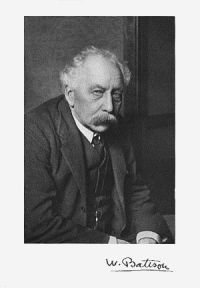
Portrait of William Bateson William Bateson,  Problems of Genetics

“ For instance one of the garden forms of Pelargonium known as altum is liable perhaps once in some hundreds of flowers to have one or two magenta petals. The normal colour is a brilliant red; and as we may be fairly sure that this red is recessive to magenta the interpretation would be quite different according as the appearance of the magenta is regarded as due to the presence of small areas endowed with magentaness, or to the spontaneous generation of the factor for that pigment. ”
Source: Gutenberg

Watson Smith,  The Chemistry of Hat Manufacturing

“ Turmeric dyes the first yellow, like it did the cotton. Magenta, however, permanently dyes the woollen as it did not the cotton. Alizarin only stains the untreated woollen, whilst the piece treated with alumina is dyed red, and that with iron, purple. If, however, the pieces treated with iron and alumina had been dyed in the Magenta solution, only one colour would have been the result, and that a Magenta-red in each case. Here we have, as proved by our experiments, two distinct classes of colouring matters. The one class comprises those which are of themselves the actual colour. ”
Source: Gutenberg

George Field,  Field's Chromatography

“ The history of these colours reads more like a romance than a sober story, but to the artist it is of slight practical interest. Sufficiently stable as dyes, though they be, coal-tar colours are not adapted to the palette. Mauve, magenta, with a few others, hare been introduced as pigments and fairly tried, but a want of permanence has been fatal to their success. Mauve is more durable than magenta, and the rest vary in stability, but none of them have proved really fitted for artists' colours. Exposed to light and air, they all more or less fade, especially in thin washes ”
Source: Gutenberg

Get perspective with Kwize: daily news enlightened by great literature