Marble column

Definition and stakes

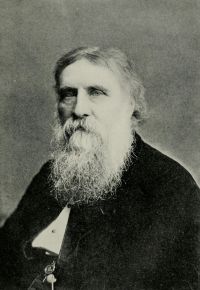
John L. Stoddard,  John L. Stoddard's Lectures, Vol…

“ Around it, on two sides, are long arcades of marble columns, the lower ones adorned with sculptures in relief, the upper ones ending in graceful circles pierced with quatrefoils. Above them is the crowning glory of the building,—a beautiful expanse of variegated marble, with intricate designs running diagonally over its surface. At every corner the twisted column of Byzantine architecture is observed, and on the border of the roof a fringe of pinnacles and pointed arches cuts its keen silhouette against the sky. ”
Source: Gutenberg

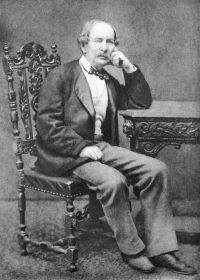
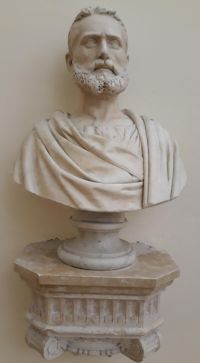
Portrait of John Henry Parker John Henry Parker,  The archæology of Rome, Part VII (1876)

“ A great number of large marble columns and capitals of the Composite order, rudely worked, as if on purpose to be seen from a great distance only, have rolled down from the edge of the upper gallery to the arena below, probably in an earthquake. They must have fallen before the substructures were filled up with earth, as many of them were found at the bottom on the old pavement, which they had damaged by falling upon it, and some have made holes through great walls, and were found lying with half the column on the inner side of the wall, and the other half on the outer one. ”
Source: Gutenberg

T. Roger Smith,  Architecture: Gothic and Renaissance

“ The use of constructive columns is general; piers are by no means unknown, but fine shafts of marble meet the eye frequently in Italian churches. The constant use of the column for decorative purposes is a marked characteristic. Not only is it employed where French and English architects used it, as in the jambs of doorways, but it constantly replaces the mullion in traceried windows. It is employed as an ornament at the angles of buildings to take off the harshness of a sharp corner, and it is introduced in many unexpected and often picturesque situations. ”
Source: Gutenberg

Get perspective with Kwize: daily news enlightened by great literature