Mezzo-soprano

Definition and stakes

Florence Ashton Marshall,  A Dictionary of Music and Musicians (1900)

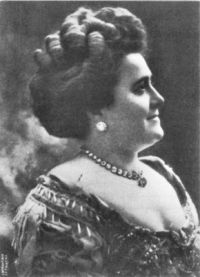
“ Her performances are still fresh in the memory of all opera and concert goers. Never was so mighty a soprano voice so sweet and luscious in its tone: like a serene, full, light, without dazzle or glare, it filled the largest arena without appearing to penetrate. It had none of a soprano's shrillness or of that peculiar clearness called 'silvery'; when it declined, as it eventually did, in power, it never became wiry. It had a mezzo-soprano quality extending to the highest register, perfectly even throughout, and softer than velvet. Her acting in no way detracted from her singing ”
Source: Wikisource

A Dictionary of Music and Musicians (1900)

“ The low mezzo-soprano, which might be called mezzo-contralto, can generally make a shift to sing contralto music, but the voice lacks the heavy lower notes necessary to give the music its full effect. It is in the large spaces of our modern concert-halls that these deficiencies make themselves most felt. The true mezzo-soprano, not forced out of its proper limit, is a very fine type of voice. ”
Source: Wikisource

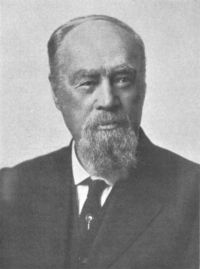
Portrait of Felix Moscheles Felix Moscheles,  Fragments of an Autobiography

“ I would show them how easy it is to compose a masterpiece if you only know the secrets of the trade, and I would notably convince them that, if they would follow some very simple directions of mine, they could then and there write an Italian opera.
Singing-masters, it is well known, never agree as to the best way of cultivating a voice entrusted to their care. One will work a mezzo-soprano downwards to a contralto, the other upwards to a high soprano. With me the wiseacres never could settle which of my voices I ought to have developed—my bass voice, my tenor, or my soprano.
”
Source: Gutenberg

Get perspective with Kwize: daily news enlightened by great literature