“ The last pair of legs in the centipede and millipede are never used for walking, and are generally much longer than the rest. In a South American species they are provided with delicate nerves, and are used as antennæ or 'feelers,' so that the animal is armed with organs of touch at each end of the body! In one kind of millipede, in the male the last pair of legs has a sound-producing apparatus, consisting of a ridged plate, which, by being rubbed against a set of tiny, bead-like bodies set in the surface of the last shield covering the body, produces a peculiar noise. ”
Millipede
Definition and stakes
The theme of “millipede” has been addressed by authors such as Various, Thomas R. Henry and Sir John William Dawson. It is often associated with terms like insect, myriapod, leg, centipede and spider.
Quotes about “millipede”
 Sir John William Dawson,
Some Salient Points in the Science of the Earth
Sir John William Dawson,
Some Salient Points in the Science of the Earth
“ No transmutationist can have the hardihood to assert the convertibility, by any direct method, of a snail into a millipede or an insect, or of either into a reptile. The plan of structure in these creatures is not only different, but contrasted in its most essential features. It would be far more natural to suppose that these animals sprang from aquatic species of their respective types. We should then seek for the ancestors of the snail in aquatic Gasteropods, for those of the millipede in worms or Crustaceans, and for those of the reptiles in the fishes of the period. ”
“ Grown-up insects seem to be very short of legs compared with many of their distant relatives. Thus, while no member of the insect tribe—when grown up—has more than six legs, the Centipede or the Millipede may, as their names imply, possess a far greater number—as many, indeed, as two hundred and forty-two! But there is one curious likeness between the legs of the insects and those of their relatives—the number of pairs of legs is always odd. ”
Various, Punch, or the London Charivari…
“ Another animal which shares with the hedgehog the defensive faculty of rolling itself up in a ball is the "pill millipede," a myriopod with seventeen pairs of legs, but fortunately exempt from the necessity of wearing trousers, which at present prices would impose an exorbitant demand on its resources. ”
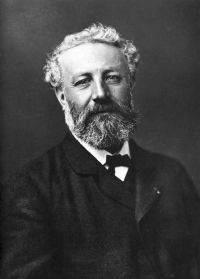 Jules Verne,
20,000 Leagues Under the Seas…
(1870)
Jules Verne,
20,000 Leagues Under the Seas…
(1870)
“ Often we went around tall, pointed rocks rising like pyramids. In their dark crevices huge crustaceans, aiming their long legs like heavy artillery, watched us with unblinking eyes, while underfoot there crept millipedes, bloodworms, aricia worms, and annelid worms, whose antennas and tubular tentacles were incredibly long. ”
Thomas R. Henry, The Strangest Things in the World… (1958)
“ The female of one European species burrows in the earth, moistens bits of soil with a sticky fluid from the salivary glands in her mouth, and thus makes tiny bricks. These she builds into the form of a hollow sphere, about the size of a walnut, with a hole in the top through which she lays from 50 to 100 eggs. Others lay their eggs in bunches in the soil and coil around them until they hatch. Mothers may even remain with the young for a few days.The bite of the millipede, unlike that of the centipede, is not poisonous. ”
1911 Encyclopædia Britannica (1911)
“ MYRIAPODA (Gr. for “ many-legged ”) , arthropod animals of which centipedes and millipedes are familiar examples. Linnaeus included them in his Insecta Aptera together with Crustacea and Arachnida; in 1796 P. A. Latreille designated them as Myriopoda, making of them, along with the Crustacean Oniscus, one of the seven orders into which he divided the Aptera of Linnaeus. Later on J. C. Savigny, by study of the mouth-parts, clearly distinguished them from Insects and Crustacea. In 1814 W. E. Leach defined them and divided them into Centipedes and Millipedes. ”
Thomas R. Henry, The Strangest Things in the World… (1958)
“ The animal has twenty to forty legs, two pair on each segment of the body—a characteristic in which it differs striking from the centipedes to whom it is only distantly related. Movement is in an almost mathematically straight line, with a series of wave-like undulations in which apparently all the legs on one side of the body move in unison. All millipedes are essentially blind. Their eyes are able only to distinguish light from dark, but as they crawl every inch of their path is explored by their delicately sensitive antennae. ”
 Reginald Innes Pocock,
1911 Encyclopædia Britannica
(1911)
Reginald Innes Pocock,
1911 Encyclopædia Britannica
(1911)
“ Habits, &c.—Millipedes are principally cryptozoic, living under stones or logs of wood in damp, secluded localities. They feed almost wholly upon decaying vegetable matter, and drink a considerable quantity of water. Some of the tropical species emerge in numbers from their hiding-places after heavy rains, and crawl over the ground and bushes in search of moisture in broad daylight. ”
Sir John William Dawson,
Some Salient Points in the Science of the Earth
“ The coal formation rocks have afforded Land Snails, Millipedes, Spiders, Scorpions and Insects, so that all the great types of invertebrate life which up to this day can live on land already had representatives in this ancient period. Some of them, indeed, we can trace further back, the land snails probably to the Devonian, the Millipedes to the same period, and the Scorpions and insects as far as the Silurian. ”
Thomas R. Henry, The Strangest Things in the World… (1958)
“ They may swarm in basements and on ground floors. They crawl up walls and drop from ceilings. These invasions usually take place in the autumn and presumably are associated with migrations to find winter quarters. In some cottages surrounded by trees as many as seven hundred have been counted in a room in one evening. However embarrassing to hosts, it must be realized that millipedes never bite and that they do no damage to furniture. The only accusation yet made against them refers to one species, the so-called greenhouse millipede, which may cause considerable damage to potted plants. ”
 Aristotle,
On the Parts of Animals — Book IV
(1912)
Aristotle,
On the Parts of Animals — Book IV
(1912)
“ We will begin with Insects. These animals, though they present no great multiplicity of parts, are not without diversities when compared with each other. They are all manyfooted; the object of this being to compensate their natural slowness and frigidity, and give greater activity to their motions. Accordingly we find that those which, as the (Millipedes) , have long bodies, and are therefore the most liable to refrigeration, have also the greatest number of feet. ”
Sir John William Dawson,
The Story of the Earth and Man
“ A curious and exceptional little group of creatures in the present world is that of the galley-worms or millipedes; wingless, many-jointed, and many-footed crawlers, resembling worms, but more allied to insects. These animals seem to have swarmed in the coal forests, and perhaps attained their maximum numbers and importance in this period, though they still remain, a relic of an ancient comprehensive type. ”
Elliott O'Donnell, Byways of Ghost-Land
“ Around the feet of the spellbound watchers have sprung up rank blades of Brobdingnagian grass and creepers, out of which have crept, with lurid eyes, prodigious millipedes, cockroaches, white ants, myriapods and scorpions, whilst added to the moaning and sighing of the trees has been the humming of stone-flies, dragon-flies, and locusts. Galleries and shafts have echoed and re-echoed with these noises of the old world, which yet lives, and will continue to live, maybe, to the end of time. ”
 Horatio C Wood, Jr.,
The Myriapoda of North America
(1865)
Horatio C Wood, Jr.,
The Myriapoda of North America
(1865)
“ Now, their method of development is similar to that of the Vermes, hence the reason of their being placed next above them. When a spider, or insect, or crustacean leaves the egg, its body has its maximum number of segments, and development takes place by the coalescence and disappearance of some of these. The embryonic myriapod, on the contrary, has its minimum number of segments, and develops by their increase. So that whilst the adult insect has generally fewer, never more segments than the young, the adult myriapod may have eight times as many, and never fewer than its young. [3] ”
 Henry Scherren,
Through a pocket lens
(1897)
Henry Scherren,
Through a pocket lens
(1897)
“ On examining it more closely to ascertain the cause of its unusual movements, I found that a millepede had fastened itself to the side of the worm, and appeared to be boring or eating its way into the body, whilst the most violent efforts on the part of the worm were ineffectual in shaking off its antagonist. If the millepede is a vegetarian, what could be its object in attacking so harmless and defenceless a creature as the earthworm? ”
Sir John William Dawson,
The Chain of Life in Geological Time
“ All the species yet known are allied to the modern Gallyworms, though presenting special features which seem to separate them as a distinct family,46 and were probably vegetable-feeders. Some of the species have the peculiarity, unknown among their modern successors, of being armed with long spines.47 The moist, equable climate and exuberant vegetation of the Coal-period would naturally be very favourable to Millepedes, and it is likely that the discoveries made as yet give but a faint idea of their actual abundance. ”
 Vernon L. Kellogg,
Elementary Zoology, Second Edition
Vernon L. Kellogg,
Elementary Zoology, Second Edition
“ They appear to belong to the mouth-parts. The internal anatomy will be found to be, if examined, much like that of insects and can be studied from the account of the anatomy of the water-scavenger beetle and butterfly larva. Compare the Myriapods with the Hexapods or true insects. What are the points of resemblance? what are the points of difference?The Myriapoda are land-animals breathing by means of tracheæ like the insects. In them the body-segments [Pg 227] are nearly uniform in character with the exception of the head, which, as in the insects, bears the mouth-parts and antennæ. ”
 Jean-Henri Fabre,
The Glow-Worm and Other Beetles
Jean-Henri Fabre,
The Glow-Worm and Other Beetles
“ Compare with these shortcomings of the adult the expert machinations of the primary larva, which knows where its victuals are and as its first action introduces itself into the dwelling of the host that is to feed it. How can time and experience be factors of instinct? The newborn animalcule amazes us with its foresight; the adult insect astonishes us with its stupidity.With both Mylabres, the batch consists of some forty eggs, a very small number compared with those of the Oil-beetle and the Sitaris. ”
Henry Scherren,
Through a pocket lens
(1897)
“ The Myriapods are worm-shaped creatures, breathing by means of air-tubes, and furnished with a number of limbs closely resembling each [121] other. There are two groups: the Centipedes and the Millepedes. The former have the body flattened, with one pair of appendages to each segment, the first pair being modified into piercing poison-organs, and they feed on living prey. The body of the Millepedes is round, with two pairs of appendages to each segment; they have no poison-organs, and their food consists chiefly, if not entirely, of vegetable matter. ”
 Philip Henry Gosse,
The Romance of Natural History…
Philip Henry Gosse,
The Romance of Natural History…
“ See the vast Mylodon, the Scelidothere, and the still more colossal Megathere. Ponderous giants these! The very forests seem to tremble under their stately stride. Their immense bulk preponderates behind, terminating in a tail [Pg 10] of wonderful thickness and solidity: the head is mean and awakens no terror; the eye lacks lustre and threatens no violence, though the whole form betokens vast power, and the stout limbs are terminated by the same stout, inbent, sharp hoof-claws. ”
 Robert Hooke,
Micrographia
(1665)
Robert Hooke,
Micrographia
(1665)
“ And that is, Whether there be not many of those minute Creatures, such as Mites, and the like, which, though they are commonly thought of otherwise, are only the pully, or young ones, of much bigger Insects, and not the generating, or parent Insect, that has layd those Eggs; for having many times observ'd those Eggs, which usually are found in great abundance where Mites are found, it seems something strange, that so small an Animal should have an Egg so big in proportion to its body. ”
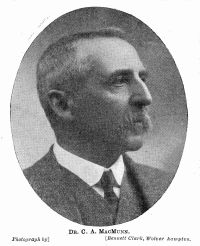 Charles Alexander MacMunn,
1911 Encyclopædia Britannica, Volume 6…
(1911)
Charles Alexander MacMunn,
1911 Encyclopædia Britannica, Volume 6…
(1911)
“ The facts that mimetic species occur in the same locality, fly at the same time of the year as their models, and are day-flying species even though they may belong to nocturnal groups, are also more or less difficult to explain except on the theory of natural selection, and so also is the fact that mimetic resemblance is produced in the most varied manner. A spider resembles its model, an ant, by a modification of its body-form into a superficial resemblance, and by holding one pair of legs to represent antennae ”
Theodore Wood, The Animal World, A Book of Natural History
“ In the first place, its body is always divided into three principal parts, which are known as the head; the thorax, or chest; and the hind body.In the second place, it always has six legs. Spiders have eight legs. Centipedes and millepedes have many legs. But an insect never has more nor less than six. And each of these limbs is made up of a thigh, a lower leg, and a foot; while the foot itself has from two to five little joints, the last of which usually has a pair of tiny claws at the tip.Besides these, there are several other ways in which insects differ from the rest of the vertebrates. ”
 Maurice Maeterlinck,
Mountain Paths
(1919)
Maurice Maeterlinck,
Mountain Paths
(1919)
“ With the oval pieces, it becomes another matter. What model has the Megachile when cutting her neat ellipses out of the delicate material for her wallets, the robinia-leaves? What ideal pattern guides her scissors? What system of measurement tells her the dimension? One would like to picture the insect as a living pair of compasses, capable of tracing an elliptic curve by a certain natural inflexion of its body, even as our arm traces a circle by swinging from the shoulder. A blind mechanism, the mere outcome of its organization, would alone be responsible for its geometry. ”
 Herman LeRoy Fairchild,
Popular Science Monthly
(1881)
Herman LeRoy Fairchild,
Popular Science Monthly
(1881)
“ In the myriapods the dorsal trunk has as many segments as there are joints of the body. One of the millepeds has not less than one hundred and sixty. Centipeds have generally twenty-one segments, and besides the pair of valves for each joint there is given off a pair of arteries. ”
 W. J. Holland,
Taxidermy and Zoological Collecting
W. J. Holland,
Taxidermy and Zoological Collecting
“ The young myriapod and the young spider are found immediately after they have emerged from the egg to present most of the features of the mature insect, and so also the immature grasshopper and squash-bug resemble the perfect insect in nearly everything but size and the absence of fully developed wings. ”
Frederick Joseph Bramwell, Popular Science Monthly (1877)
“ In the Miltonic account the order in which animals should have made their appearance in the stratified rock would be this: Fishes, including the great whales, and birds; after that, all varieties of terrestrial animals. Nothing could be further from the facts as we find them. As a matter of fact we know of not the slightest evidence of the existence of birds before the Jurassic and perhaps the Triassic formations. ”
George W. Hunter, A Civic Biology, Presented in Problems
“ Some wonderful instinct leads the animal to deposit the eggs on the milkweed, for the young feed upon no other plant. The eggs hatch out in four or five days into rapid-growing wormlike caterpillars, each of which will shed its skin several times before it becomes full size. These caterpillars possess, in addition to the three pairs of true legs, additional pairs of prolegs or caterpillar legs. The animal at this stage is known as a larva. Monarch butterfly: adults, larvæ, and pupa on their food plant, the milkweed. ”
 A. S. Packard,
Our Common Insects
A. S. Packard,
Our Common Insects
“ Correlated with the presence of wings is the wonderful differentiation of the crust, especially of the thorax, where each segment consists of a number of distinct pieces; while in the spiders and Myriopods the segments are as simple as in the abdominal segments of the winged insect. It is not difficult here to trace a series leading up from the Poduras, in which the segments are like those of spiders, to the wonderful complexity of the parts in the thoracic segments of the Lepidoptera and Hymenoptera. ”
 Charles Athanase Walckenaer,
Scientific Memoirs
(1837)
Charles Athanase Walckenaer,
Scientific Memoirs
(1837)
“ Now, as no Coleopterous insect, or Scarabæus, has vesicating properties, as no Mylabns, Lytta, Meloë, or Cantharis lives upon the vine, it is evident that the insect of which we are in search must be found among those which from their colour may be confounded or compared with them, especially with the yellow-banded Mylabris of the endive and the brilliant green Cantharis of apothecaries, for we know that these species were employed by the ancients in medicine and agriculture. ”
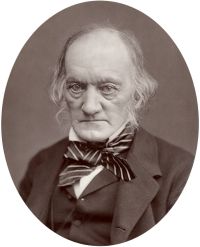 Richard Owen,
The zoology of the voyage of H.M.S. Beagle…
(1839)
Richard Owen,
The zoology of the voyage of H.M.S. Beagle…
(1839)
“ The species of which the fossil remains are described by Dr. Harlan may be dedicated to that indefatigable Naturalist who has contributed to natural science so much valuable information respecting the Zoology, both recent and fossil, of the North American continent. The fossil about to be described represents a second and smaller species of the same genus, and I propose to call it Mylodon Darwinii, in honour of its discoverer, of whose researches in the Southern division of the New World it forms one of many new and interesting fruits. ”
