Motor reaction

Definition and stakes

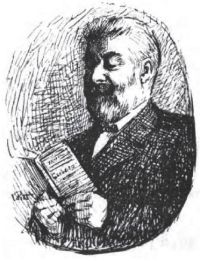
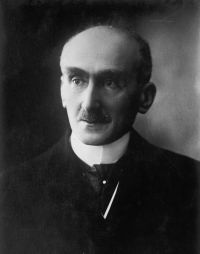
Portrait of Henri-Louis Bergson Henri-Louis Bergson,  Matter and Memory (1911)

“ On the other hand, as a great multitude of motor tracks can open simultaneously in this substance to one and the same excitation from the periphery, this disturbance may subdivide to any extent, and consequently dissipate itself in innumerable motor reactions which are merely nascent. Hence the office of the brain is sometimes to conduct the movement received to a chosen organ of reaction, and sometimes to open to this movement the totality of the motor tracks, so that it may manifest there all the potential reactions with which it is charged, and may divide and so disperse. ”
Source: Wikisource

Various,  The Journal of Abnormal Psychology…

“ REGRESSION As I have stated in a previous paper, [15] the pathogenesis of tics and allied conditions can best be appreciated by viewing the subject from an evolutionary standpoint. In our reactions and adaptations to the varying experiences with which we meet we respond by one or more of several methods of motor reaction. These motor expressions are of increasing complexity as we ascend the scale of evolution and development. One of the simplest kinds of adaptation is by simple, reflex muscular action, the response being anatomical and not physiological in its extent. ”
Source: Gutenberg

Harvard Psychological Studies, Volume 2

“ The complications may be such as actually to double the reaction time in the case of a sensory reaction, and yet a motor reaction, under precisely the same conditions as far as they may be the same for a motor, shows no increase in time. The "set" of the attention in the motor reaction is, no doubt, such a change in the order of succession of the parts of the process that some of those, which come after the stimulus is received in the case of the sensory reaction, are made to come before the stimulus in the motor. ”
Source: Gutenberg

Get perspective with Kwize: daily news enlightened by great literature