
“ If he bought a picture postcard to send home, there was sure to be an olive grove in one corner of it. The whole place was smothered with olive groves, the people owed their incomes and existence to these irrepressible trees. The villages among the hills swam roof-deep in them. They swarmed even in the hotel gardens.The guide books praised them as persistently as the residents brought them, sooner or later, into every conversation. They grew lyrical over them:“And how do you like our olive trees? Ah, you think them pretty. At first, most people are disappointed. They grow on one.” ”
Olive grove
Definition and stakes
An olive grove, or oliveraie, refers to a plantation of olive trees cultivated mainly for oil and fruit production, deeply embedded in Mediterranean agriculture. Authors have long drawn upon its imagery: Algernon Blackwood highlights its omnipresence in Provence, while E. Phillips Oppenheim weaves its sensory appeal into romantic landscapes.
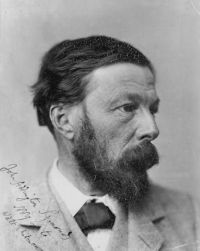
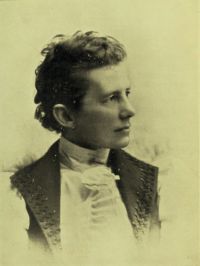
John Addington Symonds portrays it as a sanctuary of botanical variety, and Maxwell Gray underscores its atmospheric enigma. These diverse depictions emphasize the grove’s dual function as both a practical agricultural resource and a symbol of cultural and natural wealth, reflecting its lasting significance in literature and tradition.
Quotes about “olive grove”
Various, Lippincott's Magazine of Popular Literature and Science…
“ Many of the trees are very large, and their trunks are black and much twisted, their branches long and weird-looking, but the exceeding delicacy of their foliage, which is dark green on the outside and silver gray on the inner, lends them a very fascinating appearance, especially on a moonlight night, when the arching boughs of an olive grove look exactly as if covered with shawls of rich black lace. ”
David Masters, The romance of excavation (1923)
“ The blossom of the olive groves was succeeded by tiny green olives which swelled in the heat until they were ready to yield their rich oil which was so welcome to the people of other lands. Artists worked happily on the plaster walls, laying on their colours to delight the eye, potters kneaded their clay until it was as butter under the ball of the thumb. ”
“ The olive groves! His daily life could not escape the olive groves; to olive groves, sooner or later, his walks, his expeditions, his meanderings by the sea, his shopping—all led him to these ubiquitous olive groves. ”
 E. Phillips Oppenheim,
False Evidence
E. Phillips Oppenheim,
False Evidence
“ The dark mountains stretching out like giant sentinels into the silvery, glistening bay, the twinkling lights from the low, white houses, the softened strains of the band, the musky air heavily laden with the mingled perfume of the orange grove, the hyacinths, and the more distant vineyards, and Lady Olive's beautiful dark eyes so close to mine, and flashing with such a dangerously sweet light—all these seemed leagued together to stir my senses and my heart. ”
John Hughes, Itinerary of Provence and the Rhone
“ From the Pont du Gard the road to Nismes has little to recommend it excepting the high state of cultivation of the country, and this is not of a nature to gratify an eye accustomed to English verdure. Olive-groves, it is true, have been naturalized in poetry as conveying an image of beauty and freshness ”
 John Addington Symonds,
Sketches and Studies in Italy and Greece…
John Addington Symonds,
Sketches and Studies in Italy and Greece…
“ Then, in the olive-groves that stretch along the level shore, are labyrinths of rare and curious plants, painted tulips and white periwinkles, flinging their light of blossoms and dark glossy leaves down the swift channels of the brawling streams. ”
Arthur Tappan Marvin, The Olive Its Culture in Theory and Practice (1888)
“ The olive grower of California has sixty-five millions of countrymen among whom to market his product. Now if we assume that the consumption may reach only one pound per head annually, it would require ten million gallons to satisfy the demand for the United States alone, or, with an acreage of fifty trees, olive groves covering two hundred thousand acres. Our people have yet to learn to appreciate the olive. ”
 Maxwell Gray,
The suspicions of Ermengarde
(1908)
Maxwell Gray,
The suspicions of Ermengarde
(1908)
“ Some such confidences had been imparted during chance meetings and aimless rovings along paths through pine-woods aromatic with undergrowth of myrtle and juniper; through solemn olive-groves, hushed and dim, their drooping foliage tangled with azure lights; between vineyards; by lonely cottages, pergola-shaded; through shadowy dells and along sunny ridge-tops. In the bee-haunted silence of these secluded ways suddenly, round a corner, up a ravine, down a steep, emerging from an aisle of pine-trunks, anything or anybody might appear as if by magic. ”
 John A. Gade,
Cathedrals of Spain
John A. Gade,
Cathedrals of Spain
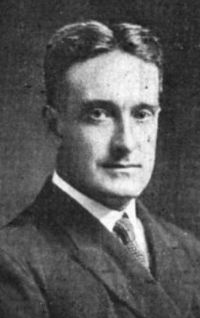
“ A soft, tempered wind whispers through the grassy meadows of La Tierra de Maria Santissima, and the atmosphere is so dry and clear that far away against the horizon objects stand out in clear silhouette. So vivid are the colors that the smoky olive groves, the orange and lemon-colored walls, the fir trees, the chalky white of the stucco, the fleshy, prickly leaves of the cacti, and the tall standards of the aloes seem photographed on the brain. ”
E. Phillips Oppenheim,
The New Tenant
“ Away on the brown hills, fading into a transparent veil of blue, the bright dresses of the peasant women stooping at their toil, the purple glory of the vineyards, and the deep, quiet green of the olive groves—all these simple characteristics of the pastoral landscape were like brilliant patches of coloring upon a fitting background. Soon the haze of the noonday heat would hang upon the earth, deadening the purity of its color, and making the air heavy and oppressive with faint overladen perfumes. But as yet the sun lay low in the heavens, and the earth beneath was like a fair still picture. ”
 John Ruskin,
The Poetry of Architecture
(1873)
John Ruskin,
The Poetry of Architecture
(1873)
“ They are not quite so rich in vegetation as the plains: both because the soil is scanty, there being, of course, no decomposition going on among the rocks of black marble which form the greater part of the shore; and because the mountains rise steeply from the water, leaving only a narrow zone at their bases in the climate of Italy. In that zone, however, the olive grows in great luxuriance, with the cypress, orange, aloe, myrtle, and vine, the latter always trellised. ”
Arthur Tappan Marvin, The Olive Its Culture in Theory and Practice (1888)
“ Experience, some say, has shown that the olive cultivated alone, in rich soil grows vigorously; makes each year a number of new shoots, but gives little fruit, as the sap being too active to fix the blossom, is carried to the extremities, and the flower falls. To obtain good trees quickly, one should never sow underneath them at first, but however afterwards, to get good fruit it is advantageous to do so; but only then the year of the crop. Thus one should prune, manure, and cultivate to force shoots or young wood to bear fruit. ”
Arthur Tappan Marvin, The Olive Its Culture in Theory and Practice (1888)
“ In Spain it may be said to be the favorite olive, but in some of the northern provinces where the tree is out of its element it gives no fruit at all but only attains a colossal size and hence is classed by the country people as a wild tree. But as we shall proceed to show it has none of the attributes of the wild tree, so far from it that it is one of the "oil press olives," one of the varieties most highly domesticated and cultivated that the world knows. ”
 Isabella Mary Anderton,
Tuscan folk-lore and sketches, together with some other papers
Isabella Mary Anderton,
Tuscan folk-lore and sketches, together with some other papers
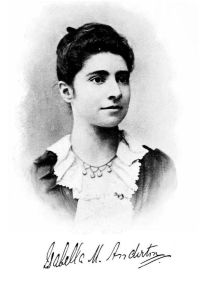
“ Yet it is mid-winter, and we are going to witness a thoroughly winter occupation; the making of the olive-oil in a villa at a little distance out of Florence.Leaving the tram at the foot of the hill, we climb for about three-quarters of an hour through vineyards in which the fresh green of the springing wheat contrasts hopefully with the knotted, bare vine branches. The slopes around us are clothed with olives, whose grey-green is thrown into relief by the austere rows of cypresses in the distance, and the spreading tops of the pine-trees on the further hills. ”
Arthur Tappan Marvin, The Olive Its Culture in Theory and Practice (1888)
“ Though every two years is generally considered often enough to thoroughly prune an olive, there is abundant work for the knife each year after the crop is gathered, in taking off the dead, weak, and sickly branches, to the end that the sap may go to fruit, and not be obliged to keep useless wood in life. The tree so treated will be better able to resist frost, will bloom and yield more heavily, and its olives will contain more oil than do those of one that does not receive this care. The olive is exceedingly subject to a species of dry rot, and unskillful pruning may actually cause it. ”
John Ruskin,
The Stones of Venice, Volume 3…
“ On the slopes of the northern Apennines, olives are the usual forest timber; the whole of the Val d’Arno is wooded with them, every one of its gardens is filled with them, and they grow in orchard-like ranks out of its fields of maize, or corn, or vine; so that it is physically impossible, in most parts of the neighborhood of Florence, Pistoja, Lucca, or Pisa, to choose any site of landscape which shall not owe its leading character to the foliage of these trees. What the elm and oak are to England, the olive is to Italy ”
 Sabine Baring-Gould,
A Book of the Riviera
(1909)
Sabine Baring-Gould,
A Book of the Riviera
(1909)
“ And when this second generation dies, the vitality of the root remains unimpaired; it throws up new shoots, and thus the life of the tree, like that of an ancient family, is indefinitely prolonged. The healthy olive tree, well fed on old rags and filth of every description, to which it is exceedingly partial, is very beautiful; but the beauty of the olive tree comes out in winter and early spring; when the deciduous trees are in leaf and brilliant green, it looks dull and dowdy. The olive flowers from April to June, and the fruit requires about six months to reach maturity. ”
Arthur Tappan Marvin, The Olive Its Culture in Theory and Practice (1888)
“ This is the crying sin of the California fruit grower. In this way heretofore unheard of pests are evolved, trees are rendered sickly and stunted, and promising orchards become unprofitable. The olive is least able to bear the effects of overcrowding; sunlight and ventilation are absolute necessities to it. Fifty good trees to an acre is a better investment than a hundred poor ones. As the olive is so long in maturing, it is customary to utilize the space between the young trees by growing grapes and the short lived fruits, such as prunes and peaches, to give way finally to the mature tree. ”
Arthur Tappan Marvin, The Olive Its Culture in Theory and Practice (1888)
“ The wild olive tree, or the tree from seed, if never transplanted, its tap root unclipped, is perfectly proportioned, its stem is straight, its bark smooth, its branches arch in beautiful equality, making a perfectly formed crown. But in the cultivated tree, the tree from a cutting, the tree that has already felt the knife, the order of nature has been disarranged and the tree, far from making a regular growth, if left to itself, will often take a most uncouth and ill-proportioned shape, and in appearance alone calls for the pruning knife. ”
Arthur Tappan Marvin, The Olive Its Culture in Theory and Practice (1888)
“ Consociation offers the great advantage of getting some return from the soil during the lengthened youth of this tree, which when it has grown to a sufficient size, the vine plot commences to age, and, disappearing by degrees, leaves the olive sole occupant of the soil. When the olives grow to a large size, and are planted near to each other, or in places where the ground is poor, other crops are not usually grown. With these two exceptions, the ground under the trees is generally utilized. At Grasse and Nice, they associate together the olive and the fig, and other fruit trees ”
Arthur Tappan Marvin, The Olive Its Culture in Theory and Practice (1888)
“ The season following, sow under the trees to moderate the flow of the sap, stay the growth of wood, and cause the blossom to set. In an indifferent soil this would be hurtful, as there is never an excess of vegetation. However, in similar conditions, in place of sowing an exhausting cereal, they sow vegetables, beans, lupins or peas. Green crops, as manure, are often dug in, and thus the olive during summer, finds sufficient subsistence to help it to bring a crop to maturity. ”
Various, Encyclopaedia Britannica, 11th Edition…
“ The proportion of ground under olives is from 20 to 36% at Porto Maurizio, and in Reggio, Lecce, Bari, Chieti and Leghorn it averages from 10 to 19%. Throughout Piedmont, Lombardy, Venetia and the greater part of Emilia, the tree is of little importance. In the olive there is great variety of kinds, and the methods of cultivation differ greatly in different districts; in Bari, Chieti and Lecce, for instance, there are regular woods of nothing but olive-trees, while in middle Italy there are olive-orchards with the interspaces occupied by crops of various kinds. ”
Arthur Stanley Riggs, Vistas in Sicily
“ Farther up the slopes of Neapolis and Epipolai straggle great rocky groves of uncanny, fantastically shaped old olives, the most disreputable-looking tenants of the soil imaginable. They are whorled like an oak, knobbed like an apple tree, split full of holes, leaning at all angles ”
Arthur Tappan Marvin, The Olive Its Culture in Theory and Practice (1888)
“ Hence it is plain that instead of being the cheapest mode of dealing with a crop, it is the most expensive as it is one of the direct causes of the olive bearing only every other year. Each leaf shelters a bud which in time will be a twig or a blossom, if the leaf is knocked off the bud is killed, for its life depends upon the preservation of the leaf, and these leaves are more plentiful on the fruit branches than any other part of the tree. No matter how carefully the fruit be poled off, damage is sure to be done. Olives should be picked by hand from ladders. ”
 John Lewis Burckhardt,
Travels in Syria and the Holy Land
John Lewis Burckhardt,
Travels in Syria and the Holy Land
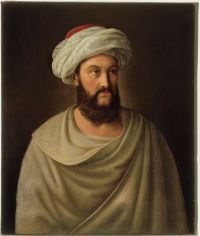
“ Every olive tree here is worth from fifteen to twenty piastres. The soil in which the trees grow is regularly ploughed, but nothing is sown between the trees, as it is found that any other vegetation diminishes the quantity of olives. The ground round the stem is covered to the height of two or three feet with earth, to prevent the sun from hurting the roots, and to give it the full benefit of the rains. We met with a few tents of Arabs Zereykat and El Hayb, who were pasturing their sheep upon the wild herbs by the road side. ”
Frederick Arthur Neale, Once a Week (1862)
“ Well, I also, in my life’s experience, have planted olives and watched them grow; and if I were to return to the spot, doubtless by this time I might reap some of the fruit of my labour. Who knows? perhaps the contents of this jar were gathered from those very identical trees! The thought is a pleasant one to myself, and will impart an extra relish to the flavour. That was in a large oil district in Syria, where the whole of the high land was devoted to the cultivation of the olive tree, both for the sake of the fruit and the oil it yields ”
Arthur Tappan Marvin, The Olive Its Culture in Theory and Practice (1888)
“ To keep down the weeds, it will be necessary to plow again before flowering time arrives, but on no account should any cultivation be attempted while the olives are in flower, as the exhalations from the ground, caused by turning over the soil, are very prejudicial to the tree when in this condition. ”
 Ferdinand Gregorovius,
Wanderings in Corsica: Its History and Its Heroes…
Ferdinand Gregorovius,
Wanderings in Corsica: Its History and Its Heroes…
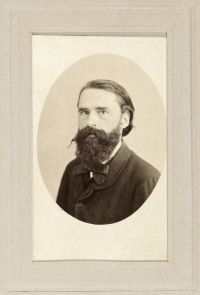
“ Belgodere might be a sanctuary of Pallas, it lies embosomed in such luxuriant groves of her favourite tree. It is said that there is no district throughout the whole of Italy where the olive attains such a size as it does in the Balagna. The thickness of its stem, its abundance of branches, and the quantity of fruit it produces, are equally astonishing. It is mighty as a beech, and in the heat of noon you rest cool under its shelter. The olive is a tree that one cannot but love. ”
Northern Nut Growers Association Report of the Proceedings at the Fifteenth Annual Meeting
“ They have olive trees that are several centuries old and I have never seen such fine olive trees, not in California, or the plains of Spain, Portugal, France, Italy, or in Algeria or Tunis, and I have seen a good many olive trees in those countries. The olive tree is usually open, light and feathery. These in the Matmatas gulches are thick and black and rank.For automatic cultivation and fertilization the plan of these primitive agriculturists is hard to beat. You put up your stone dam, and every time the gulley runs with water your crop is irrigated and fertilized. Can you beat it? ”
 William Francis Lynch,
Narrative Of The United States Expedition To The River Jordan And The Dead Sea…
(1849)
William Francis Lynch,
Narrative Of The United States Expedition To The River Jordan And The Dead Sea…
(1849)
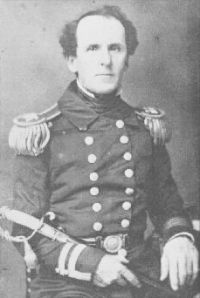
“ Leaving the village on the left, the road led over a high ridge; the vegetation extremely luxuriant, and the hillsides terraced, with many vines and fig trees, and groves of olive on each side. The olive is only picturesque in clusters. Individually it is an ungainly tree. With the appearance of greater strength than the oak, its branches are less graceful, and its leaves are smaller and less vivid in colour. The old trunks, gnarled and twisted, present to the eye vast bodies with disproportioned limbs. Those which are partially decayed are protected by stones piled up in the hollows. ”
 William Dean Howells,
Familiar Spanish Travels
William Dean Howells,
Familiar Spanish Travels
“ The only thing that I can remember against the landscape is the prevalence of olive orchards. I hailed as a relief the stubble-fields immeasurably spread at times, and I did not always resent the roadside planting of some sort of tall hedges which now and then hid the olives. But olive orchards may vary their monotony by the spectacle of peasants on ladders gathering their fruit into wide-mouthed sacks, and occasionally their ranks of symmetrical green may be broken by the yellow and red of poplars and pomegranates around the pleasant farmsteads. ”
