Oxidizing agent

Definition and stakes

Julian R. J. Jocelyn and David O. Masson,  1911 Encyclopædia Britannica (1911)

“ If nitre and potassium chlorate, with other salts of nitric and chloric acids and a few similar compounds, be grouped together as oxidizing agents, most of the other materials used in making firework compositions may be classed as oxidizable substances. Every composition must contain at least one sample of each class: usually there are present more than one oxidizable substance, and very often more than one oxidizing agent. ”
Source: Wikisource

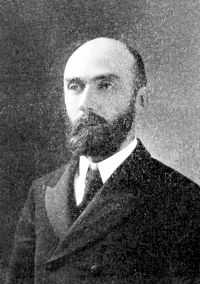
Portrait of Henry Paul Talbot Henry Paul Talbot,  An Introductory Course of Quantitative Chemical Analysis

“ A normal solution of an oxidizing agent should, therefore, contain that amount per liter which is equivalent in oxidizing power to 8 grams of oxygen; a normal reducing solution must be equivalent in reducing power to 1 gram of hydrogen. In order to determine what the amount per liter will be it is necessary to know how the reagents enter into reaction. The two solutions to be employed in the process under consideration are those of potassium bichromate and ferrous sulphate. ”
Source: Gutenberg

Julius Stieglitz,  The Elements of Qualitative Chemical Analysis…

“ Whether the oxygen, which is liberated by the action of the ferric-ion on water, 4 Fe3+ + 4 HO− ⇄ 4 Fe2+ + O2 + 2 H2O, is always the intermediate product and the direct oxidizing agent in aqueous solution, can hardly be considered decided by the experiment—it may well be the product of a parallel action, which must take place to a certain extent, according to the laws of equilibrium, in a system containing both Fe3+ and HO− ions. The result hardly proves that oxygen must be the intermediate product in the main action, when ferric ions act as the oxidizing agent. ”
Source: Gutenberg

Get perspective with Kwize: daily news enlightened by great literature