Phase (matter)

Definition and stakes

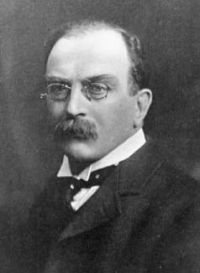
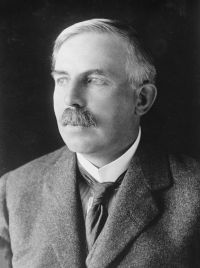
Alexander Findlay,  The Phase Rule and Its Applications

“ Were we dependent on measurements of pressure and temperature, the determination of the transition point might be a matter of great difficulty. When we consider, however, that the other physical properties of the solid phases, e.g. the density, undergo an abrupt change on passing through the transition point, owing to the transformation of one form into the other, then any method by which this abrupt change in the physical properties can be detected may be employed for determining the transition point. ”
Source: Gutenberg

Alexander Findlay,  The Phase Rule and Its Applications

“ A knowledge of its variability is, therefore, of essential importance in studying the condition and behaviour of a system, and it is the great merit of the Phase Rule that the state of a system is defined entirely by the relation existing between the number of the components and the phases present, no account being taken of the molecular complexity of the participating substances, nor any assumption made with regard to the constitution of matter. It is, further, as we see, quite immaterial whether we are dealing with "physical" or "chemical" equilibrium ”
Source: Gutenberg

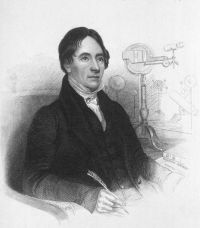
Portrait of Thomas Dick Thomas Dick,  The Practical Astronomer

“ With a power not exceeding 25 or 30 times, this phase, at such periods, may be easily perceived. It requires, however, much higher powers to perceive distinctly the variations of the gibbous phase; and if this planet be not viewed at a considerably high altitude when in a half-moon or gibbous phase, the obscurity and undulations of the atmosphere near the horizon, prevent such phases from being accurately distinguished, even when high powers are applied. ”
Source: Gutenberg

Get perspective with Kwize: daily news enlightened by great literature