Pollen tube

Definition and stakes

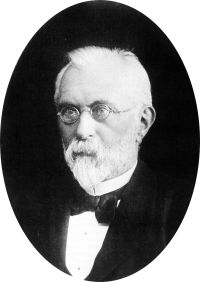
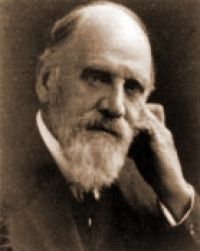
Portrait of Herbert John Webber Herbert John Webber,  Spermatogenesis and fecundization of zamia

“ Before the pollen tube has increased in length very greatly it increases also noticeably in width, and by the time it has reached a length four or five times as great as the diameter of the pollen grain it has reached a diameter as great as that of the pollen grain (fig. 13) . The point where the tube bursts out of the pollen grain has also enlarged, the broken edges of the exine being bent outward. Mean-while the tube nucleus has assumed a round form, increasing some-what in size.
The protoplasm presents a beautiful foam structure, with large vacuoles here and there.
”

Source: Wikisource

Various,  Encyclopaedia Britannica, 11th Edition…

“ In gymnosperms the pollen-grain resting on the apex of the nucellus sends out its pollen-tubes, which at once penetrate the nucellus (fig. 113) . In angiosperms when the pollen-tube reaches the micropyle it passes down into the canal, and this portion of it increases considerably in size. Ultimately the apex of the tube comes in contact with the tip of the embryo-sac and perforates it. The male cells in the end of the pollen-tube are then transmitted to the embryo-sac and fertilization is effected. ”
Source: Gutenberg

Portrait of Lorenz Oken Lorenz Oken,  Elements of Physiophilosophy

“ It is quite unnecessary for the pollen, with its sap or gas, to be materially conveyed through the style to the seed. It is only requisite for the style to be excited, dualized, electrified, and then it has life enough of its own. But it does not follow, because it is unnecessary for the sap of the floral dust or pollen to reach the seed-granules, that it cannot or ought not to reach thereunto. In many plants the pollen-tube does actually reach there and penetrate through the micropyle. In many styles it is still held as impossible, for the pollen-tube to penetrate through them to the seeds. ”
Source: Gutenberg

Get perspective with Kwize: daily news enlightened by great literature