Potassium cyanide

Definition and stakes

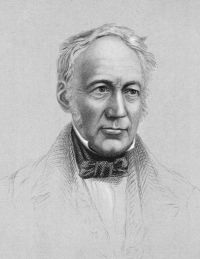
Dmitry Ivanovich Mendeleyev,  The Principles of Chemistry, Volume I

“ A solution of the salt, even without access of air, easily turns brown and decomposes, and when heated evolves ammonia and forms potassium formate; this is easily comprehensible from the representation of the cyanogen compounds which was developed in Chapter IX., KCN + 2H2O = CHKO2 + NH3. Furthermore, as carbonic anhydride acts on potassium cyanide with evolution of prussic acid, and as potassium cyanate, which is also unstable, is formed by the action of air, it will be easily seen that solutions of potassium cyanide are very unstable. ”
Source: Gutenberg

Dmitry Ivanovich Mendeleyev,  The Principles of Chemistry, Volume II

“ It is much more stable than silver cyanide itself. It has a neutral reaction, does not change in the air, and does not smell of hydrocyanic acid. Many acids, in acting on a solution of this double salt, precipitate the insoluble silver cyanide. Metallic silver dissolves in a solution of potassium cyanide in the presence of air, with formation of the same double salt and potassium hydroxide, and when silver chloride dissolves in potassium cyanide it forms potassium chloride, besides the salt KAgC2N2. ”
Source: Gutenberg

Organic Syntheses

“ Benzyl cyanide occurs naturally in certain oils. [1] The only feasible method of preparing it that has been described in the literature is the one in which alcoholic potassium cyanide and benzyl chloride [2] are employed. The cheaper sodium cyanide is just as satisfactory as the potassium cyanide and therefore is the best material to use. Gomberg has recently prepared benzyl cyanide from benzyl chloride and an aqueous solution of sodium cyanide. ”
Source: Gutenberg

Get perspective with Kwize: daily news enlightened by great literature