Prairie chicken

Definition and stakes

Ohio Arbor Day 1913: Arbor and Bird Day Manual

“ These unavoidable dangers should appeal to the farmer to render the prairie chicken his kindness and protection whenever he can. He has few, if any, greater allies, for during the rearing of the young and throughout the summer the food of the prairie chicken consists principally of insects, chiefly of the destructive grasshopper. During the winter they feed upon weed-seed and scattered grain. Of course, at times the prairie chickens make slight inroads upon the crops, but these are many times repaid by the noxious weed-seeds they destroy. ”

Source: Gutenberg

Chester A. Reed,  The Bird Book

“ Range.--Prairies from southwestern Kansas through Indian Territory to western Texas.
A smaller and paler species than the Prairie Chicken. Never as abundant as the common Pinnated Grouse, this species appears to be becoming scarcer each year. Its nests are concealed under overhanging brush or placed under a large tuft of prairie grass, and are generally lined with a few grasses or leaves. They lay from eight to twelve eggs of a buffy color, much lighter than those of the Prairie Chicken, and unmarked.
”
Source: Gutenberg

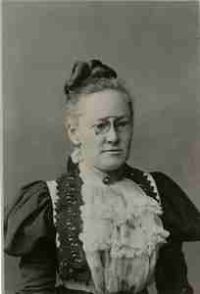
Portrait of Arthur Humble Evans Arthur Humble Evans,  The Cambridge natural history, vol…

“ The Old World species, sometimes denominated Tetrastes, are monogamous, and do not "drum."
Different races of Pedioecetes phasianellus, the well-known Prairie Chicken, occupy America as far southwards as North California, New Mexico, Wisconsin, and Illinois. Both male and female shew black, red-brown, and yellowish tints above, with white streaks on the scapulars and spots on the wings, the lower surface being white with dusky markings. The short tail, with two elongated, but truncated median rectrices, gives it the name of Sharp-tailed Grouse.
”
Source: Gutenberg

Get perspective with Kwize: daily news enlightened by great literature