Proper noun

Definition and stakes

Joseph Devlin,  How to Speak and Write Correctly

“ They are Article, Noun, Adjective, Pronoun, Verb, Adverb, Preposition, Conjunction and Interjection. Of these, the Noun is the most important, as all the others are more or less dependent upon it. A Noun signifies the name of any person, place or thing, in fact, anything of which we can have either thought or idea. There are two kinds of Nouns, Proper and Common. Common Nouns are names which belong in common to a race or class, as man, city. Proper Nouns distinguish individual members of a race or class as John, Philadelphia. ”
Source: Gutenberg

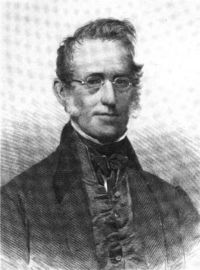
Portrait of Goold Brown Goold Brown,  The Grammar of English Grammars

“ For such a word, the form of parsing should be like this: "Peace is a common noun, personified proper; of the third person, singular number, feminine gender, and nominative case." Here the construction of the word as a proper noun, and of the feminine gender, is the result of the personification, and contrary to the literal usage.
MODIFICATIONS. Nouns have modifications of four kinds; namely, Persons, Numbers,
Genders, and Cases.
PERSONS. Persons, in grammar, are modifications that distinguish the speaker, the hearer, and the person or thing merely spoken of.
”
Source: Gutenberg

Dionysios Thrax,  The grammar of Dionysios Thrax (1874)

“ Noun, Verb, Participle, Article, Pronoun, Preposition, Adverb, and Conjunction. The proper noun, as a species, is subordinate to the noun. [22]
14. On the Noun (ὄνομα) .
A Noun is a declinable part of speech, signifying something either concrete or abstract (concrete, as stone; abstract, as education) ; common or proper (common, as man, horse; proper, as Socrates, Plato) . [23] It has five accidents: genders, species, forms, numbers, and cases.
There are three Genders, the masculine, the feminine, and the neuter. Some add to these two more, the common and the epicene—common, as man, horse
”
Source: Wikisource

Get perspective with Kwize: daily news enlightened by great literature