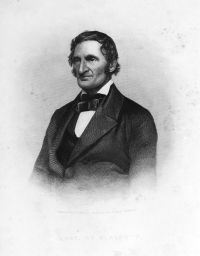
Frederick Gymer Parsons, John Gray McKendrick, and Leonard Erskine Hill, 1911 Encyclopædia Britannica (1911)
“ Thus it is evident that inspiration, by increasing the calibre of the pulmonary vessels, draws blood into the lungs, and the movements of the lungs become an effective force in carrying on the pulmonary circulation. It has been estimated that there is about one-twelfth of the whole blood quantum in the lungs during inspiration, and one-fifteenth during expiration. The great degree of distensibility of the pulmonary vessels allows of frequent adjustments being made, so that within wide limits, as much blood in a given time will pass through the pulmonary as through the systemic system. ”