Queen (chess)

Definition and stakes

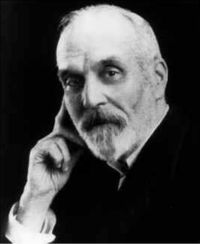
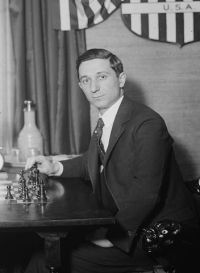
Portrait of Edward Lasker Edward Lasker,  Chess and Checkers : the Way to Mastership

“ On account of her tremendous mobility she is liable at any time to initiate a dangerous attack in conjunction with one or more of the other pieces, and most of the examples given for the typical Rook's, Bishop's and Knight's maneuvers have also shown the methods by which the cooperation with the Queen can be effected. The main field of action for the Queen is the side on which the opponent has castled. ”
Source: Gutenberg

Three Hundred Things a Bright Boy Can Do

“ In clubs and chess resorts, where there are many sets of men, a second Queen, if need be, is borrowed from another set. Sometimes, where only one set of men is available, a Rook (if one has been captured) is turned upside down, the promoted Pawn is placed on the top, and there you have a most excellent substitute for a Queen. Supposing, however, that no piece has been lost when the Pawn is promoted, then a piece of twisted paper can be placed on the head of the Pawn, and again we have a good substitute for a Queen. ”
Source: Gutenberg

Franklin K.‏ Young,  Chess Generalship, Vol. I. Grand Reconnaissance

“ At her maximum of efficiency the Queen occupies the common vertex of one or more unequal triangles, whose aggregate area is from a minimum of 21 to a maximum of 27 points. Her offensive power is equally valid against all of these points; but her defensive power is valid for the support from a minimum of one point to a maximum of five points. ”
Source: Gutenberg

Get perspective with Kwize: daily news enlightened by great literature