“ At such crises the wild beast in a man, if any there be, rattles the bars of its cage, and—well, you will see that the gnashing of teeth and that fierce talk of heart-cutting at the quickening moment were not inartistic. ”
Quotes about “quickening”
Various, Popular Science Monthly (1891)
“ But everybody has remarked that the most experienced guides—that is, the oldest ones—go up very slowly, and that under that condition they can walk for an indefinite time. They do this by avoiding, through the moderation of their pace, the quickening of their pulse and the imposition of an excess of work on their heart. ”
 Thomas De Quincey,
The Vision of Sudden Death
(1849)
Thomas De Quincey,
The Vision of Sudden Death
(1849)
“ If no more were done, nothing was done; for the little carriage still occupied the very centre of our path, though in an altered direction. Yet even now it may not be too late: fifteen of the twenty seconds may still be unexhausted; and one almighty bound forward may avail to clear the ground. Hurry then; hurry! for the flying moments—they hurry! Oh hurry, hurry, my brave young man! for the cruel hoofs of our horses—they also hurry! Fast are the flying moments, faster are the hoofs of our horses. Fear not for him, if human energy can suffice: faithful was he that drove, to his terrific duty ”
Julia Seton, The Short Cut to Regeneration Through Fasting… (1929)
“ Before we start to fast, we ask why we should fast, and after we have fulfilled all the laws for the Short Cut we have a right to demand that we shall have, as a permanent possession, some things that are worth while. We have followed for an ultimate good and we demand that the end shall justify the means. The Human Mind is so constituted that no effort, sacrifice or endurance is too great if it brings the desired end and aim ”
Julia Seton, The Short Cut to Regeneration Through Fasting… (1929)
“ The one who is taking the fast for the first time cannot expect to take the same kind of fast as those who have done the fast for several months or years. After we have established the habit of fasting, we can go as far as we like in experimenting with occult laws; but in the beginning we should take the Novitiate instructions and follow them faithfully; through these we reach the point of mental and psychical endurance and discipline which enables us to take up the Initiates’ fast or the fast of the Illuminati. ”
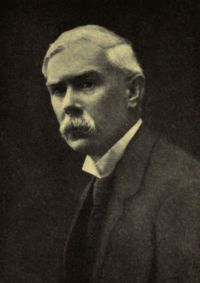 John Arthur Thomson,
The Outline of Science — Part VII
John Arthur Thomson,
The Outline of Science — Part VII
“ Correlated with the quality of restless inquisitiveness and delight in activity for its own sake there is the quality of quickness. We mean not merely the locomotor agility that marks most monkeys, but quickness of perception and plan. It is the sort of quality that life among the branches will engender, where it is so often a case of neck or nothing. ”
Harry Dexter Kitson, How to Use Your Mind
“ You had just decided to give up, when suddenly the fatigue seemed to diminish and new energy seemed to come from some source. This curious thing, which happens frequently in athletic activities, is known as second-wind, and is described, by those who have experienced it, as a time of increased power, when the work is done with greater ease and effectiveness and with a freshness and vigor in great contrast to the staleness that preceded it. It is as though one "tapped a level of new energy," revealing hidden stores of unexpected power. ”
Thomas De Quincey,
The English Mail-Coach, or The Glory of Motion
(1849)
“ But, seated on the old mail-coach, we needed no evidence out of ourselves to indicate the velocity. On this system the word was—Non magna loquimur, as upon railways, but magna vivimus. The vital experience of the glad animal sensibilities made doubts impossible on the question of our speed; we heard our speed, we saw it, we felt it as a thrilling; and this speed was not the product of blind insensate agencies, that had no sympathy to give, but was incarnated in the fiery eyeballs of an animal, in his dilated nostril, spasmodic muscles, and echoing hoofs. ”
Various, Weird Tales, Volume 1, Number 1… (1923)
“ For a moment, there in the blaze from the electrolier, lighted by the opening of the door, he stood rigid, listening, holding his breath; crouched, bent forward like a sprinter upon his mark.Quarrier was a big man, and well muscled; in his day he had been an amateur boxer of repute. For a big man, he was quick, well-poised, supple and controlled.A brain of ice and nerves of steel—that was Quarrier. ”
“ Quick is here used in its original sense of having life. These therefore were lively sayings. In the Apostle's creed the quick and the dead are referred to, and a quick set hedge is one of growing plants as contrasted with a mere fencing or line of palings. ”
“ But far more important than mere repetition is the rapidity of movement with which one does those that are meant to be rapid, and it is infinitely better to do such exercises only half the number of times suggested, with concentration and speed, than twice the number if they are done slackly or not fully. The first essentials are to do them correctly and rapidly; the endurance and strength to repeat them many times with correctness and rapidity will come of their own accord. ”
 George Adam Smith,
The Expositor's Bible: The Book of Isaiah…
George Adam Smith,
The Expositor's Bible: The Book of Isaiah…
“ Wherefore have we fasted, say they, and Thou hast not seen? we have humbled our souls, and Thou takest no notice? The answer comes swiftly: Because your fasting is a mere form! Lo, in the very day of your fast ye find a business to do, and all your workmen you overtask. So formal is your fasting that your ordinary eager, selfish, cruel life goes on beside it just the same. ”
baron de César Lecat Bazancourt, Secrets of the Sword
“ Speed, not of course mere quickness of hand, but the rapid execution of every movement, is one of the fencer’s great resources, whether in attack, parry, or retreat. It is to my mind the main point to be insisted on from the very first. ”
 A. T. Quiller-Couch,
The Ship of Stars — XI. Lizzie Redeems Her Doll and Honoria throws a Stone
(1899)
A. T. Quiller-Couch,
The Ship of Stars — XI. Lizzie Redeems Her Doll and Honoria throws a Stone
(1899)
“ Besides, if she has children, she'll be planning for them.""Isn't that rather slow?"Humility wondered where the child had picked up the word. "Slow?" she echoed, with her eyes on the horizon beyond the dunes. "Most things are slow when you look forward to them." ”
 Arthur Quiller-Couch,
Major Vigoureux
Arthur Quiller-Couch,
Major Vigoureux
“ A man's strength she must have had. 'Help me,' was all she said, in a kind of panting voice, and as I caught hold to help it over, 'That was the Head! Hard up, now! and ring down for full speed!' 'Full speed!' I grunted, yet pressing on the wheel all the time—'It's stop her you mean, and anchor.' 'What, here? with Hell-deeps on your starboard bow and a five-knot tide running! ”
Alfred M. Williams, Studies in Folk-Song and Popular Poetry
“ A camp poet thus relieves his feelings in regard to the exercise of "double quick:"— Since I became a volunteer things have went rather queer; Some say I'm a three months' man, and others a three years' volunteer. With plenty of likes and dislikes to all I have to stick; There's plenty of pork, salt horse, and plenty of Double Quick. Oh, I'm miserable, I'm miserable, To all I 'll have to stick. The old salt horse is passable, But d-n the Double-Quick. ”
“ Quick-as-Thought let her run on a short distance, in order to give her a start, and then pursued her so quickly and so lightly that you could not have tracked his footsteps if the field had been strewn with flour. In a very few springs he had overtaken the doe, and had so impressed Moscione with his fleetness of foot that he begged Quick-as-Thought to go with him, promising at the same time to reward him handsomely. ”
baron de César Lecat Bazancourt, Secrets of the Sword
“ Speed and freedom of delivery follow as a matter of course. And we must not forget that quickness of hand, combined with what may be called fencing judgment, is of all qualifications the most important, the most necessary, the most vitally indispensable. ”
Harry Dexter Kitson, How to Use Your Mind
“ Since we are endowed with the energy requisite for such efficient work, the obvious question is, why do we not more frequently use it? The answer is to be found in the fact that we have formed the habit of giving up before we create conditions of high efficiency. You will note that the conditions require long-continued exertion and resolute persistence. This is difficult, and we indulgently succumb to the first symptoms of fatigue, before we have more than scratched the surface of our real potentialities. ”
 Richard Francis Burton,
The Sentiment of the Sword — The Third Evening
Richard Francis Burton,
The Sentiment of the Sword — The Third Evening
“ Quickness, meaning not only of the hand, wrist, and forearm, but of the whole body, is undoubtedly an immense merit, both in the attack and defence, the riposte and the retreat. " Slow and sure," chi va piano va sano, do not apply to our art. There are writers who hold quickness to be the very commencement of the fencing lesson, as it is the capital point of the fencer. Listen to one of the best [7] : "I believe that we must guard against the usual style of instruction, which consists in repeating over and over again, ' Go slowly; study quietly the thrusts and parries ”
Ed. James, Practical Training for Running…
“ Let the man continually bear in mind that “it is the pace that kills,” and that slow walking never made a fast race or fast man; let him practice at his best pace, which will daily improve. The commencement of fast work will most likely bring on pain of the shins, which will be sore after the exertion has been discontinued, as well as other portions of the frame being in the same predicament. ”
 Anna Alice Chapin,
A Maiden in Distress
(1912)
Anna Alice Chapin,
A Maiden in Distress
(1912)
“ Football, and spending money. Oh, Lord! And running a car. Say, it was a pippin of a car, and no mistake! The spell of humility was broken. He chuckled, and played with his new toy for quite half an hour, happily trying speed after speed. Then he whistled: “My Girl's a High-born Lady!” and looked about him. He was running slowly, the indicator at about twenty. He had been experimenting with that odd, sensatory illusion which arises from a big shift in speed. To go from fifty miles an hour to thirty-five is to be convinced that you are crawling at a footpace. ”
Albert Lee, The call of the night rider (1916)
“ They saw in him a man capable of high and prolonged endurance, but the strain of the past few months, when he was compelled to remain in the house in hiding, foregoing exercise and recreation, and especially during these last few days, when he was seeking to get away from his would-be tormentors, had borne him down, and he had come to the end of his reserve strength. ”
Carlo Giuseppe Quadrupani, Light and Peace
“ He laughingly answered them: “If you fast four times a week this year so as to advance in perfection, you will be obliged for the same reason to fast five times the next year, then six, then seven times; and the number of your fasts being always the guage of the degree of perfection you shall have attained, it will be necessary for you, under pain of advancing no more, thereafter to fast twice a day, then thrice, then four times, and so on.” What Saint Francis de Sales said of fasting is just as applicable to all other devout practices. ”
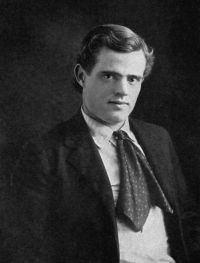 Jack London,
White Fang
(1906)
Jack London,
White Fang
(1906)
“ He seemed made to run on for ever. His iron-like body ignored fatigue. And even after fatigue came, his heritage of endurance braced him to endless endeavour and enabled him to drive his complaining body onward. ”
Julia Seton, The Short Cut to Regeneration Through Fasting… (1929)
“ Return again to the light heart of youth, if you do it with tears in your eyes and a smile that you cultivate. Come out from under your load of responsibility; slip it onto the universal shoulders. Often after a true fast we will find that it has slipped off forever. ”
 Ellis Stanyon,
Magic
(1911)
Ellis Stanyon,
Magic
(1911)
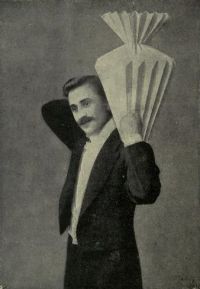
“ Do not cultivate quick movements, at the same time it will never do to be painfully slow; but endeavor to present your tricks in an easy-going, quiet, graceful manner. It is generally understood that "the quickness of the hand deceives the eye," but this is entirely erroneous. ”
 Miguel de Cervantes,
Don Quixote — Volume 1, Chapter XXVII
(1885)
Miguel de Cervantes,
Don Quixote — Volume 1, Chapter XXVII
(1885)
“ They told me that it was in this quarter, and I at once directed my course hither, intending to end my life here; but as I was making my way among these crags, my mule dropped dead through fatigue and hunger, or, as I think more likely, in order to have done with such a worthless burden as it bore in me. ”
Donald Walker, Walker's manly exercises (1855)
“ People pass from the march to the quick pace they know not how; and hence all the awkwardness and embarrassment of their walk when their pace becomes moderate, and the misery they endure when this pace has to be performed by them, unaccompanied, up the middle of a long and well-lighted room, where the eyes of a brilliant assembly are exclusively directed to them. ”
“ Day by day he did his share and more in the shop-work, and instead of the old feeling of fatigue, which before had followed any prolonged exertion, felt his muscles spring with hardness and new life at each demand made upon them. The old joy of a strong man in his strength came back in him. ”
 William Le Queux,
The Death-Doctor
(1912)
William Le Queux,
The Death-Doctor
(1912)
“ I had not the sum of money with me if I lost. Long and deeply I thought, but somehow defeat was looming ahead. "I have won—I have you!" chuckled the old man, as time went on; "you had better resign—it's waste of time going on." ”
“ Even a Quickie like myself is stimulated by constant variety and change. No one is ever bored. You don't have to see your original mate ever again, as long as you, as a Transient, provide for her. The Quickies, in their turn, will provide for you in all your subsequent marriages. You have the novelty and satisfaction of a true change in environment every time you travel, but you also have the comfort and security of a home.""This newlywed girl must also be naive," said Simon. ”
Richard Francis Burton,
The Sentiment of the Sword — The Third Evening
“ By degrees the bones are strengthened, the use of the muscles is learned, and the two-year-old treads firmly as the young bird flies. " Such a child is the pupil. As his science and experience grow in stature, so will many weaknesses and defects cast themselves off, and finally they will easily be rectified by reason and judgment. "But quickness is purely a mechanical and material process, which cannot be reasoned out, which cannot be analysed, which can be produced. ”
Julia Seton, The Short Cut to Regeneration Through Fasting… (1929)
“ Muscle Tensing, with Fasting. When we begin to fast, our first attention is to our flesh structure. We must tear down our old house of worn-out substances and gather new material for our new construction work. The body is always reconstructing itself but it is too slow a process to fit the whirlwind consciousness of the new Illuminatus. ”
 Edgar Jepson,
Peter Intervenes
(1925)
Edgar Jepson,
Peter Intervenes
(1925)
“ His leisureliness of movement gave him an appearance of slowness that accorded ill with his catlike quickness when such quickness was plainly demanded by circumstances he had frequently brought about, but over which he had no control. ”

“ But Quisanté drew his arm sharply away and braced his body to uprightness. "I'm not tired. I can go quite well by myself. You look more tired than I do," he said. "Come, we shall be late," and he set off down the hill at a brisk pace. Her appeal then had failed; this last little incident told her that with unpitying plainness. If he had yielded for a moment before the face of reality, he soon recovered himself, turned away from the sight, and went back to his masquerading. ”
Thomas De Quincey,
The Vision of Sudden Death
(1849)
“ Light does not tread upon the steps of light more indivisibly, than did our all-conquering arrival upon the escaping efforts of the gig. That must the young man have felt too plainly. His back was now turned to us; not by sight could he any longer communicate with the peril; but by the dreadful rattle of our harness, too truly had his ear been instructed—that all was finished as regarded any further effort of his. ”
Thomas De Quincey,
Note Book of an English Opium-Eater
“ The window is wide open; the rope is swinging free; the journeyman has launched himself; and already he is in the first stage of his descent. Simply by the weight of his person he descended, and by the resistance of his hands he retarded the descent. The danger was, that the rope should run too smoothly through his hands, and that by too rapid an acceleration of pace he should come violently to the ground. Happily he was able to resist the descending impetus: the knots of the splicings furnished a succession of retardations. ”
Harriet Osgood Taylor, Japanese Gardens (1912)
“ The length of pace is also restricted by the bind of the kimono; and even when this is tied back, as it so often is in the case of the men, or tucked up, as in the case of working-women, who have no false modesty about their legs, the habit of taking short steps has been formed irrevocably. ”
