“ The accursed shadow of miscegenation hangs over the South to-day like a pall of hell. We talk much of the Negro question and all of its possible ramifications and consequences, but, gentlemen, the trouble is not far afield. Our own people, our white men with their black concubines, are destroying the integrity of the Negro race, raising up a menace to the white race, lowering the standard of both races and preparing the way for riot, mob, criminal assaults, and, finally, a death struggle for racial supremacy. The trouble is at our own door. ”
Racial antagonism
Definition and stakes
The theme of “racial antagonism” has been addressed by authors such as Sidney Andrews, Booker T. Washington, Sutton E. Griggs, E. W. Burgess and Ulrich Bonnell Phillips. It is often associated with terms like people, black, white, states and negro.
Quotes about “racial antagonism”
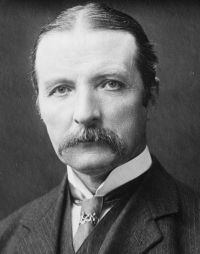 William Archer,
Through Afro-America: An English Reading of the Race Problem
William Archer,
Through Afro-America: An English Reading of the Race Problem
“ Once let a dozen white men be killed by armed negroes in any city of the South, and a flame would burst out all over the land which would work untold devastation before either authority or humanity could check it. The incident would be taken as a declaration of racial war; everywhere the white mob would insist on searching for arms in the negro quarters; the negroes would inevitably attempt some panic-stricken defensive organization; and the more effective it proved, the more terrible would be the calamity to their race. ”
Sutton E. Griggs, The Hindered Hand; or, The Reign of the Repressionist
“ The sullen hatred of the Negroes engendered by the rabid utterances and violent conduct of the radicals among the whites is pregnant with harm to the South, and tends to summon to a resurrection the entombed savagery of some members of the race, and to dishearten others in their upward strivings. On and on I could go, showing the awful wreckage in the pathway of the Southern radical."If the nation would ever heal this sore the radicals must be suppressed. If the Negroes attempt their undoing a feeling of racial solidarity282 among the whites greets them. ”
 Carl Schurz,
Speeches, correspondence and political papers of Carl Schurz
(1913)
Carl Schurz,
Speeches, correspondence and political papers of Carl Schurz
(1913)
“ I think it also safe to say that, whatever atrocities may have happened during that terrible period of sudden transition from one social order to another, the relations between the white and black races are now in progress of peaceful and friendly adjustment, and that the disappearance of race antagonism on the political field will do more for the safety of the negro's rights and the improvement of his position in human society than could be done by any intervention of mere power. ”
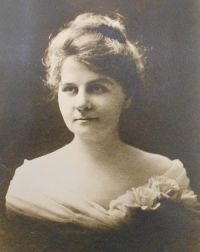 Myrta Lockett Avary,
Dixie After the War
Myrta Lockett Avary,
Dixie After the War
“ The fact that there was such a victim seemed lost sight of; the crime for which the negro was executed would often escape everything but bare mention, sometimes that. What deductions were negroes to draw from such distinctions, except that lynching was monstrous crime, rape an affair of little moment, and strenuous objection to it only one feature of damnable “Race Prejudice in the South”? ”
William Archer,
Through Afro-America: An English Reading of the Race Problem
“ This horror is all the more acute—all the more morbid, if you will—because the white race is conscious of its own frailty, and knows that it is, in some sense, fighting a battle against perfidious nature. It is a hard thing to say, but I have little doubt it is true, that much of the injustice and cruelty to which the negro is subjected in the South is a revenge, not so much for sexual crime on the negro’s part, as for an uneasy conscience or consciousness on the part of the whites. ”
George Washington Williams, History of the Negro Race in America from 1619 to 1880…
“ The Negro soldiers had to run the gauntlet of the persecuting hate of white Northern troops, and, if captured, endure the most barbarous treatment of the rebels, without a protest on the part of the Government—for at least nearly a year. Hooted at, jeered, and stoned in the streets of Northern cities as they marched to the front to fight for the Union; scoffed at and abused by white troops under the flag of a common country, there was little of a consoling or inspiring nature in the experience of Negro soldiers. ”
 Frederick Douglass,
Why is the Negro Lynched?
Frederick Douglass,
Why is the Negro Lynched?
“ It says to the world that the colored people of America are not deemed by Americans as within the compass of American law, progress and civilization. It says to the lynchers and mobocrats of the South, go on in your hellish work of Negro persecution. You kill their bodies, we kill their souls. ”
Frederick Douglass,
The Future of the Colored Race
(1886)
“ Sometimes I have feared that, in some wild paroxysm of rage, the white race, forgetful of the claims of humanity and the precepts of the Christian religion, will proceed to slaughter the negro in wholesale, as some of that race have attempted to slaughter Chinamen, and as it has been done in detail in some districts of the Southern States. ”
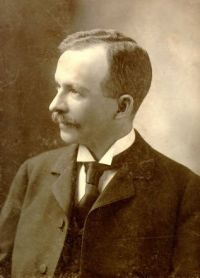 Charles W. Chesnutt,
The Marrow of Tradition — XXXV.
(1901)
Charles W. Chesnutt,
The Marrow of Tradition — XXXV.
(1901)
“ Crowds of white men and half-grown boys, drunk with whiskey or with license, raged through the streets, beating, chasing, or killing any negro so unfortunate as to fall into their hands. Why any particular negro was assailed, no one stopped to inquire; it was merely a white mob thirsting for black blood, with no more conscience or discrimination than would be exercised by a wolf in a sheepfold. It was race against race, the whites against the negroes ”
Frederick Douglass,
Why is the Negro Lynched?
“ The problem in their hands is immeasurable. The coloured race multiplies like the locusts of Egypt. The safety of women, of childhood, of the home, is menaced in a thousand localities at this moment, so that men dare not go beyond the sight of their own roof tree.” Such, then, is the crushing indictment drawn up against the Southern Negroes, drawn up, too, by persons who are perhaps the fairest and most humane of the Negro’s accusers. ”
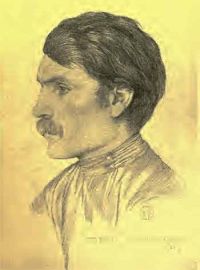 Stephen Graham,
The Soul of John Brown
Stephen Graham,
The Soul of John Brown
“ We burn ‘em alive, yes, and do it slow, because killing’s too good for them, and we get just so mad that everyone wants to be there, and have his part in putting them to death. In the North they do not lynch the Negro, but if one commits a crime they blame the whole Negro race. In the South we find the guilty man and punish him. ”
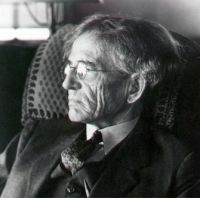 John R. Commons,
Races and Immigrants in America
John R. Commons,
Races and Immigrants in America
“ Many strikes are accompanied by an incipient race war where employers are endeavoring to make substitution, one race for another, of Irish, Germans, native whites, Italians, negroes, Poles, and so on. Even the long series of crimes against the Indians, to which the term “A Century of Dishonor” seems to have attached itself without protest, must be looked upon as the mob spirit of a superior race bent on despoiling a despised and inferior race. ”
 Lydia Maria Child,
An Appeal in Favor of that Class of Americans Called Africans
(1833)
Lydia Maria Child,
An Appeal in Favor of that Class of Americans Called Africans
(1833)
“ Our books, our reviews, our newspapers, our almanacs, have all been silent, or exerted their influence on the wrong side. The negro's crimes are repeated, but his sufferings are never told. Even in our geographies it is taught that the colored race must always be degraded. Now and then anecdotes of cruelties committed in the slave-holding States are told by individuals who witnessed them ”
Various, The Journal of Negro History, Volume 6…
“ It is material, also, that the removal of the blacks to be a distance precluding the jealousies and hostilities to be apprehended from a neighboring people, stimulated by the contempt known to be entertained for their peculiar features; to say nothing of their vindictive recollections, or the predatory propensities which their state of society might foster. Nor is it fair, in estimating the danger of collisions with the whites, to charge it wholly on the side of the black. ”
Frederick Douglass,
Why is the Negro Lynched?
“ It is a crime that awakens the intensest abhorrence and tempts mankind to kill the criminal on first sight.But this charge thus brought against the Negro and as constantly reiterated by his enemies, is plainly enough not merely a charge against the individual culprit, as would be the case with an individual of any other race, but it is in large measure a charge constructively against the coloured people as such. It throws over every man of colour a mantle of odium, and sets upon him a mark of popular hate, more distressing than the mark set upon the first murderer. ”
Stephen Graham,
The Soul of John Brown
“ Now we have the phenomenon of Negro mothers telling their little children of the terrible things done by the white folk, and every Negro child is learning that the white man is his enemy. Every lynching, every auto-da-fé is secreting hate and the need for revenge in the Negro masses. ”
E. W. Burgess, Introduction to the Science of Sociology
“ And with this dawning consciousness of race there is likewise coming an appreciation of the limitations and restrictions which hem in its unfolding and development. One of the best indices to the possibilities of increased racial friction is the Negro's own recognition of the universality of the white man's racial antipathy toward him. This is the one clear note above the storm of protest against the things that are, that in his highest aspirations everywhere the white man's "prejudice" blocks the colored man's path. ”
 Carter Godwin Woodson,
A Century of Negro Migration
Carter Godwin Woodson,
A Century of Negro Migration
“ The South, moreover, has adopted the policy of a more general intimidation of the Negroes to keep them down. The lynching of the blacks, at first for assaults on white women and later for almost any offense, has rapidly developed as an institution. ”
George Washington Williams, History of the Negro Race in America from 1619 to 1880…
“ White persons acting as commissioned officers in organizations of Colored Troops were to "be put to death!" And all Negroes and Mulattoes taken in arms against the Confederate Government were to be turned over to the authorities:—civil, of course—of the States in which they should be captured, to be dealt with according to the present or future laws of such States! Now, what were the laws of the Southern States respecting Negroes in arms against white people? The most cruel death. ”
Frederick Douglass,
Why is the Negro Lynched?
“ The great trouble with the Negro in the South is that all presumptions are against him. A white man has but to blacken his face and commit a crime to have some Negro lynched in his stead. An abandoned woman has only to start a cry, true or false, that she has been insulted by a black man, to have him arrested and summarily murdered by the mob. ”
Chicago Commission on Race Relations, The Negro in Chicago: A Study of Race Relations and a Race Riot
“ Haven't you been hearing more reports of lynching of Negroes than you ever did in your life, since the war? Where, then, is there any improvement? Ain't all the judges, all the police and constables, all the juries as white man as ever? Does the word of a Negro count for more now than it did before the war? Don't white men insult our wives and daughters and sisters and get off at it, unless we take the law into our own hand and punish them for it ourselves, and get lynched for protecting our own, just as often as ever? ”
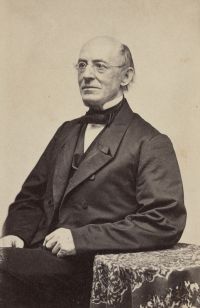 William Lloyd Garrison,
Thoughts on African Colonization
William Lloyd Garrison,
Thoughts on African Colonization
“ But it powerfully tends to veil the existing and outrageous atrocity of negro slavery; and it corroborates against the people of color, whether enslaved or free, one of the most base, groundless, and cruel prejudices, that has ever disgraced the powerful, or afflicted the weak. ”
Ulrich Bonnell Phillips, American Negro Slavery
“ The racial antipathy felt by the alien whites, along with their cultural repugnance and economic apprehensions, intrenched the negroes permanently in the situation. The most fertile Southern areas when once converted into black belts tended, and still tend as strongly as ever, to be tilled only by inert negroes, the majority of whom are as yet perhaps less efficient in freedom than their forbears were as slaves. ”
Hubert H. Harrison, The Negro and the nation (1917)
“ The barbarity of the most odious slave-code was, under various disguises, applied to the Negro in his new condition of freedom”. Even before the resentment of the national legislature had taken form, the Ku-Klux Klan, the Knights of the White Camelias, the Society of the Pale Faces, and other bands of organized representatives of culture had begun to do their bloody work of terrorizing Negroes into economic and social subjection. ”
William O. Blake, The History of Slavery and the Slave Trade (1861)
“ The negro chiefs would have no neutrals among those of their race, and the more faithful slaves, who were found concealing themselves from the rebels, were immediately put to de by their own countrymen. On the other hand, parties of enraged whites were traversing the country, and, with an undiscriminating vengeance, killing every living thing that was black. ”
Lydia Maria Child,
An Appeal in Favor of that Class of Americans Called Africans
(1833)
“ Such laws are a positive inducement to violent and vicious white men to oppress and injure people of color. In this point of view, a negro becomes the slave of every white man in the community. The brutal drunkard, or the ferocious madman, can beat, rob, and mangle him with perfect impunity. ”
Various, The Journal of Negro History, Volume 2…
“ But while this was true, there is abundant evidence to show that by the masses of the people the Negro was thoroughly disliked, persecuted and relegated to an inferior social status by no means in harmony with the doctrine of the inalienable and unalterable rights of man. Negroes were set upon in the streets, beaten, cut and even stoned to death in sheer wanton cruelty. ”
George Washington Williams, History of the Negro Race in America from 1619 to 1880…
“ When a prisoner escapes he is hunted down by fiery dogs and cruel guards; and often the poor prisoner is torn to pieces by the dogs or beaten to death by the guards. No system of slavery was ever equal in its cruel and dehumanizing details to this convict system, which, taking advantage of race prejudice on the one hand and race ignorance on the other, with cupidity and avarice as its chief characteristics, has done more to curse the South than all things else since the war. ”
Various, The Journal of Negro History, Volume 6…
“ It is true that individual Negroes, by fiendish assaults on white women, now and then rouse men to frenzy, but statistics show that only about a fifth of the lynchings of Negroes are because of the 'usual crime.' Burning at the stake is never justifiable under any circumstance, and it is undeniable that in race riots scenes of horror have been enacted that are a disgrace to American civilization. ”
George Washington Williams, History of the Negro Race in America from 1619 to 1880…
“ Many white men who owned no slaves poured forth their wrathful invectives and cruel blows upon the heads of innocent Negroes with the slightest pretext. They pushed, jostled, crowded, and kicked the Negro on every occasion. The young whites early took their lessons in abusing God's poor and helpless children; while an overseer was prized more for his brutal powers—to curse, beat, and torture—than for any ability he chanced to possess for business management. ”
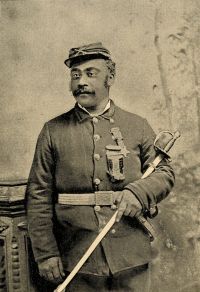 Joseph T. Wilson,
The Black Phalanx
Joseph T. Wilson,
The Black Phalanx
“ The Negro race, however, it must be remembered, is the only race that has ever come in contact with the European race, and been able to withstand its atrocities and oppression; all others, like the Indian, whom they could not make subservient to their use, they have destroyed. The Negro race, like the Israelites, multiplied so rapidly in bondage, that the oppressor became alarmed, and began discussing methods of safety to himself. ”
Horace James, Annual report of the superintendent of Negro Affairs in North Carolina… (1865)
“ The shadow of a passing disgust at the abject negro is changed into the fervor of a holy indignation against the crime that debased him when we reflect upon the pent up abuses of many generations now let loose in judgment upon the land, and hear the voice of the Lord, like muttering thunders, saying, let my people go. ”
Carl Schurz,
Speeches, correspondence and political papers of Carl Schurz
(1913)
“ Truly, there never were professions of affection and solicitude more damnably treacherous than those lavished by such men upon the negroes of the South. To place the negroes of the South in the attitude of organized partisan supporters of corruption and robbery against the whites was the blackest crime that could be committed against the colored race. And I affirm that the men who did it, the carpet-baggers and plunderers, have been and are the cruelest, the most treacherous, the most dastardly enemies the colored people ever had since their emancipation. ”
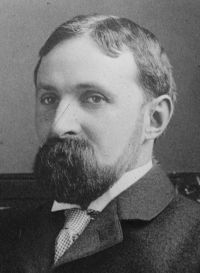 Albert Bushnell Hart,
The Southern South
Albert Bushnell Hart,
The Southern South
“ That the Negroes as a race are impure and unregulated is the judgment of most white observers whether ill-wishers or fair-minded men. Thomas Nelson Page, for instance, declares that the immorality of the negro race has increased since slavery times. ”
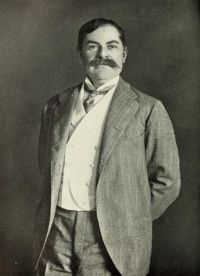 Thomas Nelson Page,
The negro: the southerner's problem
(1904)
Thomas Nelson Page,
The negro: the southerner's problem
(1904)
“ All other evils are but corollaries; the evil of race-conflict, though not so awful as the French Revolution or San Domingo; the evil of growing armies with their menace to liberty; the evil of race-degeneration from enforced and constant association with an inferior race: these are some of the perils which spring from that state of affairs [Pg 214] and confront us. At one more step they confront the rest of the Anglo-American people to-day. For the only thing that stands to-day between the people of the North and the Negro is the people of the South. ”