“ Only two strokes for such as Casey or Neale! Ten spikes to a rail—four hundred rails to a mile! ... How many million times had brawny arms swung and sledges clanged! Forward every day the work-trains crept westward, closer and closer to that great hour when they would meet the work-trains coming east. The momentum now of the road-laying was tremendous. The spirit that nothing could stop had become embodied in a scientific army of toilers, a mass, a machine, ponderous, irresistible, moving on to the meeting of the rails. ”
Rail (road)
Definition and stakes
The theme of “rail (road)” has been addressed by authors such as William Hemingway Mills, George L. Vose, Thomas Curtis Clarke, Hugh Munro Ross and Sir Francis Bond Head. It is often associated with terms like railway, train, locomotive, railroad and wheel.
Quotes about “rail (road)”
Various, Graham's Magazine, Vol. XLI, No…
“ The unparalleled extension of rail-roads in this country, so peculiarly calculated for their creation by its natural configuration and geological structure, has called for a supply of rail-road materials, both raw and manufactured, to a degree almost inconceivable even at the present day ”
Various, Chambers's Journal of Popular Literature…
“ In its course up the valley the railway on one side sometimes rises above the level of the carriage-road on the other, sometimes finds itself considerably below it. In climbing the pass, the rail of course never ceases to ascend; while the more humble road bows to the obstacles it encounters, and rises and falls according to the nature of the ground. At last, Nature seems determined to put a stop to the encroachments of steam, and the railroad finds itself directly facing a lateral valley, the bottom of which lies far below it. ”
“ It was in him to travel that way—the way of the glimmering, jewelled lamps, the road of the shining rails.But first he shoved his suitcase, with his foot, over the platform's edge, as though it had fallen there by accident.... And, as though he had followed to recover it, he climbed down among the tracks.There was a third rail running parallel to the twin rails. It was roofed with wood. Lying flat, there in the shimmering dusk, he could look up under the wooden guard rail and see it. ”
1911 Encyclopædia Britannica (1911)
“ The keys which hold the rail in the chairs are usually of oak and are placed outside the rails; the inside position has also been employed, but has the disadvantage of detracting from the elasticity of the road since the weight of a passing train presses the rails up against a rigid mass of metal instead of against a slightly yielding block of wood. The rails, which for heavy main line traffic may weigh as much as 100 ℔ per yard, or even more, are rolled in lengths of from 30 to 60 ft., and sleepers are placed under them at intervals of between 2 and 3 ft. ”
William Hemingway Mills, Railway Construction
“ The writer has had long mileages of each description of permanent way under his charge, both at home and abroad, for many years, and the result of his experience has shown that, although a fairly good road may be made with flange rails, still, for constant, heavy, fast traffic, the bull-head rail with cast-iron chairs makes a much stronger, more durable, and better permanent way than any flange railroad. ”
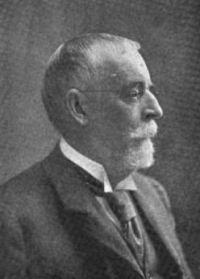 Thomas Curtis Clarke,
The American Railway: Its Construction…
“ At least twice a day track-walkers from the section-gangs pass over the entire line of road. To simplify reports and instructions, frequently every bridge or opening in the track is numbered, and the number displayed upon it; and every curve is also posted with its degree of curvature and the proper elevation to be given to the outer rail.The work of the section-men is all done under regular system. In the spring construction-trains deliver and distribute ties and rails on each section, upon requisitions from supervisors. ”
James W. Buel, Glimpses of America
“ To secure perfect safety in ascending and descending such a tremendous grade, the track is composed of three rails bolted to a trestle of heavy timbers, the centre rail being an immense wrought-iron ladder, with rounds four inches apart, into which the cogs of the locomotive drive-wheel fit, and thus drag the train up the steep as well as control it, with aid of air-brakes, in making the descent. One and a half hours are consumed in making the round trip, and the fare is six dollars, but the view from the summit is so magnificent that it fully justifies the expense. ”
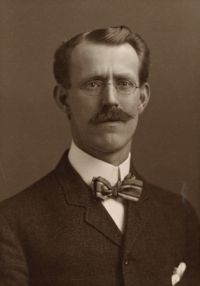 Edward Stratemeyer,
Dave Porter and His Classmates…
“ The thirty-and forty-storied buildings in our big cities, the underground railways, the tubes under the rivers, the tremendous suspension bridges, the automobile carriages and business trucks,—not to mention the railroad trains that are to run on one rail at a speed of a hundred miles an hour. ”
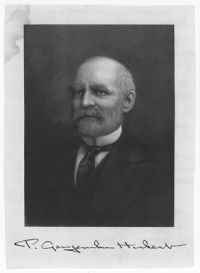 Philip Gengembre Hubert,
Inventors
“ To accomplish this, two sets of railways will be laid so nearly level as not in any way to deviate more than two degrees from a horizontal280 line, made of wood, or iron, or smooth paths of broken stone or gravel, with a rail to guide the carriages so that they may pass each other in different directions and travel by night as well as by day. ”
Joseph Wardle, From the Thames to the Tiber
“ The railway has a central rail which is cogged, and into this endless cog fits a wheel underneath the engine. This is really the driving wheel by which it slowly moves up the steep gradient. We passed farms, orchards and plantations, up and up. It is a curious sensation to find yourself steadily moving up without any effort of your own, but still up we went until we landed on a lovely plateau, with a charming hotel. The view from this mountain height was beyond description. We left the train and wandered into the woods and viewed our surroundings. ”
Thomas Curtis Clarke,
The American Railway: Its Construction…
“ The railway to-day is one of the matter-of-fact associations of our active life. We use it so constantly that it requires some little effort to think of it as a wonderful thing; a creation of man's inge [48] nuity, which did not exist when our grandfathers were young. Its long bridges, high viaducts, and dark tunnels may be remarked and remembered by the traveller, but the narrow way of steel, the road itself, seems but a simple work. ”
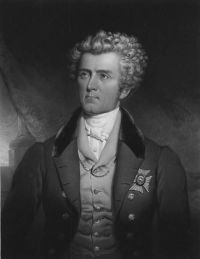 Sir Francis Bond Head,
Stokers and pokers
“ The velocity with which all these little parcels are booked, weigh-billed, placed into hand-trucks, wheeled off to their respective vans, packed, locked up, and then despatched down the little branch-rail to the main line, on which is the train ready to convey them, is very surprising. ”
Walter White, A July Holiday in Saxony, Bohemia…
“ And along the road which skirts the shore there go men and women, horses and vehicles, and there is always something strange to note in costume and appearance. And close by runs the railway, its course marked by the painted wicker balloons hanging aloft on the signal posts, and the bright colour of the jutting rocks through which the way is hewn, or by a train dashing past with echoing snort and tail of cloud. ”
William Hemingway Mills, Railway Construction
“ The speed of the train regulates the amount of super-elevation to be given on any particular curve, and to ensure smooth and safe running this amount must be maintained uniform all round the curve. On curves of small radius, guard, or check, rails are frequently placed alongside the inner rail, as in Figs. 30 to 33, to check the tendency of the engine to leave the rails and run in a straight line. ”
William Hemingway Mills, Railway Construction
“ It is evident that the rail which would last for very many years under the small traffic, would have a very short life under the frequent traffic. Hence the reason why it is found expedient to give a large increase of material in the heads of rails carrying the heavy, constant train service of many of our main lines. ”
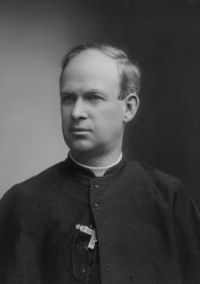 J. A. Zahm,
Up the Orinoco and down the Magdalena
“ From sea level to the summit of the range, the railroad is conspicuous for its heavy grade—about four per cent.—its sharp curves, its cuts and tunnels, but above all for the magnificent scenery everywhere visible. From the car window one may look over precipitous cliffs into yawning abysses far below the track on which the train slowly and carefully winds its way. On the beetling rocks above, in the dark and wild gorge below—what a wealth of vegetation, what luxuriance of growth, what a gorgeous display of vari-colored fruit and flower, of delicate fern and majestic palm! ”
Various, Scientific American Supplement…
“ The junction signals are soon sighted; neither caution nor danger is indicated, and, once clear of the station, we steam ahead as fast as ever. One peculiarity of the view of the line ahead strikes us. Looking at a railroad line from a field or neighboring highway, even where the rails are laid on a steep incline, the rise and fall of the road is not very strikingly apparent. ”
Frederick C. Bakewell, Great Facts
“ No sooner had the formation of railways commenced for carrying passengers in long trains of carriages drawn by heavy locomotive engines, than the want was experienced of some different kind of bridge from any then existing for crossing rivers, roads, and valleys. The train could not be turned sharply round a curve to cross a road at right angles; and to make the requisite bend to enable it to do so would have taken the railway considerably out of its direct course. ”
George Sutherland, Twentieth Century Inventions: A Forecast
“ We now have a kind of rail which conforms to the condition already mentioned, namely, that of being capable of being laid down in front of the wheel of the truck or vehicle, and of being picked up again when the weight has passed over any particular part. The hoop, in fact, constitutes a rolling railway, and the larger it can with convenience be made, the nearer is the approach which it presents to a straight railway track as regards the absence of resistance to the passing of a loaded truck-wheel over it. ”
Hugh Munro Ross, 1911 Encyclopædia Britannica (1911)
“ Wooden sleepers continued to be used, the rails being secured by spikes passing through the extremities, but about 1793 stone blocks also began to be employed—an innovation associated with the name of Benjamin Outram, who, however, apparently was not actually the first to make it. This type of rail (fig. 1) was known as the plate-rail, tramway-plate or barrow way-plate—names which are preserved in the modern term “plate layer” applied to the men who lay and maintain the permanent way of a railway. ”
 George L. Vose,
Handbook of Railroad Construction…
“ The superiority which the modern railroad possesses over the common, McAdam, plank, or turnpike-road, consists, first, in the reduction of the resistance to motion, and second, in the application of the locomotive steam-engine.13. The effect of grades of a given incline upon a railroad is relatively more than upon common roads; for as the absolute resistance on a level decreases, the relative resistance of grades augments: whence to obtain the full benefit of the system, we must reduce much more the 7grades and curvature upon a railroad, than on a common road. ”
 Burton Egbert Stevenson,
The Young Train Dispatcher
“ YOUNG TRAIN DISPATCHER CHAPTER I THE NEW POSITIONStretching from the Atlantic seaboard on the east to the Mississippi River on the west, lies the great P. & O. Railroad, comprising, all told, some four thousand miles of track. Look at it on the map and you will see how it twists and turns and sends off numberless little branches; for a railroad is like a river and always seeks the easiest path—the path, that is, where the grades are least and the passes in the mountains lowest. ”
William Hemingway Mills, Railway Construction
“ Rail manufacturers are now able to roll a section of rail combining the vertical stiffness of the ordinary flange, or flat-bottom, rail with the running-head and continuous wheel-flange groove, considered the most suitable for heavy tramway traffic. ”
William Hemingway Mills, Railway Construction
“ It is evident, therefore, that when the pivoted arms are set in the forward or backward position, and one of the wheels of a train or vehicle has passed on to the rail over the rocking-bar, the latter cannot be changed or raised and pulled over to the opposite extremity so long as any one of the wheels of the train or vehicles remain over the rocking-bar. ”
Nicholas Wilcox Cundy, Inland Transit — Inland Transit (1834)
“ Now, we shall see hereafter, that when adequate moving powers are applied, even with very considerable weights, the speed attainable, without loss of advantage on roads, bears a large proportion to this. Railroads are contrivances for obtaining a surface for the wheels of carriages to roll upon, smoother than the surface of a turnpike road, whether Macadamised or paved. ”
George Waldo Browne, Where Duty Called; or, In Honor Bound
“ The railroad which connects the two coils about this rugged ascent like a steel lariat thrown by a dextrous hand, now winding in and out where some bottomless abyss is encircled like a huge letter U upon the landscape, or anon clinging upon the rim of some sharp-pointed rock, where the same train creeps around the angle, showing mortal fear by its snail-like pace. ”
Frederick Arthur Ambrose Talbot, The Railway Conquest of the World (1911)
“ Yet the “Hanging Bridge” is but one of many engineering wonders to be found on this railway. Go where one will over its 1,800 miles of track among the Rockies, and some striking and daring work confronts one at every turn. Here the railway threads its way through a winding abyss, there it passes over the crown of a towering peak, or toils laboriously up the side of a sheering cliff. No two miles are alike. In all it traverses five yawning canyons, each possessing a strange individuality, and crosses the mountain backbone by which the continent is split in twain by three different passes. ”
Samuel Smiles, The Life of George Stephenson and of his Son Robert Stephenson
“ If we compare the railway with the best lines of common road, it may be fairly stated that in the case of a level railway the work will be increased in at least an eightfold degree. The best horse is sufficiently loaded with three quarters of a ton on a common road, from the undulating line of its draught, while on a railway it is calculated that a horse will easily draw a load of ten tons. ”
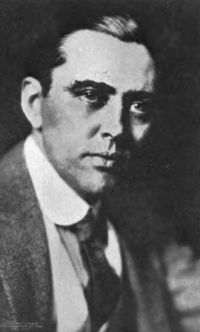 Julian Street,
Abroad at Home: American Ramblings…
“ Outside are factories, and railroad yards, and everywhere tall black chimneys, vomiting their heavy, muddy smoke. But always the train glides on like some swift, smooth river. Now the track is elevated, now depressed. You run over bridges or under them, crossing streets and other railroads. At last you dive into a tunnel and presently emerging, coast slowly along be [ 515] side an endless concrete platform raised to the level of the car floor. ”
George L. Vose,
Handbook of Railroad Construction…
“ From the above results the following table is formed, showing the life of rails under from two to one hundred trains per day. American roads being less nicely finished, as regards the road-bed, will of course wear out rails faster than the roads of Europe. ”
Railway Adventures and Anecdotes…
“ The ingenuity with which two narrow rods of iron are made to bear whole trains of wagons, laden with many hundred tons of commerce, and bounding across a wide, semi-fluid morass, previously impassable by man or beast, is beyond all praise and deserving of eternal record. p. 63Only conceive a slender bridge of two minute iron rails, several miles in length, level as Waterloo, elastic as whalebone, yet firm as adamant! Along this splendid triumph of human genius—this veritable via triumphalis—the train of carriages bounds with the velocity of the stricken deer ”
Various, Scientific American Supplement…
“ Notwithstanding the necessity, the proposal to establish a railroad met with general derision, but the scheme was soon shown to be perfectly practicable, and a beginning was made in 1879. The road is what is known as a cable road, there being a single sleeper with three rails, one on the top which really bore the weight, and one on each side near the bottom, which supported the wheels, which coming out from the axle at a sharp angle, prevented the vehicle from being overturned. ”
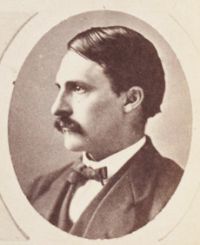 Burton Willis Potter,
The Road and the Roadside
“ Don't ever approach a railway crossing without looking out for the engine while the bell rings, and listening to see if the train is coming; for there is good sense as well as good law in the suggestion of Chief Baron Pollock, that a railway track per se is a warning of danger to those about to go upon it, and cautions them to see if a train is coming. ”

“ Coming out of the lane along the darkness, with the dark space spreading down to the wind, and the twinkling lights of the station below, the far-off windy chuff of a shunting train, the tiny clink-clink-clink of the wagons blown between the wind, the light of Beldover-edge twinkling upon the blackness of the hill opposite, the glow of the furnaces along the railway to the right, their steps began to falter. ”
Related terms
Authors who wrote about “rail (road)”
William Hemingway MillsGeorge L. VoseThomas Curtis ClarkeHugh Munro RossSir Francis Bond HeadSir Cusack P. RoneyVarious Charles DickensEdward Stratemeyer
 Zane GreyPhilip Gengembre HubertWalter WhiteFrederick C. BakewellJames W. BuelJoseph WardleHolland ThompsonGeorge SutherlandNicholas Wilcox CundySamuel Smiles
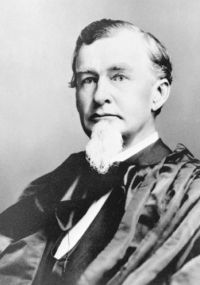 Howell Edmunds Jackson
George L. VoseThomas Curtis ClarkeHugh Munro RossSir Francis Bond HeadSir Cusack P. RoneyVariousCharles DickensEdward StratemeyerZane GreyPhilip Gengembre HubertWalter WhiteFrederick C. BakewellJames W. BuelJoseph WardleHolland ThompsonGeorge SutherlandNicholas Wilcox CundySamuel SmilesHowell Edmunds Jackson