Selection (biology)

Definition and stakes

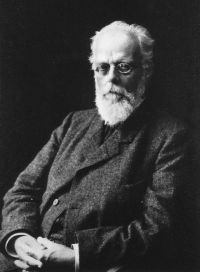
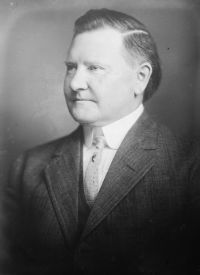
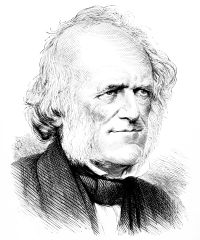
Portrait of Herbert Spencer Herbert Spencer,  The Principles of Biology — Appendix B (1898)

“ Natural selection, or survival of the fittest, is almost exclusively operative throughout the vegetal world and throughout the lower animal world, characterized by relative passivity. But with the ascent to higher types of animals, its effects are in increasing degrees involved with those produced by inheritance of acquired characters; until, in animals of complex structures, inheritance of acquired characters becomes an important, if not the chief, cause of evolution. ”
Source: Wikisource

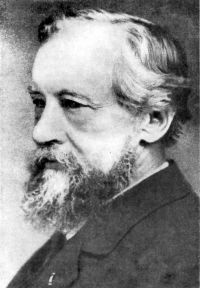
Portrait of Herbert Spencer Herbert Spencer,  The Principles of Biology — Appendix B(III) (1898)

“ Next comes an introduction to the still stranger conclusion, that these numerous kinds of germ-plasm, producing these numerous intermediate forms, are not simply needless but injurious—produce forms not well fitted for either of the functions discharged by the extreme forms: the implication being that natural selection has originated these disadvantageous forms! ”
Source: Wikisource

William A. Locy,  Biology and Its Makers

“ Darwin frequently complained that very few of his critics took the trouble to find out what he meant by the term natural selection. A few illustrations will make his meaning clear. Let us first think of artificial selection as it is applied by breeders of cattle, fanciers of pigeons and of other fowls, etc. It is well known that by selecting particular variations in animals and plants, even when the variations are slight, the breeder or the horticulturalist will be able in a short time to produce new races of organic forms. ”
Source: Gutenberg

Get perspective with Kwize: daily news enlightened by great literature