Skull and crossbones

Definition and stakes

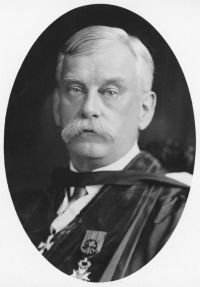
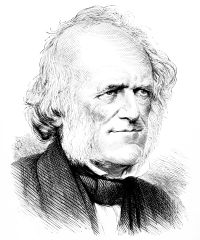
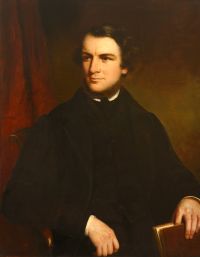
Portrait of Thomas Henry Huxley Thomas Henry Huxley,  On Some Fossil Remains of Man

“ They differ further in the relations of the transverse diameter of the face, taken through the cheek bones, to the transverse diameter of the skull; in the more rounded or more gable-like form of the roof of the skull, and in the degree to which the hinder part of the skull is flattened or projects beyond the ridge, into and below which, the muscles of the neck are inserted.
In some skulls the brain case may be said to be 'round,' the extreme length not exceeding the extreme breadth by a greater proportion than 100 to 80, while the difference may be much less.
”
Source: Gutenberg

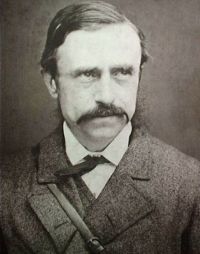
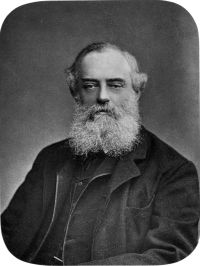
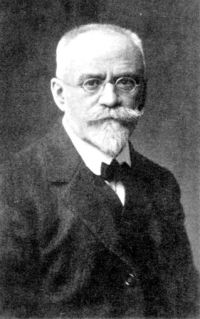
Portrait of Robert Armitage Sterndale Robert Armitage Sterndale,  Natural History of the Mammalia of India and Ceylon

“ It must be remembered that the bones of the skull do not grow in the same ratio to the others, and that they attain their full size before those of the rest of the body. Therefore it is only in the case of the adult that accurate results can be calculated upon. Probably I have not done wisely in selecting a portion of the skull as a standard—a bone of the body, such as a femur or humerus might be more reliable—but I was driven to it by circumstances. ”
Source: Gutenberg

W. L. H. Duckworth,  Prehistoric man

“ The fact that the thigh-bone might easily have passed as that of a man, while the skull-fragment is so divergent from all modern forms as to be scarcely human, is of great interest. The contrast between the indications provided by the two bones was remarked at once. Some writers, rejecting certain other evidence on the point, then drew the inference that the human thigh-bone had been evolved and had arrived at the distinctive human condition in advance of the skull. ”
Source: Gutenberg

Get perspective with Kwize: daily news enlightened by great literature