Soap industry

Definition and stakes

Edgar George Thomssen,  Soap-Making Manual

“ Soap is a very important product to every branch of the textile industry. For woolen fabrics it is used for scouring, fulling and throwing the wool; in the silk industry it is necessary for degumming the raw silk, as well as for dyeing; in the cotton mills it is used to finish cotton cloth and to some extent in bleaching; it is, furthermore, employed in a number of ways in the manufacture of linen. Large quantities of soap are thus consumed in an industry of so great an extent and the requirements necessitate different soaps for the different operations. ”
Source: Gutenberg

H. A. Appleton,  The Handbook of Soap Manufacture

“ From this time till the beginning of the nineteenth century the manufacture of soap developed very slowly, being essentially carried on by rule-of-thumb methods, but the classic researches of Chevreul on the constitution of fats at once placed the industry upon a scientific basis, and stimulated by Leblanc's discovery of a process for the commercial manufacture of caustic soda from common salt, the production of soap has advanced by leaps and bounds until it is now one of the most important of British industries. ”
Source: Gutenberg

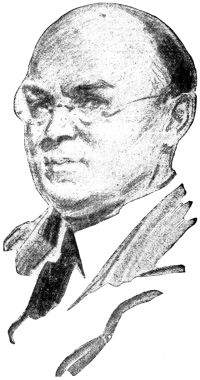
Portrait of Upton Sinclair Upton Sinclair,  The Book of Life

“ On the contrary, we want to stimulate all the workers in these industries to use their wits and improve the processes in every possible way. The whole of society has an interest in this, and the soap workers have an especial interest. Our soap industry has an invention department, with a group of experts appointed by the executive committee of the national council of soap workers. All soap workers are taxed, say five cents a day, for the support of this activity. Likewise the state contributes a generous sum out of its income toward the work of soap research. ”
Source: Gutenberg

Get perspective with Kwize: daily news enlightened by great literature