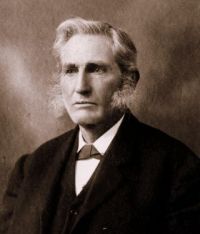
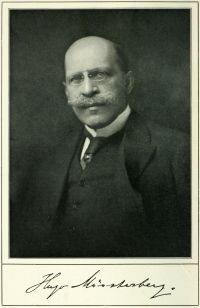
Boris Sidis,
The Source and Aim of Human Progress…
(1919)
“ I pointed out an important law in Social Psychology, namely, that greatness of individuality is inversely proportional to the mass of the social aggregate. ”
Social psychology is the scientific study of how thoughts, feelings, and behaviors are influenced by the real, imagined, or implied presence of others, focusing on individual reactions to social environments. Authors like Boris Sidis examined the inverse connection between individuality and social groups, while John Dewey emphasized shared customs as key to forming human desires and beliefs.
Chapman Cohen stressed social responsibility as a result of societal expectations, and W.H.R. Rivers connected psychology with sociology to interpret social occurrences. These differing viewpoints demonstrate how social psychology investigates the complex interaction between personal minds and societal frameworks, portraying human behavior as shaped by both internal conditions and external factors.
Boris Sidis,
The Source and Aim of Human Progress…
(1919)
“ I pointed out an important law in Social Psychology, namely, that greatness of individuality is inversely proportional to the mass of the social aggregate. ”
W.H.R.Rivers, Kinship and social organisation (1914)
“ It has been the task of these lectures to refer the social facts of relationship to antecedent social conditions, and I believe that this is the proper method of sociology. Even at the present time, however, it is possible to support sociological arguments by means of considerations provided by psychological motives, and the assistance thus rendered to sociology will become far greater as the science of social psychology advances. ”
Chapman Cohen, Determinism or Free-Will?
“ The individual sees himself in the social mirror. His nature is fashioned by the social medium, his personal life becomes an expression of the social life. Just as the social conscience, in the shape of a legal tribunal, judges each for actions that are past, so the larger social conscience, as expressed in a thousand and one different forms, customs, and associations, judges us for those desires and dispositions that may result in action in the future. Responsibility as a phenomenon of social psychology is obvious, educative, inescapable, and admirable. ”

W.H.R.Rivers, Kinship and social organisation
“ This is, however, a process very different from the interpolation of psychological facts as links in the chain of causation connecting social antecedents with social consequences. It is in no spirit of hostility to social psychology, but in the hope that it may help us to understand its proper place in the study of social institutions that I venture to put forward the method followed in these lectures as one proper to the science of sociology. ”
Robert Chenault Givler, The ethics of Hercules (1924)
“ It treats of the relation of social psychology to political science, jurisprudence, economics, history and sociology, analyzing the psychological assumptions underlying the behavior of men living in social relations. ”
H. G. Wells,
A Short History of the World
“ The science of human relationship, of individual and social psychology, of education and of economics, are not only more subtle and intricate in themselves but also bound up inextricably with much emotional matter. ”
James Hayden Tufts, The American Journal of Sociology… (1896)
“ Here indeed the intimate relation to psychology seems often to be felt as an embarrassment. If, as by some, social facts are defined as psychical facts, how shall we distinguish them from the facts studied by psychology? Where draw the line between social and individual psychology? In some cases, at least, the difficulty seems due to a lack of clearness on the relation between the individual and the social, which has its counterpart in the history of thought in the controversies over the particular and the universal. ”
Franz Boas,
The American Journal of Psychology
(1910)
“ The problem of the psychology of the crowd is a peculiarly intricate one, based largely upon the data of social psychology in a wider sense of the term, and upon data of individual psychology. I may be allowed for these reasons to confine myself to-day to the third of the problems which I have outlined, that of the psychological laws which govern man as an individual member of society. ”
Antonio Labriola,
Essays on the Materialistic Conception of History
“ This social psychology, which no one can reduce to abstract canons because, in most cases, it is merely descriptive, this is what the chroniclers, the orators, the artists, the romancers and the ideologists of every sort have seen and up to now have conceived as the exclusive object of their studies. In this, psychology, which is the specific consciousness of men in given social conditions, the agitators, orators and propagandists trust to-day, and to it they appeal. ”
John Dewey,
Human Nature and Conduct: An introduction to social psychology
“ They get their truths mixed up in theory with the false psychology of original individual consciousness, just as the school of social psychologists does upon its side. Their elaborate artificial explanations, like the mystic collective mind, consciousness, over-soul, of social psychology, are due to failure to begin with the facts of habit and custom. ”
John Dewey,
Human Nature and Conduct: An introduction to social psychology
“ But it seriously sets forth a belief that an understanding of habit and of different types of habit is the key to social psychology, while the operation of impulse and intelligence gives the key to individualized mental activity. ”
M. P. Follett, The new state (1918)
“ Some writers make “socially minded” tendencies on the part of individuals the subject of social psychology, but such tendencies belong still to the field of individual psychology. A social action is not an individual initiative with social application. [3] Neither is social psychology the determination of how far social factors determine the individual consciousness. Social psychology must concern itself primarily with the interaction of minds.Early psychology was based on the study of the individual; early sociology was based on the study of society. ”
Lester Frank Ward,
The American Journal of Sociology
(1896)
“ Thus far we have confined ourselves exclusively to the affective side of the mind, or subjective psychology. It is in this region that the motive power of social operations has been found to reside. However trivial the affections may seem to the metaphysician, they are of primary importance to the sociologist. But while they constitute the source of power in social events this is their entire function. They constitute the dynamic agent and nothing else. To render this power effective a directive agent is required. This is furnished by the intellect. ”
W. Trotter, Instincts of the Herd in Peace and War
“ Sociology has, of course, often been described as social psychology and has been regarded as differing from ordinary psychology in being {12} concerned with those forms of mental activity which man displays in his social relations, the assumption being made that society brings to light a special series of mental aptitudes with which ordinary psychology, dealing as it does essentially with the individual, is not mainly concerned. ”
John Dewey,
Psychology and Social Practice
“ It is not merely incidentally, as a grateful addition to its normal task, that psychology serves us. The essential nature of the standpoint which calls it into existence, and of the abstraction which it performs, is to put in our possession the method by which values are introduced and effected in life. The statement of personality as an object, of social relations as a mechanism of stimuli and inhibitions, is precisely the statement of ends in terms of the method of their realization. ”
William McDougall,
The Group Mind: A Sketch of the Principles of Collective Psychology
“ Society like the kingdom of God is within us. Within us, within each of us, and yet greater than the thoughts and understandings of any of us. For the social thoughts and feelings and willings of each, the socialised mind of each, with the complex scheme of his relation to the social world, is no mere reproduction of the social thoughts and feelings and willings of the rest. ”
Everett Dean Martin,
The Behavior of Crowds: A Psychological Study
“ Social psychology is still a rather embryonic science, and this notwithstanding the fact that psychiatry has recently provided us with a method with which we may penetrate more deeply than ever before into the inner sources of motive and conduct. ”
M. P. Follett, The new state (1918)
“ This may be considered an arbitrary definition, but of course I do not care about the names, I only want to emphasize the fact that men meet under two different sets of laws. Social psychology may include both group psychology and crowd psychology, but of these two group psychology is much the more important. ”
Harvard Psychological Studies, Volume 1
“ Only if in this way the sciences of voluntaristic type, including all historical and normative sciences, are fully separated from phenomenalistic psychology, will there appear on the psychological side room for a scientific treatment of the phenomena of social life, that is, for sociology, social psychology, folk-psychology, psychical anthropology and many similar sciences. ”
Alice S. Cheyney, A definition of social work: A thesis in sociology (1923)
“ That is to say the problem which social psychology must solve is the problem of how this moralization is brought about. The significance of such doctrine for social work is in its entire discrediting of any naive individualism and its indication that man being an animal that lives not solitary but in groups some form and degree of interdependence is, for him, in the first order of nature. ”
William McDougall,
The Group Mind: A Sketch of the Principles of Collective Psychology
“ But, as I have pointed out in the Introduction to my Social Psychology, those who approached these problems were generally stimulated to do so by their interest in questions of right and wrong, in questions of norms and standards of conduct, the urgency of which demanded immediate answers for the practical guidance of human life in all its spheres of activity, for the shaping of laws, institutions, governments, and associations of every kind ”
Various, Popular Science Monthly (1900)
“ Under this influence we do indeed find that he becomes a different being, and that his mental processes must be formulated by different laws; and we are convinced that, as thus understood, social psychology is just as distinct and legitimate a branch of study as is the psychology of the child or the psychology of sex. ”
Boris Sidis,
The Source and Aim of Human Progress…
(1919)
“ As the great Sociologist, Tarde, points out: "To understand thoroughly the essential social fact, as I perceive it, knowledge of the infinitely subtle facts of mind is necessary,—the roots of what seems to be even the simplest and most superficial kind of sociology strike far down into the depths of the most inward and hidden parts of Psychology and Physiology." ”
Emory S. Bogardus, A history of social thought (1922)
“ An attitude is a process of individual consciousness that determines “the real or possible activity of the individual in the social world.”XVIII-45 A social value, on the other hand, is any datum that has an empirical content324 accessible to the members of a social group and a meaning which may make it an object of activity. Activity is thus the bond between a social attitude and a social value. The value is the meaning which a material or spiritual datum may have. An attitude is a real or implied going out after value. Social psychology is the science of social attitudes. ”
William James, The Principles of Psychology, Volume 1…
“ Our social self-seeking, in turn, is carried on directly through our amativeness and friendliness, our desire to please and attract notice and admiration, our emulation and jealousy, our love of glory, influence, and power, and indirectly through whichever of the material self-seeking impulses prove serviceable as means to social ends. That the direct social self-seeking impulses are probably pure instincts is easily seen. ”
John Dewey,
Human Nature and Conduct: An introduction to social psychology
“ The hypothesis preferred may seem to some to advise a subjective, self-centered life of intensified consciousness, an esthetically dilettante type of egoism. For is not its lesson that we should concentrate attention, each upon the consciousness accompanying his action so as to refine and develop it? Is not this, like all subjective morals, an anti-social doctrine, instructing us to subordinate the objective consequences of our acts, those which promote the welfare of others, to an enrichment of our private conscious lives? ”
John Dewey,
Human Nature and Conduct: An introduction to social psychology
“ Thus the instrument of action and the means of the continuous modification of action, of the cumulative carrying forward of old activity into new, is regarded as a mysterious intruder or as a mysterious parallel accompaniment. It is fair to say that the psychology of a separate and independent consciousness began as an intellectual formulation of those facts of morality which treated the most important kind of action as a private concern, something to be enacted and concluded within character as a purely personal possession. ”
John Dewey,
Psychology and Social Practice
“ Moreover, psychology, as an account of the mechanism of workings of personality, is the only alternative to an arbitrary and class view of society, to an aristocratic view in the sense of restricting the realization of the full worth of life to a section of society. The growth of a psychology that, as applied to history and sociology, tries to state the interactions of groups of men in familiar psychical categories of stimulus and inhibition, is evidence that we are ceasing to take existing social forms as final and unquestioned. ”
Th. Ribot, The Psychology of the Emotions (1897)
“ The family group and the social group have each sprung from different tendencies, from distinct needs; each has its special, independent psychological origin, and there is no possible derivation from one to the other.III. Life in common, even under the gregarious form, requires certain ways of acting, and habits founded on sympathy and determined by the concerted aim pursued by all. In order that it may become stable and constitute a society, an element of fixity must be added—the more or less clear consciousness of an obligation, of a rule, of what has to be done or avoided. ”
Th. Ribot, The Psychology of the Emotions (1897)
“ They are entirely the product of circumstances, of their environment, of the education they have received from men and things. Some other person, or, failing that, the social environment, wills for them, and acts through them. They are not voices, but echoes. They are this or that, according to circumstances. Chance decides on their occupation, their marriage, and other things; once caught in the machinery of life, they act like every one else. They represent, not an individual, but a specific, professional character ”
Alice S. Cheyney, A definition of social work: A thesis in sociology (1923)
“ It is social in the specific sense of dealing with people in their relations to other people. Its prerequisite is not physiology, the science of that part of man which can develop in isolation, but psychology, the science of intelligence which develops only in contact with other intelligences. ”
John Dewey,
Human Nature and Conduct: An introduction to social psychology
“ Any moral theory which is seriously influenced by current psychological theory is bound to emphasize states of consciousness, an inner private life, at the expense of acts which have public meaning and which incorporate and exact social relationships. A psychology based upon habits (and instincts which become elements in habits as soon as they are acted upon) will on the contrary fix its attention upon the objective conditions in which habits are formed and operate. ”
John Dewey,
Human Nature and Conduct: An introduction to social psychology
“ Viewed from the standpoint of custom and its priority to the formation of habits in human beings who are born babies and gradually grow to maturity, the facts which are now usually assembled under the conceptions of collective minds, group-minds, national-minds, crowd-minds, etc., etc., lose the mysterious air they exhale when mind is thought of (as orthodox psychology teaches us to think of it) as something which precedes action. It is difficult to see that collective mind means anything more than a custom brought at some point to explicit, emphatic consciousness, emotional or intellectual. ”
Irwin Edman, Human Traits and their Social Significance
“ Page iv The book as a whole, so far as can be judged from the experience the author and others have had in using it during the past year as a text at Columbia, should fit well into any general course in social psychology. It has been increasingly realized that the student's understanding of contemporary problems of government and industry is immensely clarified by a knowledge of the human factors which they involve. This volume supplies a brief account of the essential facts of human behavior with especial emphasis on their social consequences. ”
John Dewey,
Human Nature and Conduct: An introduction to social psychology
“ But these influences are immensely overdone in comparison with the assistance that might be given by the influence of social judgments which operate without accompaniments of praise and blame; which enable an individual to see for himself what he is doing, and which put him in command of a method of analyzing the obscure and usually unavowed forces which move him to act. We need a permeation of judgments on conduct by the method and materials of a science of human nature. ”
William Walker Atkinson,
Your Mind and How to Use It: A Manual of Practical Psychology
“ Under the classification of "the social emotions" are those acquired tendencies of action and feeling of the race which are more or less altruistic, and are concerned with the welfare of others and one's duties and obligations toward society and our fellow men. In this class are found the emotions which impel us to perform what we consider or feel to be our duty toward our neighbors, and our obligations and duty toward the state, as expressed in its laws, the customs of men of our country, or the ideals of the community. ”