“ I believe that they all owe their characteristics to the fact that such are the characteristics of the solar hero, although they cannot all lay claim to a solar origin for themselves. For this golden hair and white skin, at first the property of the shining sun-hero alone, would naturally in the course of time be given to other Indian folk-lore heroes on whose beauty and brightness it was necessary to lay a stress. ”
Solar hero
Definition and stakes
The theme of “solar hero” has been addressed by authors such as Angelo De Gubernatis, Walter William Strickland, Isaac W. Heysinger, Garrett Putman Serviss and John Fiske. It is often associated with terms like Sun, system, planet, star and Earth.
Quotes about “solar hero”
 Victor Hugo,
William Shakespeare
“ Is not the function of such or such atom, divine motive power called soul, to give movement to a solar man among earthly men? Since the floral atom exists, why should not the stellary atom exist? That solar man will be, in turn, the savant, the seer, the calculator, the thaumaturge, the navigator, the architect, the magian, the legislator, the philosopher, the prophet, the hero, the poet. The life of humanity will move onward through them. The volutation of civilization will be their task; that team of minds will drag the huge chariot. ”
Walter William Strickland, Segnius Irritant: or Eight Primitive Folk-lore Stories (1896)
“ They are all annual solar high latitude myths, and not low latitude solar myths of the dawn. (2) They can all be traced to somewhere in the Arctic circle as their point of origin; the total disappearance of the sun in winter and an excessive degree of frost and cold being essential elements their composition. (3) The hero is never the sun, but invariably the latent force of organic life, conceived as somehow instrumental in bringing back the sun, by conquering the forces of death and cold on the earth itself. ”
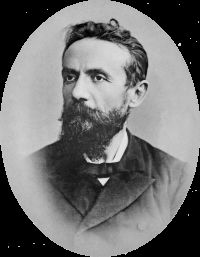 Angelo De Gubernatis,
Zoological Mythology; or, The Legends of Animals…
“ Thou must go in that direction, so that every morning thou may'st have the sun before thee, and every evening the sun behind thee. Thus thy strength will increase more and more every day." How can one indicate better the apparent course of the solar hero, or of the sun in the night? The hero, in order to go towards the morning sun, must necessarily have the sun of evening behind him. The old dwarf also gives him a sack and a little barrel, in which he will always find the food and drink he requires ”
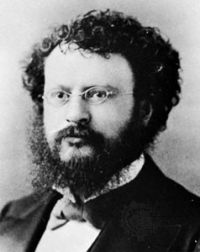 John Fiske,
Myths and Myth-Makers
“ The mere fact that solar heroes, all over the world, travel in a certain path and slay imps of darkness is of great value as throwing light upon primeval habits of thought, but it is of no value as evidence for or against an alleged community of civilization between different races. ”
William Leitch, God's glory in the heavens (1867)
“ When we look with curious eye into the glowing furnace of a steam-engine, we have to shade our face from the fierce glare, and survey the bars and boiler-tubes in detail. When we look into the great central furnace of the solar system, we need a screen too, and the moon admirably serves the purpose. It most effectually intercepts the light and heat of the central parts, so that we may descry the fainter objects round the circumference. Night reveals to us a new glory of the heavens, by unveiling its innumerable hosts, and the darkness of the eclipse has revealed to us a new glory of the sun. ”
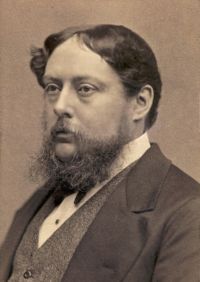 Richard A. Proctor,
Myths and Marvels of Astronomy
“ I have addressed hundreds of audiences in Great Britain and America on the subject of recent solar discoveries, and I have conversed with many hundreds of persons of various capacity and education, from men almost uncultured to men of the highest intellectual power; and my invariable experience has been that solar research derives its chief interest when viewed in relation to the sun's position as the mighty ruler, the steadfast sustainer, the beneficent almoner of the system of worlds to which our earth belongs. ”
Zénaïde A. Ragozin, Chaldea: From the Earliest Times to the Rise of Assyria
“ One of the prettiest, oldest, and most universally favorite solar myths is the one which represents the Sun as a divine being, youthful and of surpassing beauty, beloved by or wedded to an equally powerful goddess, but meeting a premature death by accident and descending into the dark land of shades, from which, however, after a time he returns as glorious and beautiful as before. ”
“ The authors of the original solar fables, having lived in that remote age in which physical prowess was recognized as the highest attribute of humanity, conceived the idea that God Sol, while passing through his apparent orbit, had to fight his way with the animals of the Zodiac, and with others in conjunction with them. ”
 Manly Palmer Hall,
The Secret Teachings of All Ages…
(1928)
“ Many of the ancient peoples had more than one solar deity; in fact, all of the gods and goddesses were supposed to partake, in part at least, of the sun's effulgence.The golden ornaments used by the priestcraft of the various world religions are again a subtle reference to the solar energy, as are also the crowns of kings. In ancient times, crowns had a number of points extending outward like the rays of the sun, but modern conventionalism has, in many cases, either removed the points or else bent: them inward, gathered them together, and placed an orb or cross upon the point where they meet. ”
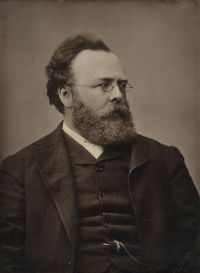 Robert Williams Buchanan,
The New Abelard: A Romance, Volume 2…
“ As the great cosmic Bard of solar biology expresses it in his sublime epic: The radiant flux and reflux, the serene Atomic ebb and flow of force divine, This, this alone, is God, the Demiurgus; By this alone we are, and still shall be. O joy! the Phantom of the Uncondition’d Fades into nothingness before the breath Of that eternal ever-effluent Life Whose centre is the shining solar Heart Of countless throbbing pulses, each a world! ”
 Edmond Hamilton,
The star-stealers
(1929)
“ The solar system was home to us, would always be home to us, but never, I knew, would either of us be able to break away from the fascination of the great fleet's interstellar patrol, the flashing from sun to sun, the long silent hours in cosmic night and stellar glare. ”
 F. Max Müller,
India: What can it teach us?
“ And yet wise people wonder and say, How curious that the ancient Aryans should have had so many solar myths. Why, every time we say "Good-morning," we commit a solar myth. Every poet who sings about "the May driving the Winter from the field again" commits a solar myth. ”
Isaac W. Heysinger, The Source and Mode of Solar Energy Throughout the Universe
“ The source of solar energy is not to be found in the sun itself, but in his environment; and he himself, in all his glory, is but the king, crowned with gold, blazing with rich apparel, and scattering benefits among his satellites, not from his own private treasury, but who himself is enriched by the mighty tribute with which his willing subjects continually endow him, and to whom alone he owes all his pride and power and wealth and magnificence, and which he, in turn, so freely expends, transmuted in form alone, in the perpetual improvement and welfare of his domain. ”
Isaac W. Heysinger, The Source and Mode of Solar Energy Throughout the Universe
“ While solar systems may afford in their circling planets a possible dominion for finite life, and in their suns their daily bread; in the infinite and all-embracing realms of space, filled with the potentialities of all created forms, thrilled with the impulses of all creative force, is to be found the unfailing source of all, the dominion of the eternal architect, before whom nature bends the obedient knee, waits to hear his mighty voice, or swiftly runs to do his royal bidding. ”
Thomas H. Burgoyne, The Light of Egypt; Or, The Science of the Soul and the Stars…
“ It is the sign of the Man. The truths of the past are becoming etherealized. Our solar parent has scarcely crossed the threshold of the sign Aquarius, and already we observe in many directions the activities of the peculiar influx. True, it is but the first flush of the dawn of a new era, the harbinger of a glorious day to our race. In the light of this truth, ponder well on the nature of the influx radiating from the solar center, each orb of his shining family absorbing a different ray, or attribute, of solar energy, corresponding to its own peculiar nature. ”
William George Hooper, Aether and Gravitation
“ The solar fires are ever glowing, and their flames ever burning, robing the solar disc with its quivering fringe, or madly leaping on every side to a distance of one hundred thousand miles, and by their madness lashing the aetherial atmosphere into fury, creating aetherial waves, myriads upon myriads, and sending them with lightning speed across the intervening space. ”
 Theodore Parker,
Speeches, Addresses, and Occasional Sermons…
“ Put one of the cold thin moons of Saturn into the centre of the solar system,—would the universe revolve about that little dot? Loyal matter with irresistible fealty gravitates towards the sun, and wheels around the balance-point of the world's weight, be it where it may, called by whatever name. ”
Geo. W. Warder, The Universe a Vast Electric Organism
“ They may then pass to other solar realms, and wander over the varied bosom of Andromeda's triple suns of blue and green and sapphire tints that whirl like globes of rainbow beauty in the azure sky, and see the double stars and multiple suns, and fiery comets with their glowing spooms, and blood-red meteors, all following harmonious orbits through the pulsing voids of space, vibrating to the rythmic cadence of electric law. All moving with tranquil majesty in the trackless seas of immensity obedient to the Omnipotent Will. ”
A Book Written by the Spirits of the So-Called Dead
“ I can not carry my thought further than to say in addition that our solar system, as a system in its entirety, has representatives to thousands of other solar systems revolving in space, circling around their respective central suns. You perceive that the grandeur of creative glory is looming up before us in majestic proportions, far beyond our power to comprehend and portray. ”
 Agnes M. Clerke,
A Popular History of Astronomy During the Nineteenth Century
“ A cool, dark, solid globe, its surface diversified with mountains and valleys, clothed in luxuriant vegetation, and "richly stored with inhabitants," protected by a heavy cloud-canopy from the intolerable glare of the upper luminous region, where the dazzling coruscations of a solar aurora some thousands of miles in depth evolved the stores of light and heat which vivify our world—such was the central luminary which Herschel constructed with his wonted ingenuity, and described with his wonted eloquence. ”
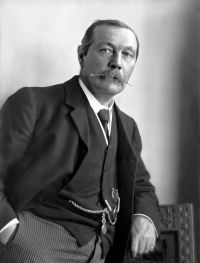 Arthur Conan Doyle,
The Captain of the Polestar and Other Tales
(1890)
“ The solar system, amidst a countless number of other systems as large as itself, rolls ever silently through space in the direction of the constellation of Hercules. The great spheres of which it is composed spin and spin through the eternal void ceaselessly and noiselessly. ”
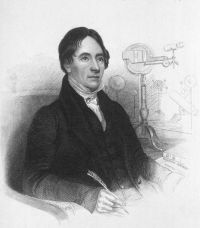 Thomas Dick,
The Practical Astronomer
“ Our globe appears to be little more than an accumulation of terrestrial materials introduced into the boundless ocean of the solar light, as a theatre on which it may display its exhaustless power and energy, and give animation, beauty and sublimity to every surrounding scene—and to regulate all the powers of nature, and render them subservient to the purposes for which they were ordained. ”
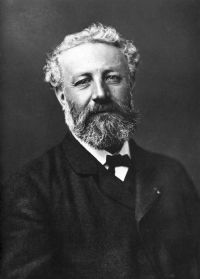 Jules Verne,
From the Earth to the Moon, Direct in Ninety-Seven Hours and Twenty Minutes…
“ If we had started when there was an eclipse of the moon, all our passage would have been in the shadow, which would have been a pity."THE SUN CHOSE TO BE OF THE PARTY."Why?""Because, though we are floating in space, our projectile, bathed in the solar rays, will receive their light and heat. It economizes the gas, which is in every respect a good economy."Indeed, under these rays which no atmosphere can temper, either in temperature or brilliancy, the projectile grew warm and bright, as if it had passed suddenly from winter to summer. ”
Thomas Wood, The Mosaic History of the Creation of the World
“ Who can contemplate the power which produced the solar system, at once so magnificent, beautiful, and delightful, without astonishment and admiration? The planets are kept in a regular motion, and retained in an invariable course round the sun, by the power of this luminary’s attraction or gravity. These bodies have a projectile force, being propelled forwards in a right line, which is the nature of all simple motion; but the sun’s attraction combining with their own projectile force, withdraws them from their rectilineal courses, and preserves the most perfect harmony in the system. ”
John Fiske,
The Unseen World, and Other Essays
“ Some of the immense residue of course hits other planets stationed in the way of it, and is utilized upon their surfaces; but the planets, all put together, stop so little of the total quantity that our startling illustration is not materially altered by taking them into the account. Now this two-billionth part of the solar radiance poured out from moment to moment suffices to blow every wind, to raise every cloud, to drive every engine, to build up the tissue of every plant, to sustain the activity of every animal, including man, upon the surface of our vast and stately globe. ”
Noel M. Loomis, Date line (1948)
“ People everywhere on Earth had finally resigned themselves to taking it easy, and so Solar News was just about on the rocks when along came time-travel, and Smullen, the sharp-eyed vice-president of Solar, foresaw a chance to put Solar in the clear again. ”
 Nikola Tesla,
The New York Herald Tribune, 18th August…
(1935)
“ Those who are still doubting that our sun emits powerful cosmic rays evidently overlook that the solar disk, in whatever position it may be in the heavens, cuts off the radiations from beyond, replacing them by its own. ”
Isaac W. Heysinger, The Source and Mode of Solar Energy Throughout the Universe
“ What principle of conservation of energy is it possible to apply to the vast quantities of light and heat which constantly disappear in the interstellar realms of space? How to account for this enormous emission of solar energy during the long period of time requisite for the development of the earth during its past geological ages. How to explain why the moon always presents the same face to the earth. Why, if the law of gravity prevails there, there are no visible traces of atmosphere or moisture in the moon. ”
Isaac W. Heysinger, The Source and Mode of Solar Energy Throughout the Universe
“ If, however, we consider, as is generally believed to be the case, the sun itself to be the sole prime source of its visible energy, nothing but difficulty and vague speculation can be looked for on every hand; but by relegating the solar orb to its proper place, and taking as the starting-point the true source of all energy,—to wit, the hidden forces embodied in the vapors or gases of interstellar space,—the whole process and mode of action will logically follow, and obscurity and difficulty together disappear. ”
Portal:Anonymous texts, The Urantia Book (1955)
“ Still other conditions enable these suns to transform and send forth much of the energy of space which comes their way in the established space circuits, Many phases of physical energy and all forms of matter are attracted to, and subsequently distributed by, the solar dynamos. In this way the suns serve as local accelerators of energy circulation, acting as automatic power-control stations. ”
Adam Clarke, Commentary and critical notes on the Bible… (1800s)
“ He is like a general in his pavilion, surrounded by his troops, to whom he gives his orders, and by whom he is obeyed. So, the solar influence gives motion, activity, light, and heat to all the planets. ”
J. G. M'Pherson, Meteorology; or, Weather Explained
“ Though no fixed conclusions are yet established about the causes of the brilliant auroral display, yet, as the results of laborious observations, we are assured that the stabler centre of our solar system holds in its powerful sway the several planets at their respective distances, supplying them all with their seasonable light and heat, vibrating sympathetic chords in all, and even controlling under certain—though to us still unknown—laws the electric streamers that flit, apparently lawlessly, in the distant earth’s atmosphere. ”
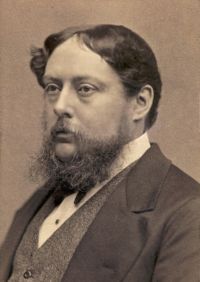 Richard Anthony Proctor,
Popular Science Monthly
(1872)
“ Now, the question which has agitated astronomy during the past few years has been simply whether the glory of light seen around the sun is in reality a solar appendage, or may not be due wholly or in part to the illumination either of our own atmosphere or of some other matter (not necessarily atmospheric) lying much nearer to us than the sun does. ”
Richard A. Proctor,
Myths and Marvels of Astronomy
“ It is true that Sir William Herschel thought the sun might be the abode of living creatures; and Sir John Herschel even suggested the possibility that the vast streaks of light called the solar willow-leaves, objects varying from two hundred to a thousand miles in length, might be living creatures whose intense lustre was the measure of their intense vitality. But modern discoveries had rendered all such theories untenable. The sun is presented to us as a mighty furnace, in whose fires the most stubborn elements are not merely melted but vaporised. ”
Related terms
Authors who wrote about “solar hero”
Angelo De GubernatisWalter William StricklandIsaac W. HeysingerGarrett Putman ServissJohn FiskeRichard A. ProctorJ. H. HillManly Palmer HallEdmond HamiltonThomas Dick David P. ToddAgnes M. ClerkeWilliam LeitchVictor HugoThomas H. BurgoyneF. Max MüllerTheodore ParkerWilliam George HooperGeo. W. WarderArthur Conan Doyle
