Souterrain

Definition and stakes

F.R.A.I. Elizabeth Andrews,  Ulster Folklore

“ In these coves it is believed the fairies dwell, and here they keep as prisoners women, children, even men. These subterranean dwellings may not be known to mortals. I heard of a lad being kept for several days in the fort of the Shimna, near Newcastle, Co. Down, and I was told that the great rath at Downpatrick had been a very gentle place, meaning one inhabited by fairies. In neither of these forts is there, as far as is known, a souterrain, nor is there one in the old fort at Antrim, a typical rath. In many cases we do find the entrance to a souterrain is in a fort. ”

Source: Gutenberg

F.R.A.I. Elizabeth Andrews,  Ulster Folklore

“ We have, however, two other small races who are usually regarded by the peasantry as strictly human, the Pechts and the Danes. [47] Two traditions regarding Danes exist: sometimes we hear of tall Danes, doubtless the medieval sea-rovers; sometimes of small Danes, the builders of many of the raths and souterrains.
While the Danes are the great builders throughout Ireland, some of the raths and souterrains, especially those in North-East Antrim, are said to have been made by the Pechts. Last summer I visited one of these, the cave of Finn McCoul.
”
Source: Gutenberg

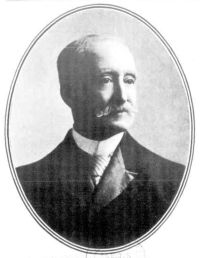
Portrait of Grant Allen Grant Allen,  Falling in Love; With Other Essays on More Exact Branches of Science

“ The rock when it first emerges from the water rises bare and rugged like a sea-cliff; no living thing, animal or vegetable, is harboured anywhere on its naked surface. In time, however, as rain falls upon its jutting peaks and barren pinnacles, disintegration sets in, or, to speak plainer English, the rock crumbles; and soon streams wash down tiny deposits of sand and mud thus produced into the valleys and hollows of the upheaved area. ”
Source: Gutenberg

Get perspective with Kwize: daily news enlightened by great literature